

By Bosphorus News Geopolitics Desk
Iran's declaration that the Strait of Hormuz was closed pushed the Gulf from restricted commercial passage back into open military confrontation. In the Eastern Mediterranean, Türkiye challenged a new France-Republic of Cyprus military agreement, while Greece and Israel intensified their objections to Ankara's possible return to the F-35 programme.
Iran Closes Hormuz as War Spreads Across the Gulf
Iran's Islamic Revolutionary Guard Corps declared the Strait of Hormuz closed until further notice after an attack on a commercial vessel, as the United States launched another round of strikes against Iranian military and coastal targets.
Iran then fired missiles and drones toward regional states hosting or supporting U.S. military operations, including Bahrain, Kuwait, Qatar, Oman and Jordan. The attacks expanded a confrontation centred on Iran and the United States into a wider Gulf security crisis.
The escalation displaced the diplomatic track discussed a day earlier. Türkiye had said Iran and the United States could still reach an understanding over safe commercial passage, while Oman, France and the United Kingdom were involved in separate initiatives concerning navigation through the strait.
Those contacts did not produce agreed rules before military operations resumed. Iran says vessels must comply with routes and instructions issued by its forces. Washington maintains that ships retain the right to use the international waterway, including routes closer to Oman.
Türkiye receives a large share of its oil and gas through pipelines from Russia, Azerbaijan and Iran rather than through Hormuz. It remains exposed to higher global energy prices, shipping charges and insurance premiums if traffic through the strait remains restricted.
The crisis also adds pressure to Türkiye's ambition to become a regional energy hub. Earlier Bosphorus News reporting examined how the suspension of the BOTAŞ-Bulgargaz gas agreement had already raised questions over the commercial foundations of that strategy.
Türkiye Calls France-Cyprus Military Agreement Illegal
Türkiye's Defense Ministry rejected the status of forces agreement signed by France and the Republic of Cyprus, calling it legally invalid because France is not one of the three guarantor powers established by the 1960 Cyprus arrangements.
The ministry said the agreement disregarded the rights of the Turkish Cypriot side and could deepen military competition around the island. Türkiye, Greece and the United Kingdom are the guarantor powers under the 1960 Treaty of Guarantee.
Ankara's objection moves the agreement beyond bilateral French-Cypriot defence cooperation and into the legal dispute over who may establish a lasting military role on the island. France has expanded its training, access and operational coordination with the Republic of Cyprus in recent years.
Türkiye said it would continue to protect the rights and security of the Turkish Cypriot side and warned against military arrangements directed at Türkiye. The statement gives Ankara's formal response to the growing French defence role in the Republic of Cyprus.
The timing also matters. Türkiye and the United Kingdom signed a new security and defence partnership during the NATO summit in Ankara. Britain's position as a guarantor power gives the two relationships different legal foundations, a distinction now central to Ankara's argument.
Greece Makes Its F-35 and KAAN Engine Objection Explicit
Greek Defense Minister Nikos Dendias publicly opposed both a possible U.S. sale of F-35 fighter aircraft to Türkiye and American engine access for Türkiye's KAAN combat aircraft programme.
Dendias said Greece would not welcome Türkiye receiving the F-35 or engines for a new-generation fighter. His remarks moved Athens beyond Prime Minister Kyriakos Mitsotakis's earlier call for NATO allies to consider each other's security concerns.
The objection targets two parts of Türkiye's future air-power programme. The first is Ankara's proposed return to the F-35 programme. The second is access to U.S.-origin engines needed during KAAN's development and early production stages.
Bosphorus News previously reported how Mitsotakis used the NATO summit to press Greece's concerns over Türkiye's possible F-35 return. Dendias has now stated the objection more directly and extended it to KAAN.
Israel has raised parallel concerns in Washington. Prime Minister Benjamin Netanyahu has pressed President Donald Trump over Türkiye's regional policies and the possibility of restoring Ankara's access to the F-35 programme.
Trump nevertheless left the Ankara summit without closing the door. He said Washington was considering the removal of sanctions imposed under the Countering America's Adversaries Through Sanctions Act, while Turkish and U.S. officials continued negotiations over the Russian-made S-400 system.
Foreign Minister Hakan Fidan said Türkiye hoped to achieve progress soon on the sanctions and fighter-aircraft files. U.S. law continues to block Türkiye's full return to the programme while it possesses the S-400 system.
The Greek and Israeli objections meet in Washington but come from different strategic concerns. Greece is focused on the military balance in the Aegean and Eastern Mediterranean. Israel is seeking to preserve its air superiority while limiting Türkiye's growing role in Syria and regional security.
A Bosphorus News analysis examined how Trump's separate relationships with Erdoğan and Netanyahu have created a direct political channel through which the F-35, Syria, Iran and wider Türkiye-Israel tensions are increasingly managed.
The dispute also follows a NATO declaration that committed allies to reducing defence-trade restrictions. Bosphorus News examined how the Ankara declaration placed defence market access alongside alliance burden-sharing, strengthening Türkiye's argument that allied restrictions cannot remain detached from NATO's wider defence plans.
Lindsey Graham's Death Removes a Leading Foreign Policy Voice
U.S. Senator Lindsey Graham died at the age of 71 after what his office described as a brief and sudden illness.
The South Carolina Republican was one of Trump's closest congressional allies and a prominent advocate of a muscular U.S. foreign policy. He was a strong supporter of Israel and NATO and one of Washington's most visible proponents of pressure on Iran.
Graham had also shown greater openness than several other members of Congress to a negotiated solution on Türkiye's F-35 dispute, while maintaining that the S-400 issue had to be resolved.
His death does not alter the legal restrictions governing Türkiye's return to the programme. It removes an influential senator with direct access to Trump from the congressional network through which foreign-policy and defence decisions are debated.
South Carolina's governor is expected to appoint a temporary successor before a special election. The replacement's position on Türkiye, Israel, Iran and NATO will determine how much of Graham's political role can be reproduced.
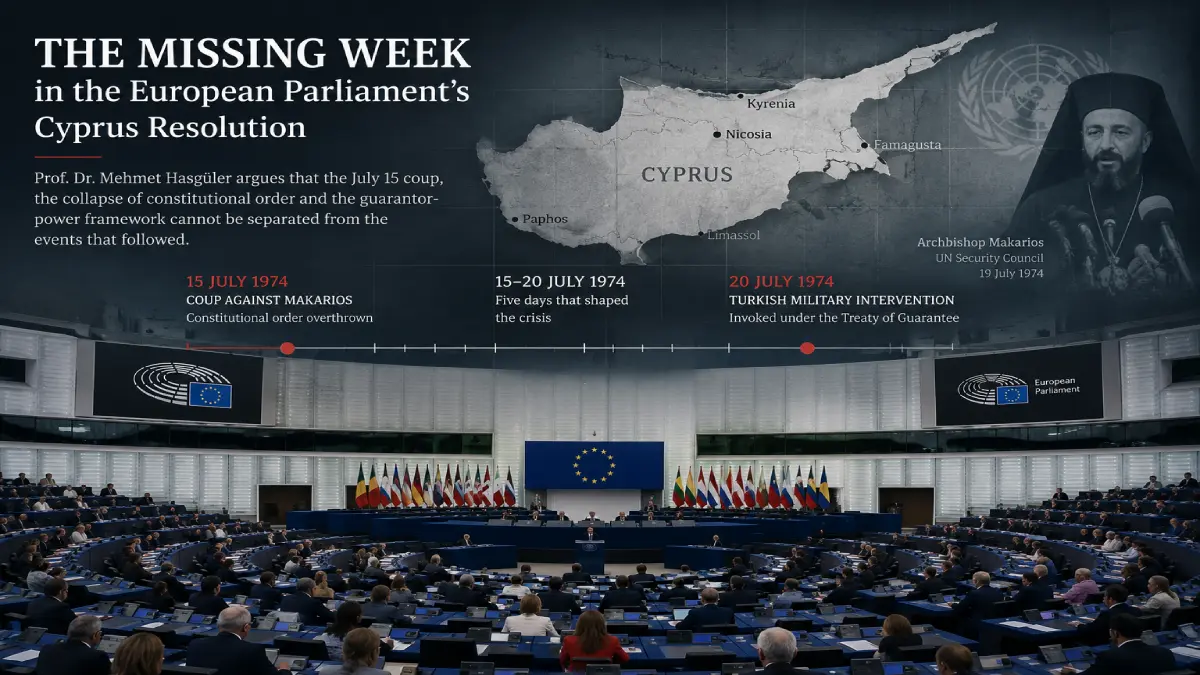
European Parliament Resolution Reopens the 1974 Sequence
The European Parliament's resolution concerning violence against women during the events of 1974 has become a central political issue in Türkiye and the Turkish Republic of Northern Cyprus.
Türkiye and the Turkish Cypriot side argue that the text separates crimes committed during the conflict from the July 15 coup against President Makarios, the earlier collapse of the constitutional order and the violence that preceded Türkiye's military intervention on July 20.
The dispute is therefore not limited to whether crimes against women should be investigated or condemned. It concerns where the political and legal chronology of 1974 begins, which actors are included and whether the coup organised by the Greek military junta is treated as a cause of the crisis.
The Republic of Cyprus government rejected Türkiye's criticism and defended the resolution as an effort to recognise victims and establish accountability. Türkiye said the text relied on a selective chronology and repeated allegations against the Turkish Armed Forces that Ankara rejects.
In a Bosphorus News guest commentary, Professor Mehmet Hasgüler argues that the resolution detaches the violence of 1974 from the coup and constitutional breakdown that preceded Türkiye's intervention.
Hasgüler's intervention explains why the resolution has moved beyond Brussels and become a wider debate in Türkiye and the TRNC over chronology, political responsibility and the European Parliament's treatment of the Cyprus conflict.
The dispute over historical sequence also sits beside an unresolved human record. A separate Bosphorus News investigation into two decades of excavations found that 203 missing persons had been recovered while hundreds remained unaccounted for across both communities.
That record limits attempts to reduce the events of 1974 to a single date, military action or community. The missing-persons file continues to preserve evidence of violence committed at different stages of the conflict.
Lebanon Conditions Rome Talks on Israeli Withdrawal
Lebanon has linked its participation in talks scheduled in Rome for July 15 and 16 to an Israeli withdrawal from two pilot zones in southern Lebanon.
The June 26 framework provides for phased Israeli withdrawals followed by Lebanese army deployments. U.S. officials have presented the first zones as a test of whether the wider arrangement can be implemented, but Israel has not announced a timetable.
Froun, Ghandouriyeh and Zawtar al-Gharbiya have been discussed as possible locations, although they have not been formally confirmed as the final pilot zones.
Lebanese officials want a withdrawal to begin before the Rome talks rather than allowing the meeting to become another negotiation over preliminary conditions.
Israel continues to link further withdrawals to the removal of Hezbollah's armed presence and the Lebanese army's ability to control transferred territory. Hezbollah rejects disarmament and was not a party to the agreement.
The U.S. military delegation that arrived in Lebanon provided the framework with an implementation mechanism, but no territorial transfer has yet been independently verified. The Rome talks will have limited value unless the first withdrawal begins or produces a binding timetable.
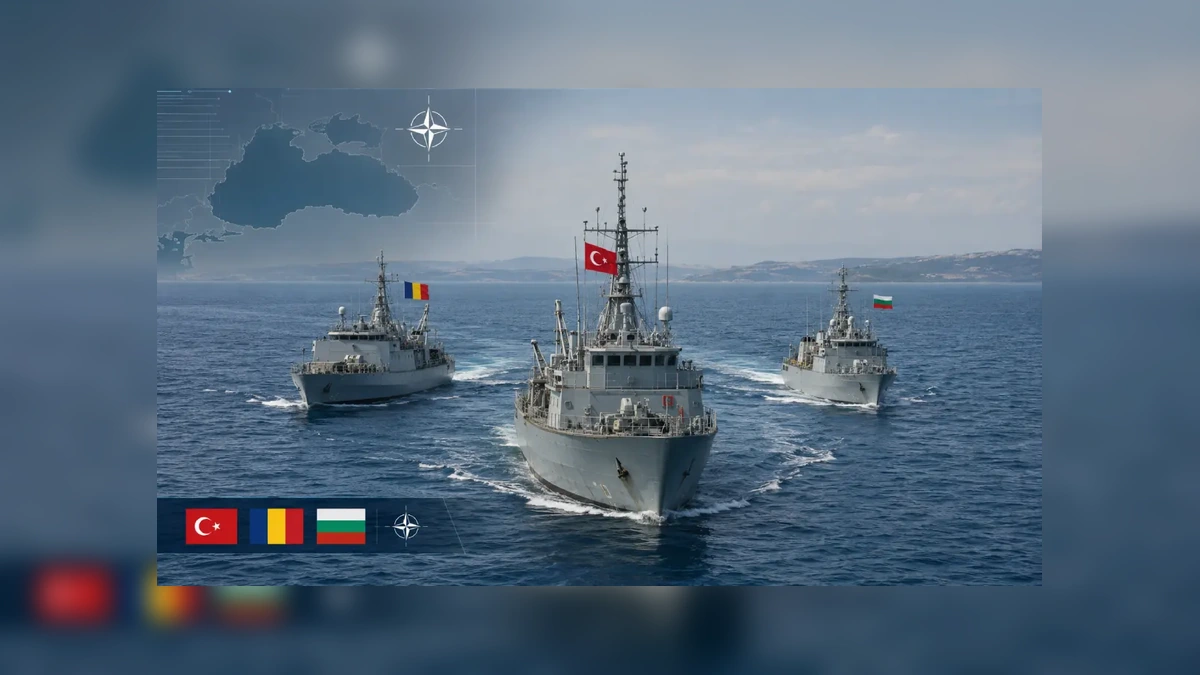
Black Sea Security Expands Around Undersea Infrastructure
Türkiye, Romania and Bulgaria are broadening their Black Sea mine-countermeasures cooperation to cover energy installations, telecommunications links and other infrastructure on and beneath the seabed.
The expanded task gives the three NATO allies a role in protecting pipelines, cables and future electricity routes without creating a permanent NATO naval deployment in the Black Sea.
Bosphorus News previously examined the Türkiye-Romania-Bulgaria mission and its expansion into undersea infrastructure security.
The mission also connects with wider plans to move electricity from Azerbaijan and the South Caucasus toward Southeast Europe. Bosphorus News reported on the proposed Türkiye-Azerbaijan electricity corridor, a project whose security would depend on the protection of regional grids, cables and maritime infrastructure.
The Black Sea file is therefore moving beyond drifting mines. It now includes the physical security of energy and communications systems linking Türkiye, the Caucasus and European markets.
Serb Ministers Block Bosnia-Wide Srebrenica Mourning Day
Serb ministers prevented Bosnia and Herzegovina's Council of Ministers from deciding whether July 11 should be declared a nationwide day of mourning for the victims of the Srebrenica genocide.
Eight members supported placing the proposal on the agenda, but two ministers from Republika Srpska did not participate. The extraordinary session failed to reach the required quorum before a substantive vote could take place.
The Federation of Bosnia and Herzegovina declared its own day of mourning, exposing the institutional division between the country's two entities.
The blockade gives administrative form to the continuing political dispute over the recognition and commemoration of Srebrenica. It followed renewed denial and resistance from Bosnian Serb political leaders around the anniversary.
The episode also showed how the dispute can stop state-level decision-making even when a majority of participating ministers supports the proposal.
Türkiye's Tourism Record Still Leaves a $35 Billion Gap
Türkiye ended 2025 with tourism revenue of approximately $65.2 billion and around 64 million visitors, setting records in income and arrivals. The government's target of $100 billion by 2028 nevertheless leaves a gap of almost $35 billion.
A Bosphorus News analysis argues that visitor growth alone will not close that difference. Türkiye would need higher spending per visitor, stronger pricing power and a larger share of premium tourism rather than continued dependence on the low-cost destination model.
The question extends beyond the tourism industry. Tourism is one of Türkiye's largest sources of foreign currency and an important part of the country's effort to reduce pressure on the current account. Record arrivals matter less if income per visitor remains below the level required to reach the government's target.
Strategic Take
The Strait of Hormuz moved from fragile negotiation back to direct warfare, extending immediate risk from commercial vessels to U.S. military sites and Gulf states. Diplomatic contacts remain available, but agreed navigation rules no longer exist on the water.
In the Eastern Mediterranean, Türkiye is confronting separate challenges over military access to Cyprus, combat-aircraft technology and the political chronology of 1974. France's agreement with the Republic of Cyprus, Greek and Israeli objections to Türkiye's air-power plans and the European Parliament resolution are moving through different institutions but touch the same contest over Türkiye's regional role.
The Black Sea and Lebanon files are moving from political agreement toward operational implementation. Türkiye, Romania and Bulgaria have expanded their mission to protect infrastructure beneath the sea. Lebanon is still waiting for the first Israeli withdrawal before committing to the next diplomatic stage.
Bosnia presents the opposite movement. The institutional mechanism already exists, but political obstruction prevented a state-level decision on Srebrenitsa from reaching a vote.
Türkiye's tourism figures add an economic measure to the same regional map. Visitor growth has produced record revenue, but the distance from the $100 billion target remains large enough to require a change in the country's tourism model rather than another increase in arrivals alone.
Sources: Türkiye's Defense Ministry, U.S. Central Command, Reuters, Associated Press, Kathimerini, European Parliament, Bosnia and Herzegovina Council of Ministers reporting, Lebanese and U.S. officials, Bosphorus News review and reporting.
Read Yesterday's brief: Eastern Mediterranean Strategic Brief | July 11, 2026.