
The missing persons issue in Cyprus is rooted in two distinct periods of violence.
According to the International Commission on Missing Persons (ICMP), 2,002 people were reported missing as a result of intercommunal unrest during the 1960s and the events of 1974. This figure includes 492 Turkish Cypriots and 1,510 Greek Cypriots.
For many families, the absence of graves or confirmation has extended across generations, turning recovery and identification into a continuing humanitarian obligation rather than a closed historical chapter.
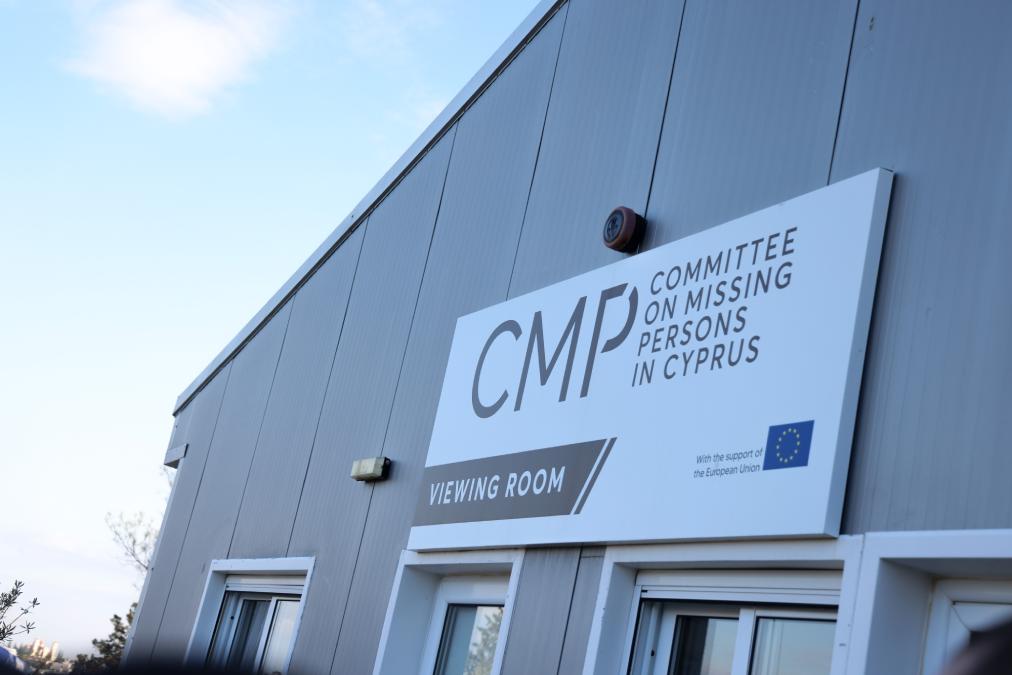
Over the past twenty years, excavation work carried out in military areas across Cyprus has led to the recovery of the remains of 203 individuals, according to figures shared by the Committee on Missing Persons (CMP).
The data were outlined in a two-part interview published on 3–4 February 2026 by YENİDÜZEN (1)(2), based on an extended discussion with Hakkı Müftüzade, the CMP's Turkish Cypriot member.
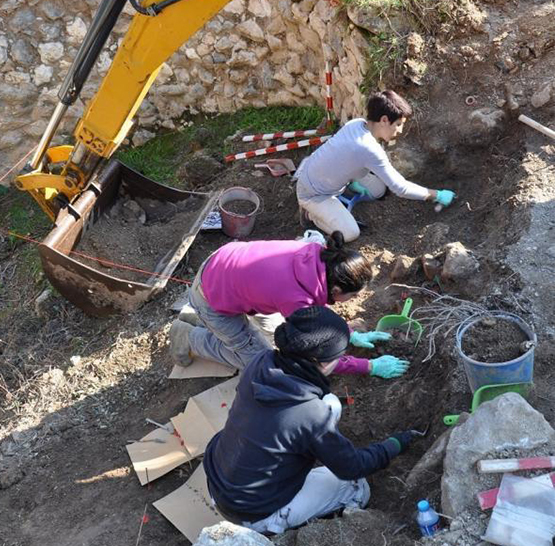
Between 2006 and 2026, CMP teams conducted 127 excavations in military zones and the buffer zone. 124 of these took place in military areas in the north. Three were carried out in the buffer zone, following military clearance.
These operations resulted in the recovery of 203 sets of human remains.
142 belonged to officially listed missing persons whose identities were confirmed and returned to their families. Thirty-seven cases involved individuals classified as "known to be dead." Twenty-four remains are still undergoing identification through forensic and DNA analysis.
Access and authority
Müftüzade draws a clear distinction between field access and institutional authority. Military zones are often perceived as sealed or inaccessible. He notes that, in practice, excavation teams have been able to operate in sensitive areas when procedures are followed and witnesses are involved.
Witness-guided excavations have taken place at sites such as St. Hilarion, the Voni (Gökhan) military camp, and areas near the former Kornaro Hotel in Nicosia. In these cases, witnesses directly indicated burial locations. Excavations proceeded without operational obstruction.
According to Müftüzade, the main constraint is not physical access. It is mandate.
The boundary of the CMP mandate
The CMP's work is tied to the Official List of Missing Persons compiled in 2002. Individuals outside this list, particularly those categorised as "known dead," fall beyond the committee's current authority unless a political decision expands its mandate.
This limitation has concrete consequences. Müftüzade refers to Mandirga (Yeşilırmak), linked to the events of 1974. Deaths are documented and burial sites are believed to exist. Yet no excavation can be authorised under the present framework.
In such cases, the obstacle is neither technical capacity nor evidence on the ground. It is the absence of formal authorisation.
A humanitarian framework
Throughout the interview, Müftüzade insists that the missing persons issue must be treated as a humanitarian responsibility, not a political instrument. CMP operations are bicommunal. They rely on cooperation between Turkish Cypriot and Greek Cypriot offices, forensic specialists, and witness testimony from both communities.
Forensic work continues at several locations, including Tekke Bahçesi, where unidentified remains are still being examined. The committee also maintains open channels for public input. Individuals with relevant information can come forward anonymously if they choose.
Where the process stands
After twenty years of excavation work, the contours of the process are clear. Technical expertise is established. Field experience is deep. Military zones have not blocked work when authorisation exists.
What remains unresolved is authority. Decisions on whether the search will remain limited to the existing list or be extended beyond it no longer sit with excavation teams or forensic labs. They sit with political decision-makers.
That boundary now shapes the future of the missing persons process in Cyprus.