
By Bosphorus News Defense Desk
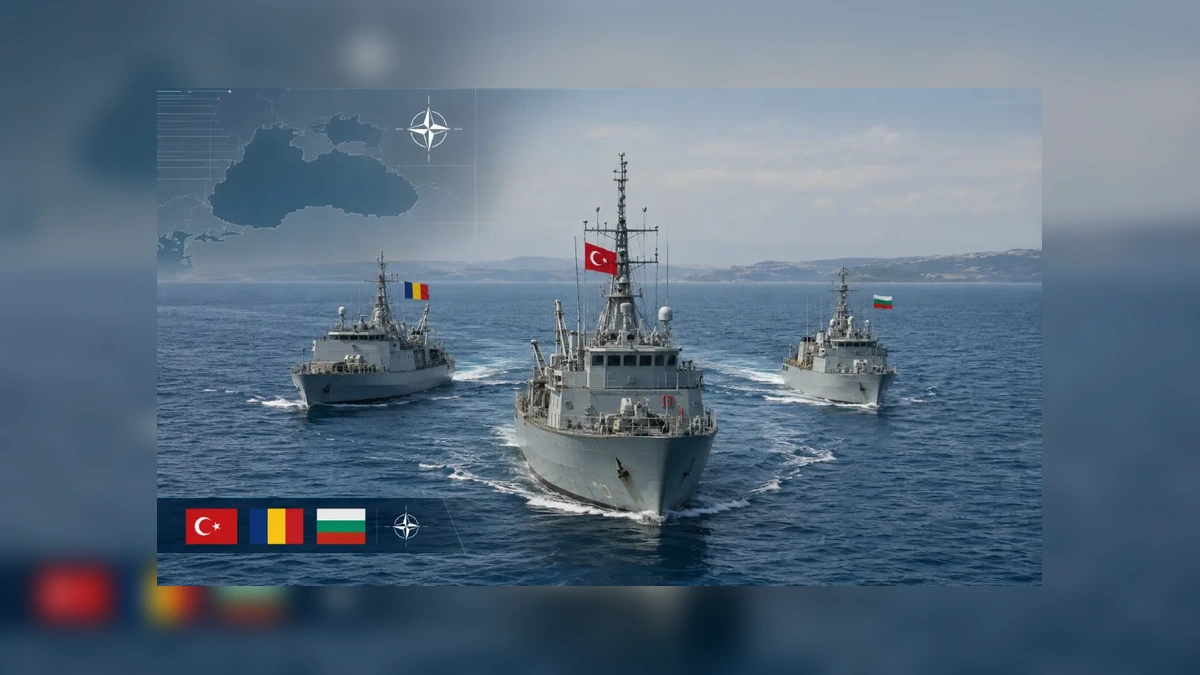
Türkiye, Romania and Bulgaria have expanded their Black Sea mine-countermeasures task group to include critical undersea infrastructure protection, turning a trilateral mine-clearance mechanism into a wider maritime-security tool after the Ankara NATO Summit.
Romania's Defense Ministry said the three governments signed an amendment to the Mine Countermeasures Black Sea Task Group memorandum during the July 7-8 summit in Ankara. The new mandate adds protection of critical undersea infrastructure to a mission that was originally built around drifting mines, navigation safety and naval interoperability among the three NATO Black Sea littoral states.
From mines to infrastructure
The task group was created in January 2024 by Türkiye, Romania and Bulgaria to counter the mine threat generated by the war in Ukraine. It became operational in July 2024, with command rotating among the three navies every six months.
Romania's ministry said the group has carried out 10 activations since then. It also said Türkiye is handing command to Bulgaria on July 9, as the next deployment begins alongside BREEZE 2026, the multinational naval exercise hosted by Bulgaria.
The amendment builds on a mechanism already active under Turkish command. Bosphorus News previously reported that the task group had entered a new operational cycle with Romania's "Vice Admiral Constantin Bălescu" minehunter joining allied patrols before the next command handover.
The latest activation includes Romania's M 271 "Căpitan Constantin Dumitrescu" minehunter, which will operate from July 9 to 24 in assigned Black Sea areas and during BREEZE 2026. Romania said the mission is designed to support freedom of navigation and strengthen allied cooperation at sea.
A Black Sea version, not a Baltic copy
The change moves the Black Sea mechanism closer to the undersea-infrastructure security agenda that has grown across Europe since the Nord Stream explosions and later cable and pipeline incidents in the Baltic Sea.
But the Black Sea format is different. NATO's Baltic Sentry activity is a broader alliance response. The Black Sea task group remains a trilateral structure among Türkiye, Romania and Bulgaria, keeping the mission in the hands of NATO's three Black Sea littoral allies and avoiding a wider naval format that would immediately raise the Montreux Convention question around non-littoral warships.
That makes the amendment strategically important for Ankara. Türkiye is part of the operational core, but the format stays regional, naval and legally contained. It strengthens Black Sea security without opening the door to a larger NATO naval presence in waters where Montreux rules remain central to Turkish policy.
What the group may protect
The expanded mandate lands in a sea crowded with strategic assets. The Black Sea carries gas routes, offshore energy projects, telecommunications links and planned power-cable infrastructure, while drifting mines remain a threat to ships and future seabed work.
TurkStream and Blue Stream link Russia and Türkiye across the Black Sea. TurkStream runs from the Anapa area to Kıyıköy and carries gas onward through Türkiye toward Southeast Europe. Blue Stream has supplied Türkiye through a deepwater Black Sea route to Samsun since 2003.
Romania has its own infrastructure stakes. The Neptun Deep offshore gas project is expected to begin production in 2027, with Bucharest positioning it as a project that could turn Romania into the European Union's largest gas producer. The wider Black Sea map also includes Türkiye's Sakarya gas field and the planned Azerbaijan-Georgia-Romania Black Sea electricity cable corridor.
That asset map gives the new mandate a harder edge. The group is not only clearing mines left by the war. It is moving toward surveillance, reconnaissance and protection of infrastructure whose disruption could hit energy flows, data links, shipping and regional security.
The Russian gas paradox
The infrastructure logic is politically awkward. Some of the assets exposed to Black Sea risk include routes linked to Russian gas exports, yet disruption would also affect Türkiye and downstream European markets before it became a simple pressure point against Moscow.
Russia has repeatedly claimed attempted attacks or sabotage planning against energy infrastructure linked to TurkStream and Blue Stream. Those claims should be treated as Moscow's account, not independently verified fact. But they show why the Black Sea's seabed and coastal energy routes are now part of the wider security file.
Türkiye's role is central because the same sea carries Russian-linked gas infrastructure, Turkish energy interests, Romanian offshore projects and allied maritime operations. The new mandate allows Ankara, Bucharest and Sofia to answer that risk without changing the basic political geometry of the Black Sea.
Ankara summit signal
The amendment also fits the wider NATO Ankara Summit agenda, where allies focused on deterrence, defence production, Ukraine and resilience. For the three Black Sea allies, resilience now includes the seabed.
Romania's ministry framed the change as a step toward stronger maritime cooperation and regional interoperability. Bulgaria's government had already approved the amendment before the summit, describing the expanded task as a way to reduce the risk of deliberate attacks against critical underwater infrastructure.
The result is a more capable Black Sea mechanism, but not a new NATO fleet. Türkiye, Romania and Bulgaria are expanding a mine-clearance group into an infrastructure-protection tool while keeping the mission inside a littoral-state format. In the Black Sea, that distinction is the point.
Sources: Romania's Defense Ministry, Bulgaria's government, Türkiye's Defense Ministry, NATO, Reuters, Bosphorus News review and reporting.