
By Bosphorus News Geopolitics Desk
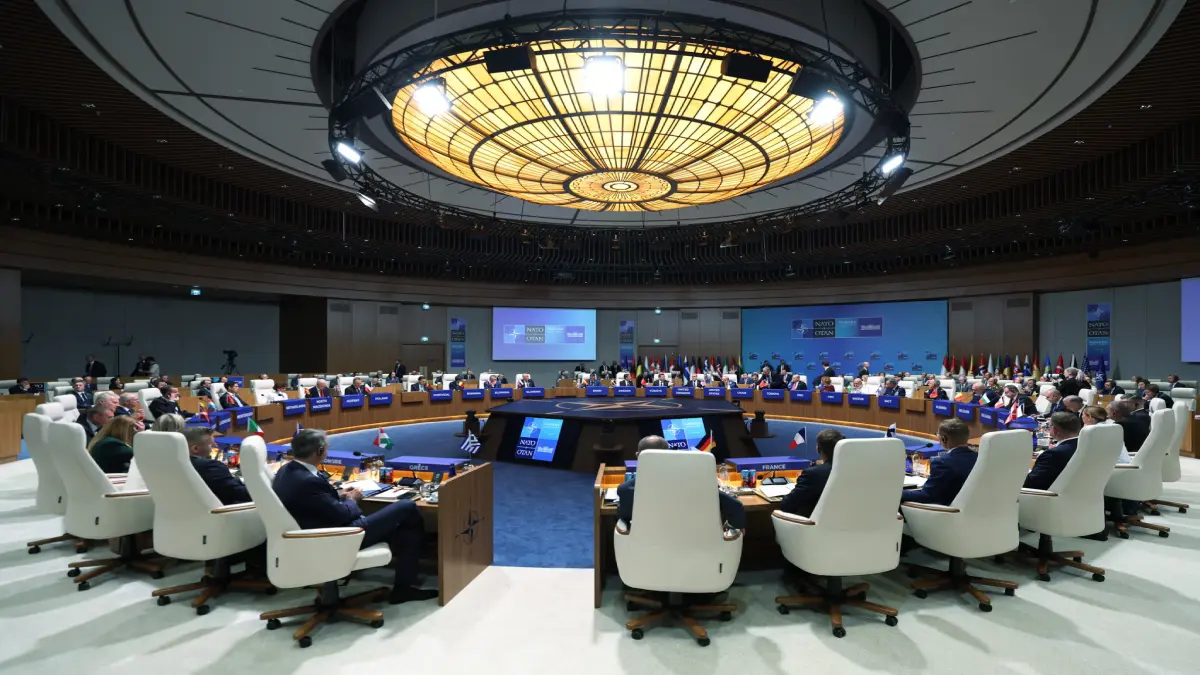
Ankara closed the North Atlantic Treaty Organization (NATO) summit by turning spending pledges into procurement, industrial capacity and defence-market access. The summit week also pulled Hormuz, Syria, Lebanon, Cyprus and the Balkans into Türkiye's regional map.
Ankara Turns Pledges Into Procurement
NATO's Ankara Declaration gave the summit its hard edge: procurement, industrial capacity, Ukraine funding, air defence and defence trade barriers.
NATO said allies announced more than $50 billion in procurement and industrial agreements around the Ankara Defence Industry Forum. Secretary General Mark Rutte presented Ankara as the delivery stage after previous spending commitments, with drones, air defence, fuel infrastructure, surveillance, command systems, cyber, space and artificial intelligence moving into the capability pipeline.
The declaration also pledged at least €70 billion in military equipment, assistance and training for Ukraine in 2026. It warned that Iran must never acquire a nuclear weapon and called for freedom of navigation through the Strait of Hormuz.
The result followed NATO's second day in Ankara, where Bosphorus News tracked the alliance's move from summit messaging into defence-production, air-defence and market-access bargaining.
IBNA, Bosphorus News' regional partner site, placed Ankara inside NATO's industrial-strategy turn, with production capacity, technology and supply-chain security moving closer to deterrence.
Türkiye Tests the Alliance's Defence Market
President Recep Tayyip Erdoğan used the summit to press NATO allies to remove defence-industry restrictions and avoid European security schemes that exclude non-European Union allies.
The argument gave Türkiye's summit diplomacy a clear defence-access line. The United States track remained tied to the F-35 programme and the Countering America's Adversaries Through Sanctions Act (CAATSA). The France-Italy track moved through continuing technical work on the SAMP/T air-defence system. The summit also produced a new UK-Türkiye Security and Defence Partnership, adding a London channel to Ankara's defence-access map.
The United Kingdom partnership covers defence industry, technology, cyber, hybrid threats, counter-terrorism, resilience, civil preparedness and space. It also gives the summit a Cyprus-related subtext because Türkiye and the United Kingdom are two of the island's three guarantor powers, although public summit language avoided the Cyprus file.
The F-35 track was already tied to Greek pressure around Ankara, with Greek Prime Minister Kyriakos Mitsotakis raising Türkiye's 1995 parliamentary position treating a Greek extension of territorial waters in the Aegean to 12 nautical miles as a cause for war. Erdoğan said he agreed that the Aegean file needed to be addressed and pointed to a future meeting between Hakan Fidan and George Gerapetritis.
Hormuz Moves From Risk to Combat Cycle
The Hormuz file moved from maritime risk into direct military exchange during summit week. The United States launched new strikes on Iran after attacks on merchant vessels near the Strait of Hormuz, while Iran responded by targeting sites linked to U.S. forces in Gulf states including Bahrain, Kuwait and Qatar.
The escalation gave NATO's Ankara language a sharper regional edge. Its call for freedom of navigation through Hormuz landed during a live security crisis around the Gulf's most important energy chokepoint.
Oil markets moved sharply before stabilising, while Gulf governments shifted into air-defence and public-safety mode. For the Eastern Mediterranean, the main issue is no longer price pressure alone. Maritime chokepoint security has moved back into NATO's southern planning horizon at the same time the alliance is expanding procurement and industrial capacity.
The regional pressure had already been visible in Trump's summit moves on Ukraine, Iran and F-35s, which turned the Ankara week into a test of alliance unity and Türkiye's defence-access file.
Syria and Lebanon Enter the Summit Room
Syria entered the summit map through Ankara. U.S. President Donald Trump met Syrian President Ahmed al-Sharaa and told him the United States would move to remove Syria from the State Sponsors of Terrorism list, opening a congressional review period.
The move connects Ankara's NATO week to Syria's reconstruction and normalization file. It also gives Türkiye a central diplomatic position in the post-Assad order, with Trump publicly linking his contact with Sharaa to Erdoğan's role.
Damascus remained unstable around the same period. French President Emmanuel Macron visited Syria, reopened high-level European engagement with Damascus and discussed reconstruction and security cooperation, while explosions near the Four Seasons area in the capital showed the security risk around the new Syrian track.
Lebanon formed the other side of the regional file. Trump said in Ankara that he believed Israel would withdraw from southern Lebanon, but Israeli officials have tied any withdrawal to the Hezbollah threat and the implementation of a U.S.-mediated security framework. The Lebanon front remains conditional, even as Washington tries to move it into a political channel.
Cyprus Returns Through the EU Door
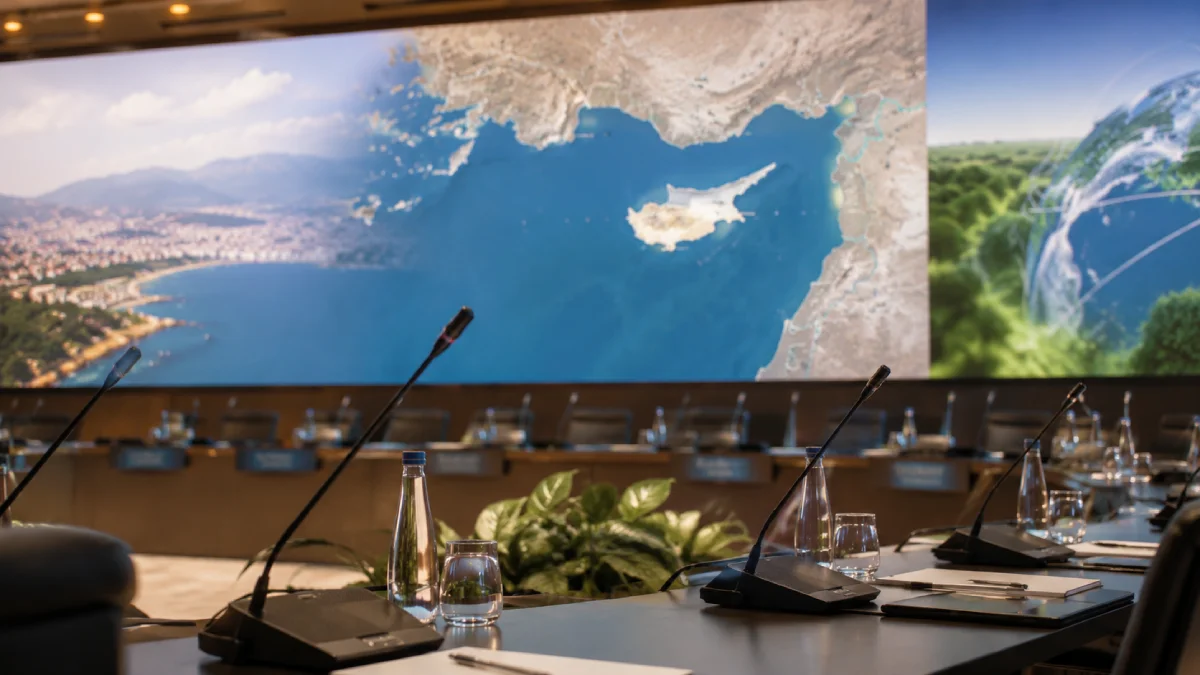
Cyprus did not sit on NATO's formal summit agenda, but it returned through the European Union channel.
European Council President António Costa and European Commission President Ursula von der Leyen raised Cyprus with Erdoğan on the summit sidelines and urged Türkiye to use what they called renewed momentum around the United Nations-led process.
The timing matters. United Nations envoy María Ángela Holguín is expected to continue consultations after contacts in Brussels and ahead of a later-July return to the island. The Greek Cypriot side is trying to keep progress on the Cyprus file linked to European Union-Türkiye relations, while the Turkish Cypriot side continues to resist any process that returns to an old federal template without addressing political equality and status.
The public silence was also part of the week's map. Erdoğan, Mitsotakis and British Prime Minister Keir Starmer did not place Cyprus at the centre of their public summit messaging, even as European Union leaders used the Ankara margins to bring the file back into direct contact with Türkiye.
Balkan Strain Shows Behind the Ukraine Pledge
The Balkans entered the summit week through a smaller but revealing Ukraine signal.
Bulgarian President Rumen Radev said in Ankara that Bulgaria had already sent 13 military aid packages to Ukraine and had little left to provide from its own stocks. He said Sofia could help repair Ukrainian equipment but warned that its warehouses had been depleted.
The statement landed as NATO framed Ukraine support for 2026 in the tens of billions of euros. It showed the gap between alliance-level commitments and the stockpile limits of smaller southeastern members.
That gap now runs across NATO's southeastern flank. Governments are being asked to support Ukraine, expand industrial capacity, protect Black Sea infrastructure and keep national inventories viable at the same time.
Strategic Take
Ankara's summit result was the compression of several files into one week: NATO procurement, Türkiye's access to allied defence markets, Hormuz escalation, Syria normalization, Lebanon security and Cyprus diplomacy.
That compression is the regional development. The Eastern Mediterranean is moving closer to NATO's industrial and military planning table through air defence, maritime chokepoints, Ukraine supply chains, Syria diplomacy and the unresolved Cyprus-Aegean file.
Sources: NATO, Reuters, Associated Press, United Kingdom Government, Türkiye's Directorate of Communications, Cyprus Mail, IBNA, European Pravda, Balkan Insight, Bosphorus News review and reporting.
Read Yesterday's brief: https://www.bosphorusnews.com/article/eastern-mediterranean-strategic-brief-july-08-2026-1783517497826.