
By Bosphorus News Geopolitics Desk
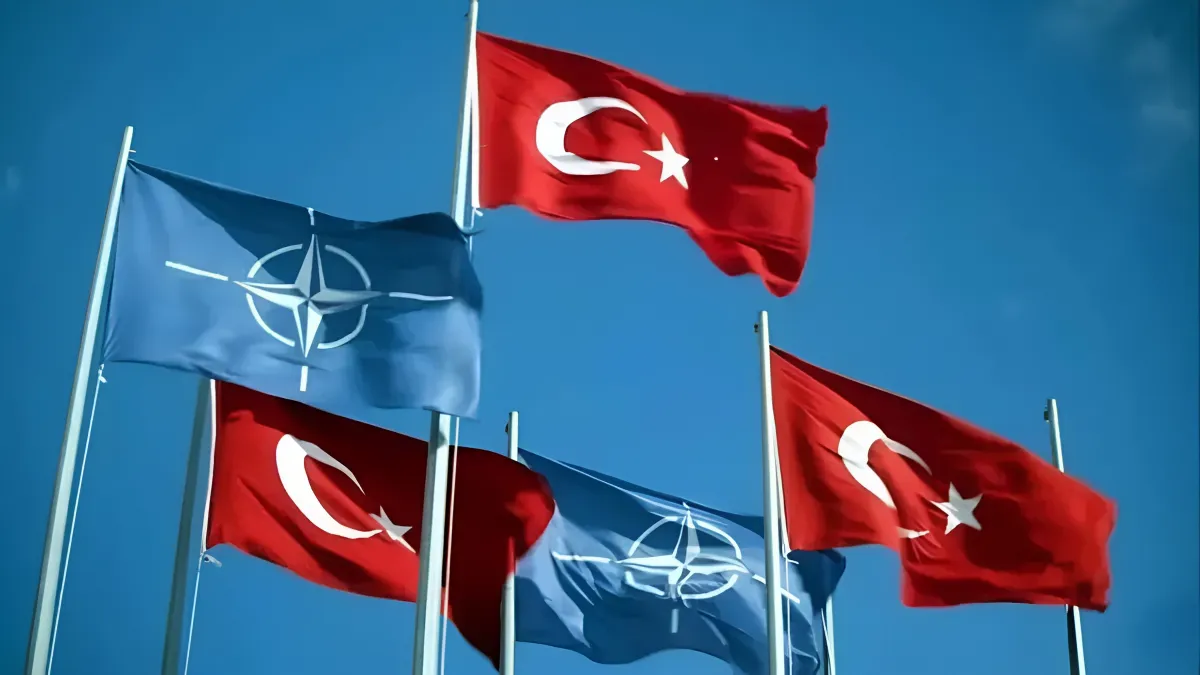
NATO closed its Ankara summit on July 8 with a declaration built around unity, Article 5 and defence production. President Donald Trump left the same summit with several disputes back in open view: Ukraine's air-defence shortage, Iran's collapsing ceasefire, Greenland's sovereignty and Türkiye's blocked return to the F-35 programme.
The official text gave NATO a common record. Trump's diplomacy showed where that record is hardest to convert into policy. He offered Ukraine a new path on Patriot production, warned of further U.S. action against Iran, revived his claim that Greenland should come under U.S. control and reopened Türkiye's fighter-jet file before the legal and political obstacles around it had moved.
The F-35 channel was already one of the summit's hardest access files. Bosphorus News' Day Two summit brief placed the aircraft question inside the wider NATO access fight: Trump's political opening was running into U.S. law, congressional resistance, Israel's objections and the unresolved S-400 dispute.
Trump's meeting with Ukrainian President Volodymyr Zelenskyy produced the clearest military development in Ankara. The U.S. president said Washington would allow Ukraine to produce Patriot air-defence systems overseas, moving the Patriot file from emergency supply toward licensed production.
For Kyiv, the statement matters because Patriot batteries remain among the systems Ukraine most urgently needs against Russian missile and drone attacks. For NATO, it placed another sensitive U.S.-controlled system inside the summit's production agenda, where allies were already pressing governments and industry to deliver faster.
Iran pulled the summit toward a different security file. Trump said he believed the ceasefire with Iran was over and warned of further U.S. strikes, while criticizing allies he saw as too cautious on Tehran.
That was harder for NATO to absorb than Ukraine. Support for Kyiv has an alliance framework, even when funding and weapons deliveries are contested. A live U.S.-Iran escalation sits in a looser space, where European governments must weigh maritime risk near the Strait of Hormuz, energy exposure and the political cost of following Washington into another military crisis.
Greenland created a separate discomfort inside the alliance. Trump again said the island should come under U.S. control, forcing Denmark to respond while NATO leaders were reaffirming collective defence. The issue stayed outside the Ankara Declaration, but it cut against the summit's language of cohesion because the pressure on Denmark came from another NATO ally.
Spain also drew Trump's public criticism over defence spending. NATO Secretary General Mark Rutte worked to keep the summit focused on unity among the 32 allies, and Trump later said there had been "a lot of unity." Ankara still showed how much management that unity now requires.
Türkiye's F-35 file gave the summit its most direct Ankara test. Trump had already said during the first day that he would lift sanctions on Türkiye and make a decision on a possible F-35 sale, reopening a file frozen by the S-400 dispute, U.S. law and years of congressional resistance.
The Day One summit brief placed that opening in the Trump-Erdoğan channel, where CAATSA sanctions, F-35 access and KAAN engine supply returned to the table. By the second day, the file had moved beyond presidential chemistry.
Israel entered the debate quickly. Israeli Prime Minister Benjamin Netanyahu warned against advanced aircraft or engine access for Türkiye, arguing that such a move would affect Israel's regional air superiority. In Washington, lawmakers opposed to Türkiye's return to the F-35 programme continued to cite the S-400 purchase, Countering America's Adversaries Through Sanctions Act restrictions and the legal barriers that still stand between Trump's political opening and an aircraft deal.
The Türkiye file now runs through several decision points at once: the White House, Congress, the Pentagon, Israel's security debate and NATO's production agenda. Trump can reopen the political channel. He cannot by himself erase legislation, congressional review or the regional objections attached to the aircraft.
The Ankara Declaration had already put defence-trade barriers into the summit's formal record, giving Türkiye's access complaint alliance language without resolving the blockages behind it. Trump's F-35 remarks moved the same problem from NATO wording into Washington's decision machinery.
The European track was also alive, but less advanced. France confirmed that technical work with Türkiye and Italy continues on the SAMP/T air-defence system, after Paris opened the SAMP/T door as Ankara pressed NATO for defence access.
That does not mean a sale is approved. The SAMP/T file still touches Italy, Greece, the Republic of Cyprus and Türkiye's own Steel Dome architecture. Its place in the Ankara picture is narrower but important: Türkiye's access problem is moving on both U.S. and European tracks.
Ankara did not break NATO's unity line, but it stripped the line down to the political bargains beneath it: Ukraine left with a Patriot production opening that still depends on U.S. control over the system, Iran returned to the table as an active crisis, Denmark had to answer a sovereignty claim from Washington, and Türkiye saw the F-35 file reopened without any of the legal, congressional or regional barriers being removed.
That was the real Ankara picture behind the declaration. NATO could still produce a common record, but the summit showed that unity now has to pass through weapons licences, sanctions waivers, congressional review, production lines and allied capitals still divided over Türkiye's place in the Western defence base.
Sources: Reuters, Associated Press, Axios, NATO, Ynet News, Jerusalem Post, Breaking Defense, Bosphorus News review and reporting.