
By Bosphorus News Geopolitics Desk
NATO leaders put defense trade barriers into the Ankara summit record on July 8, giving Türkiye's long-running defense-access complaint formal alliance language as Erdoğan pressed allies to lift restrictions on defense industry cooperation.
The move carried the Trump-Erdoğan F-35 channel from the summit's first day into a broader NATO procurement debate, without resolving the legal, congressional and regional barriers still blocking Türkiye's return to the fighter program.
Ankara widens the access file
Bosphorus News reported in its Day One summit brief that U.S. President Donald Trump reopened the F-35, CAATSA and KAAN engine channel in Ankara after President Recep Tayyip Erdoğan cited a five-aircraft pledge and said Trump stood behind his word.
The second day widened that channel. The issue was no longer only whether Washington would move on F-35 access, sanctions relief or engine supply. It became a NATO market question: whether allies can demand higher spending, faster production and more deployable capability while keeping political barriers inside the defense market.
Bosphorus News reported separately that the NATO Ankara Declaration put defense trade barriers on the summit record, giving Türkiye's access complaint a formal place in the alliance text.
Defense barriers enter NATO language
The declaration reaffirmed Article 5, NATO's 360-degree defense approach and allied support for Ukraine, but its procurement language carried the sharpest Ankara relevance. NATO said allies announced more than $50 billion in new procurements and would continue work to remove defense trade barriers among them.
That wording matched the argument Türkiye brought to the summit. Ankara's access file now stretches across F-35s, Countering America's Adversaries Through Sanctions Act restrictions, KAAN engine supply, SAMP/T air defense, co-production, components and European defense procurement.
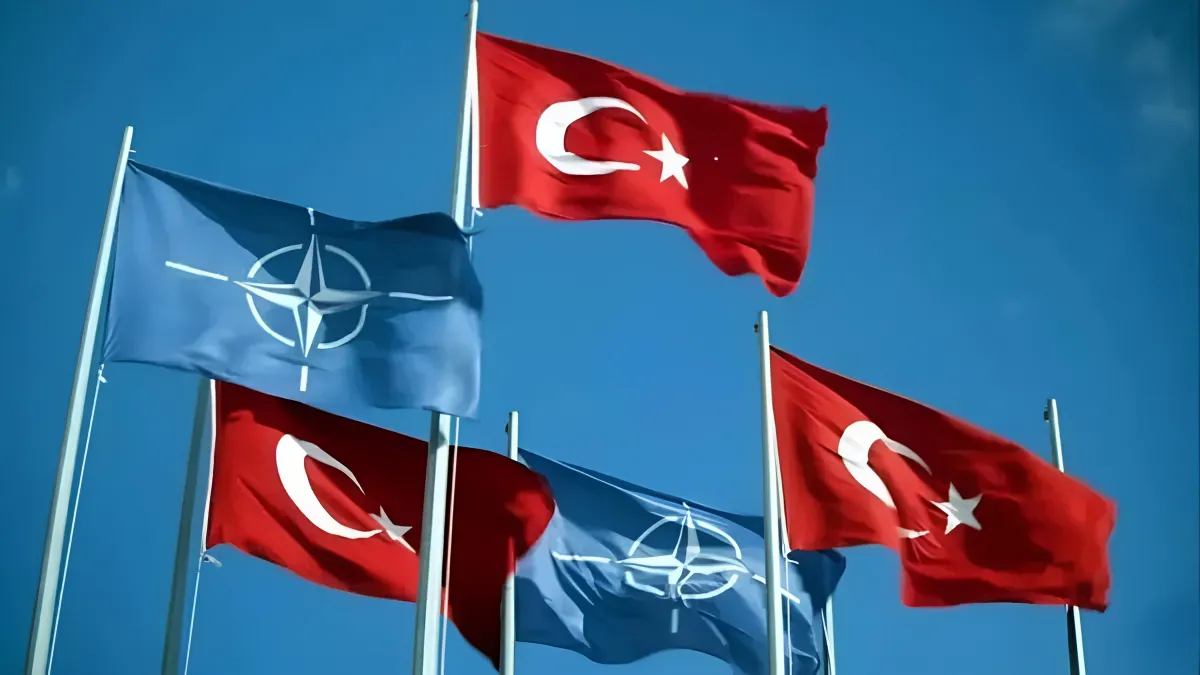
Erdoğan made the case directly in Ankara, saying restrictions among allies on defense cooperation, especially in the defense industry, must be lifted. He also warned that European security initiatives should complement NATO and should not exclude non-European Union allies with relevant capabilities.
Türkiye presents capability alongside access demands
Türkiye also used the summit to present itself as a capability provider, not only a restricted buyer. Erdoğan told allies that Türkiye has Europe's largest land force, contributes to NATO operations, missions and exercises, and has played active roles in Kosovo, the Black Sea and the Baltics.
Air and missile defense was central to that pitch. Erdoğan said Türkiye had allocated an additional $24 billion for its Steel Dome project, placing Ankara's domestic air-defense architecture inside NATO's capability debate.
He also proposed a NATO-accredited Countering Unmanned Systems Center of Excellence in Türkiye. The offer matched the summit's drone agenda, where NATO leaders and industry focused on counter-drone systems, uncrewed platforms, surveillance and battlefield lessons from Ukraine.
Procurement becomes the access test
NATO Secretary General Mark Rutte used the summit's closing phase to push the alliance from spending targets into delivery. He said the Ankara forum produced more than $50 billion in procurement deals in one day and tied that figure to faster production, industry cooperation and deployable systems.
The procurement map included GlobalEye airborne warning and control aircraft, MQ-4C Triton high-altitude surveillance drones, A330 Multi Role Tanker Transport aircraft, A400M airlift cooperation and NATO Drone Edge, the alliance's plan to accelerate drone and counter-drone capability.
Rutte also announced a €27 billion fuel supply-chain investment covering storage, distribution infrastructure, new facilities and pipelines reaching NATO's eastern flank. The package moved the summit's production agenda beyond platforms and into the logistics needed to move and sustain forces.
The industry forum made procurement, market access and industrial speed part of the same alliance conversation. That gave Ankara room to argue that Türkiye cannot be treated as a frontline NATO contributor while remaining outside parts of the allied defense bargain.
Greece, Cyprus and Israel press the regional brakes
The access file still faces hard brakes outside Ankara. U.S. law continues to block Türkiye's return to the F-35 program while the S-400 dispute remains unresolved, and Rutte left that question in the Washington-Ankara channel by describing the S-400 issue as primarily bilateral between Türkiye and the United States.
Bosphorus News reported separately that Greek Prime Minister Kyriakos Mitsotakis returned from Ankara facing domestic pressure over Türkiye's possible F-35 return, after Athens pointed to U.S. legal barriers, Congress and Israel rather than demanding a direct U.S. block on any sale.
Mitsotakis also brought the Aegean back into the NATO setting. He pointed to Türkiye's 1995 parliamentary position treating a Greek extension of territorial waters in the Aegean to 12 nautical miles as a cause for war, calling it a historical irregularity and tying the F-35 debate to good-neighborly relations inside the alliance.
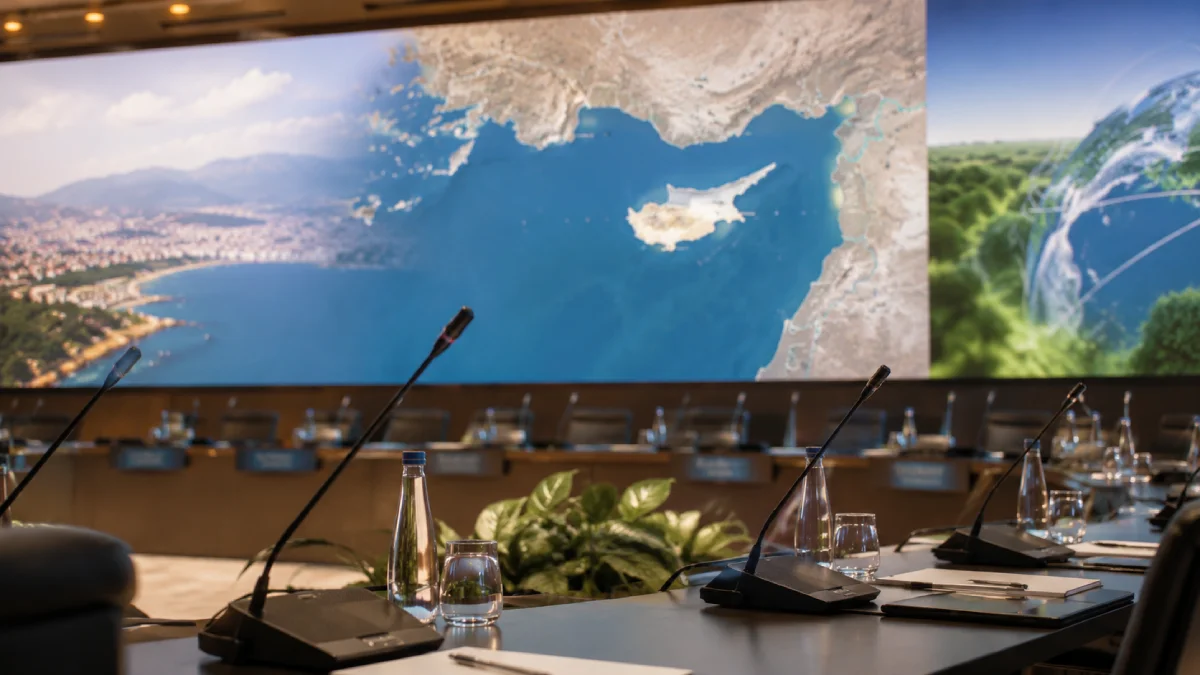
The Cyprus track added another regional constraint. Republic of Cyprus officials linked Erdoğan's EU contacts in Ankara to Türkiye's Cyprus-related obligations, while Greek Cypriot media tied the F-35 debate to U.S. congressional objections and Netanyahu's warning that advanced aircraft for Türkiye would affect the regional air-power balance.
Israeli opposition remained visible. Reuters reported that a planned Hegseth-Netanyahu discussion over a possible F-35 sale to Türkiye was canceled, while the wider file still faced resistance from Israel and parts of Congress. Trump opened the political channel, but legal, congressional and regional resistance still shape the aircraft file.
European and bilateral tracks stay live
The European side of Türkiye's access file was already active before the declaration. Bosphorus News reported this week that France had become more open to a possible SAMP/T sale to Türkiye, according to Reuters, moving a long-stalled Franco-Italian air-defense project into the same NATO market-access debate.
That file is not settled. France has not publicly approved a sale, and any SAMP/T move would touch Italy, Greece, the Republic of Cyprus and the future structure of Türkiye's Steel Dome architecture. It still shows that Ankara's defense-access push is moving on both U.S. and European tracks.
The summit also produced a bilateral layer with the United Kingdom. Türkiye and the UK signed a Security and Defense Partnership covering politico-military consultations, military cooperation, defense industry and technology, cyber, hybrid threats, counterterrorism, resilience, civil preparedness and space.
The UK also used the summit to launch a deep precision-strike initiative with European partners, worth more than $50 billion over 10 years. The program sat inside the same production logic that shaped Ankara: allies are trying to build range, stockpiles and industrial depth while NATO presses industry to move faster.
Ukraine, Hormuz and other summit files
Ukraine stayed inside the declaration as a separate commitment. NATO allies pledged €70 billion in military equipment, assistance and training in 2026 and said they intended to maintain at least the same level in 2027.
Trump also used his Ankara meeting with Ukrainian President Volodymyr Zelenskyy to discuss air defense. Associated Press reported that Washington would license overseas production of Patriot air-defense systems for Ukraine, adding another production item to the summit's military agenda.
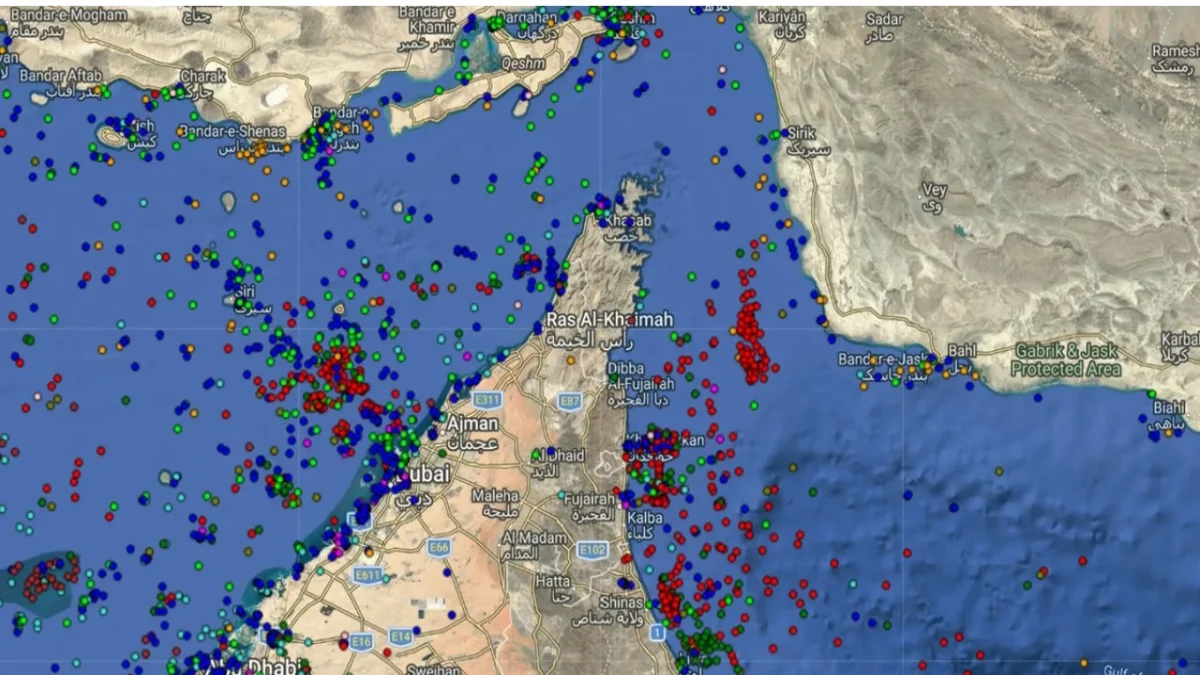
The declaration moved Iran and the Strait of Hormuz into NATO's southern-flank language. Allies said Iran must not acquire nuclear weapons and called for full respect for freedom of navigation in the waterway, while maritime risk near Oman and Hormuz remained elevated.
Other summit files stayed on the margins but helped define the political map. Trump's criticism of Spain's defense-spending position added noise, while NATO's official text kept the focus on Article 5, procurement, Ukraine and allied defense production. Trump revived his Greenland remarks during summit week, but the issue stayed outside the Ankara declaration. Syria's Ahmad al-Sharaa appeared in the summit diplomacy stream, without overtaking Türkiye's defense-access push or NATO's procurement agenda. Erdoğan's contacts with Emmanuel Macron and Giorgia Meloni mattered mainly through the SAMP/T and European defense-access file. Czech reservations around Ukraine funding showed that the €70 billion pledge will still face national political tests after NATO placed it in the Ankara record.
Day One reopened the U.S. channel. Day Two widened the file into NATO language, European air defense, Greek and Israeli objections, and alliance procurement rules.
The summit did not return Türkiye to the F-35 program, remove CAATSA restrictions or approve SAMP/T. It gave Ankara a larger framework for the same demand: if NATO wants more production, more air defense and more burden-sharing, Türkiye wants fewer allied barriers inside the defense market.
Sources: NATO, Türkiye's Directorate of Communications, Reuters, Associated Press, TRT Haber, Greek Prime Minister's Office, PASOK, Kathimerini, Protothema, Cyprus Mail, UK Government, UKMTO/JMIC, Bosphorus News review and reporting.
Read Yesterday's Bosphorus News XTRA NATO brief: Day One: Trump Opens F-35 Door.