
By Bosphorus News Geopolitics Desk
A drone attack on a Turkish-flagged cargo ship has brought the Black Sea shipping war closer to Türkiye's commercial routes and made Ankara's position between Moscow and Kyiv more difficult.
In Brussels, European Commission Executive Vice-President Raffaele Fitto met UN Cyprus envoy María Ángela Holguín as the European Union sought a more direct role ahead of her Ankara talks and António Guterres' visit to the island.
Türkiye also entered a period of domestic political uncertainty after Özgür Özel announced plans to establish a new party that could take much of the CHP's parliamentary group with him.
Black Sea Shipping Risk Deepens for Türkiye
A Turkish-flagged cargo ship carrying Russian coal to Trabzon was damaged in a drone attack in the Black Sea, with two injured crew members evacuated after the vessel reached waters off Samsun.
The operator of the Reyhan Sarı said the ship was attacked while under way on July 22 but remained operational and continued sailing under its own power. Damage was reported in its communications systems.
The exact location of the strike and the identity of the attacker remained unclear. Initial reports placed the incident in different parts of the Black Sea, and no side had claimed responsibility by the time of publication.
The attack follows a series of Russian and Ukrainian operations against ports, tankers, grain ships and commercial infrastructure.
Turkish vessels carry Russian energy products, Ukrainian agricultural goods and cargo moving between Black Sea ports and the Turkish Straits. As those routes become more exposed, Ankara faces increasing pressure to protect commercial traffic without appearing to side with either Moscow or Kyiv.
Türkiye has repeatedly called for civilian navigation to remain outside the conflict. The attack on the Reyhan Sarı shows how difficult that position is becoming, with the widening maritime conflict raising risks for Türkiye's ships and trade routes while making Ankara's diplomatic position harder to sustain.
EU and UN Cyprus Tracks Move Into Direct Coordination
European Commission Executive Vice-President Raffaele Fitto met UN Cyprus envoy María Ángela Holguín in Brussels on Wednesday as the European Union moved into a more structured role in the Cyprus process.
The meeting was listed in the Commission's official calendar.
Fitto was designated as the Commission's Special Representative for Cyprus on July 13. His mandate includes contributing to the settlement process within the UN framework, working closely with Holguín and engaging the parties involved.
The Commission said he would help prepare the ground for renewed negotiations, support confidence-building efforts and promote a comprehensive settlement based on UN Security Council resolutions and European Union law.
The meeting was the first public contact between Holguín and the Commission's newly designated representative.
The Turkish Cypriot side argues that the EU cannot act as a neutral participant because the Republic of Cyprus is a member of the bloc while Turkish Cypriots are not represented in its institutions.
Turkish Cypriot leader Tufan Erhürman has also said his side will not enter another formal process without clear rules, an agreed method and concrete confidence-building measures.
Türkiye and the Turkish Cypriot side want sovereign equality, equal international status and security guarantees addressed before negotiations resume. The Greek Cypriot side supports a return to talks within the established UN framework.
Holguín's Brussels-Ankara tour will test whether the sides' red lines can support a new UN process before Guterres arrives on the island.
Holguín is expected to meet Turkish Foreign Minister Hakan Fidan in Ankara on Friday. Guterres is scheduled to visit Cyprus from July 27 to 29.
No new negotiating framework has been announced, and the main differences over political status, procedure and the EU's role remain unresolved.
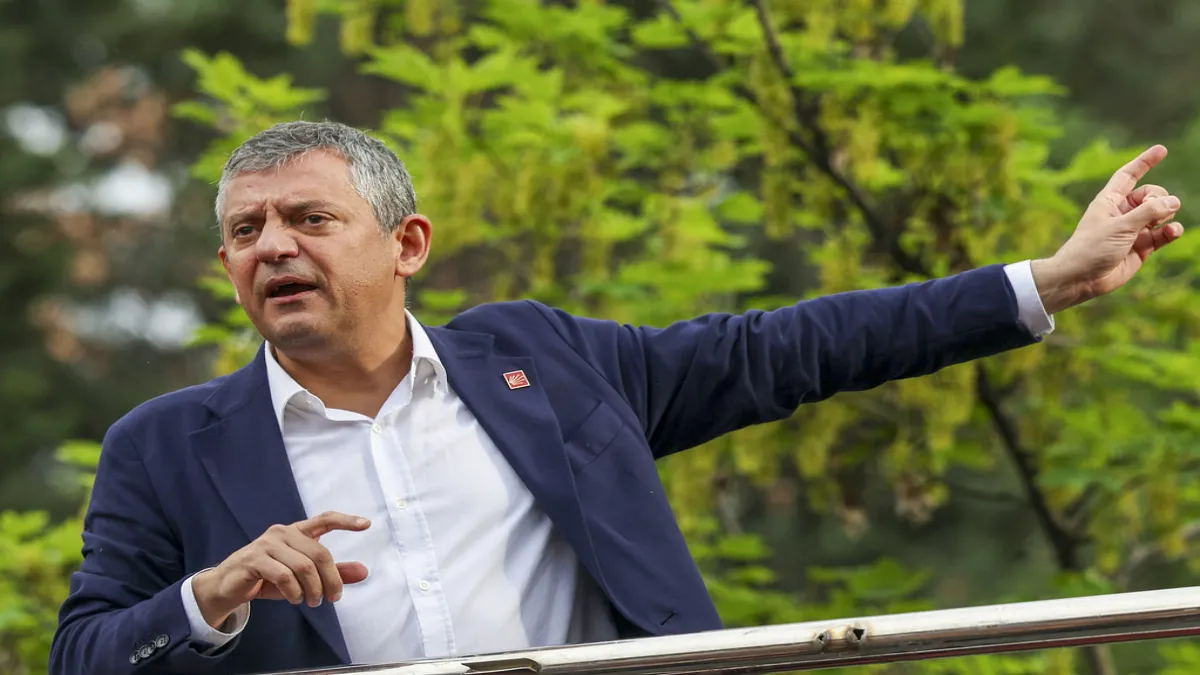
Özgür Özel Breakaway Could Reshape Türkiye's Opposition
Özgür Özel has announced plans to leave the Republican People's Party and establish a new political party, opening the way for much of the CHP's parliamentary group to move into a separate opposition structure.
Speaking at what he described as his final CHP group meeting, Özel said he would consult provincial chairs, lawmakers and elected party officials before formally establishing the new organisation.
More than 80 lawmakers attended the meeting, although the number expected to join the new party has not been confirmed.
A transfer on that scale would make the new organisation the largest opposition group in parliament.
Kemal Kılıçdaroğlu would retain control of the CHP's historic name, headquarters and legal identity, while Özel could take much of its parliamentary strength and the political momentum generated by the party's 2024 local election victory.
A large-scale transfer would affect speaking rights, committee representation and the formal status of the main opposition party.
It could also change the arithmetic around an early election. Parliament requires 360 votes to call an early presidential election, while the governing alliance does not hold that number on its own.
Özel's planned breakaway could transfer the CHP's parliamentary majority into a new political organisation and make it Türkiye's main opposition force.
The party's name, founding list and registration date remain unconfirmed.
Türkiye Helped Block a Kurdish Front Against Iran
Iranian Foreign Minister Abbas Araghchi has credited Türkiye with helping prevent armed Iranian Kurdish groups based in Iraq from opening a new front against Iran during the war.
Araghchi said Ankara contacted the United States and opposed the involvement of Kurdish armed groups.
He also said he spoke with Turkish Foreign Minister Hakan Fidan, Iraqi Prime Minister Mohammed Shia al-Sudani, Kurdistan Democratic Party leader Masoud Barzani and Patriotic Union of Kurdistan leader Bafel Talabani.
Türkiye and the United States have not publicly confirmed his full account.
The remarks broadly match statements made by Fidan in March, when he said Türkiye was monitoring claims that Kurdish groups could be mobilised against Tehran.
Fidan said he raised the issue with U.S. Secretary of State Marco Rubio and maintained contacts with Kurdish political leaders in Iraq.
Türkiye's immediate concerns are PJAK activity, border security, migration and the risk of wider instability.
A conflict involving Iranian Kurdish armed groups could increase Party for a Free Life in Kurdistan activity and weaken security coordination along Türkiye's eastern frontier.
PJAK is linked to the Kurdistan Workers' Party, which is designated as a terrorist organisation by Türkiye, the United States and the European Union.
Araghchi's account places Türkiye at the centre of efforts to block a Kurdish front against Iran.
His comments do not establish who proposed the operation, which groups were expected to take part or how far the discussions progressed.
Hormuz and Bab el-Mandeb Form a Two-Chokepoint Crisis
Commercial traffic through the Strait of Hormuz has fallen to extremely low levels as security fears continue to restrict energy shipping.
Only a small number of commodity vessels were reported to have crossed the strait on Tuesday, with no major crude oil tanker or liquefied natural gas carrier identified among them.
Houthi threats against vessels using Saudi ports have also placed pressure on the Red Sea and Bab el-Mandeb route.
The group warned shipping companies against loading or discharging cargo at Saudi ports and threatened action against vessels that ignored the order.
Some tankers carrying Saudi crude towards Asian markets changed course after the warning.
Saudi Arabia uses its east-west pipeline to move crude from the Gulf coast to the Red Sea port of Yanbu, reducing its dependence on Hormuz but exposing those shipments to a separate threat in the Red Sea.
Restrictions at Hormuz are limiting Gulf energy exports from the east, while Houthi action could disrupt Saudi shipments from the west.
Even without a confirmed attack on Saudi cargo, vessel rerouting and changes in tracking behaviour are pushing up freight, insurance and security costs.
Southern Lebanon Withdrawal Enters Field Test
The first phase of a U.S.-brokered arrangement for Israeli withdrawal from parts of southern Lebanon has moved into field implementation.
Lebanese forces entered or expanded their presence in pilot areas including Zawtar al-Gharbiyeh, where the government presented the deployment as a transfer of security responsibility.
The process also covers Froun and Srifa.
Its immediate significance remains disputed because Lebanese officials said some of the designated locations already had no permanent Israeli military presence.
The wider framework links Israeli withdrawal with Lebanese army deployment and the removal of Hezbollah military infrastructure.
Lebanon argues that Israel must first leave occupied areas before further progress can be made on the weapons issue. Israel wants guarantees that Hezbollah will not return to the evacuated zones.
A further round of Israeli-Lebanese talks is expected in Italy on August 4.
The harder test will come in areas where Israeli forces still maintain an operational presence.
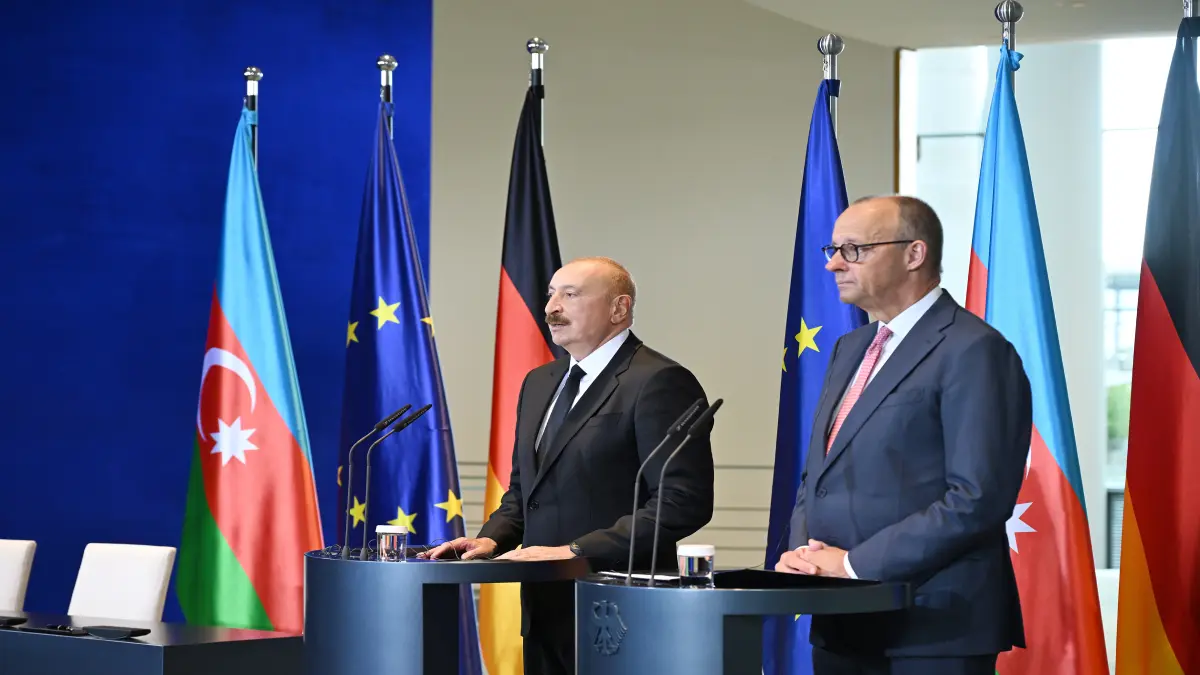
Baku Exposes Unofficial German-Russian Channel
Azerbaijani President Ilham Aliyev has confirmed that former senior German politicians met current and former Russian officials in Baku without informing the Azerbaijani government.
Aliyev said Azerbaijani authorities examined flight records after German media reported the meeting.
The German participants included former Chancellery chief Ronald Pofalla and former Social Democratic Party chairman Matthias Platzeck.
The Russian group included former prime minister Viktor Zubkov and Valery Fadeyev, chairman of Russia's Presidential Human Rights Council.
German Chancellor Friedrich Merz said he had no knowledge of the talks. Berlin also denied that the meeting was an official government initiative.
The Russian participants have not publicly explained the purpose or content of the contact.
Azerbaijan's disclosure that its territory had been used without notice for the German-Russian talks prevents Baku from being presented as a consenting intermediary.
The available evidence confirms that the meeting took place, but not whether either delegation carried an official mandate.
German Deportation Raises New Uyghur Questions
Germany has deported a 21-year-old Uyghur reported to hold Turkish citizenship to China, raising questions over why he was not sent to Türkiye instead.
The man was reportedly detained or questioned after arriving in China.
German authorities have not publicly explained why China was selected as the destination.
The case comes amid concern over the treatment of Uyghurs living abroad and the use of confidential security assessments in deportation proceedings.
China's announcement that Türkiye had agreed to deepen law-enforcement and security cooperation has already raised questions because Ankara has not published a matching account of the talks.
There is no evidence linking the July 16 Türkiye-China consultations directly to the German deportation.
The case shows how confidential security designations and third-country deportations can leave Uyghurs exposed to eventual transfer to China.
Türkiye has historically hosted one of the world's largest Uyghur communities, making the treatment of dual nationals and deportation cases politically sensitive.
Strategic Take
Türkiye's room for manoeuvre is narrowing.
Attacks on commercial shipping are bringing the Black Sea war closer to Turkish routes. Instability around Iran is increasing pressure on Türkiye's eastern border, while the Cyprus process is placing Ankara back at the centre of a diplomatic dispute that remains far from settlement.
The domestic picture is also becoming less predictable. Özgür Özel's planned breakaway could divide the CHP between its legal identity and much of its parliamentary representation.
Türkiye maintains channels with Moscow, Kyiv, Tehran, Baghdad, Washington and both sides in Cyprus. Their value now depends on whether they can limit risks to Turkish shipping, border security and domestic stability.
Sources: European Commission, Türkiye's Foreign Ministry, United Nations statements, Lebanese government statements, Azerbaijani presidential statements, German government statements, Iranian media, shipping and operator statements, Bosphorus News reporting and review
Read yesterday's brief: Eastern Mediterranean Strategic Brief | July 21, 2026