
By Murat Yıldız
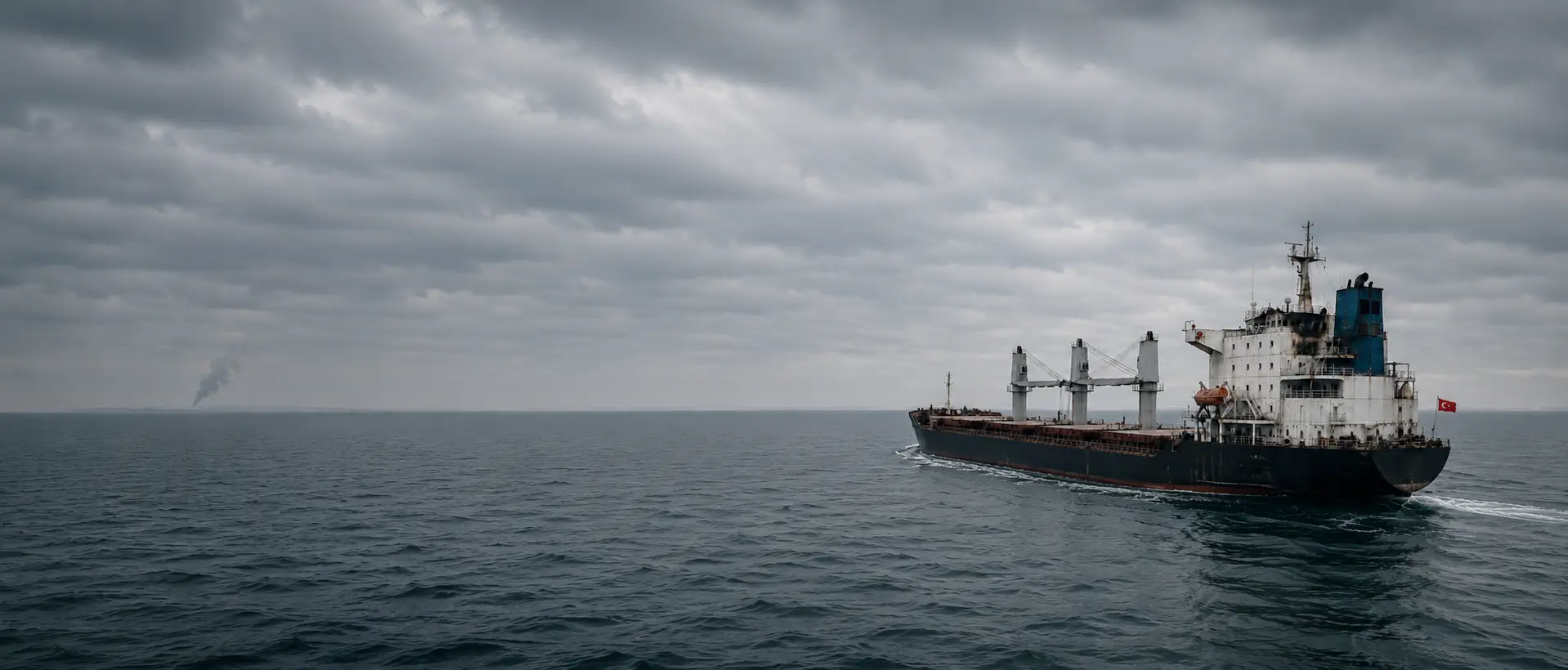
On July 22, 2026, the Turkish flagged bulk carrier Reyhan Sarı was damaged in a drone attack while carrying coal from Russia's Taman port to Trabzon, extending the Black Sea maritime conflict directly to a vessel operating under the Turkish flag.
The operator said the ship remained operational despite damage to its communications systems. Two injured crew members were evacuated by helicopter after the vessel reached waters off Samsun. Conflicting reports left the casualty count and strike location unresolved, while no government had claimed responsibility or established whether the ship was deliberately targeted, as Bosphorus News reported.
The incident came as Russia and Ukraine intensified reciprocal attacks against ports, ships and maritime logistics across the Black Sea and Sea of Azov.
Russian missiles and drones have repeatedly struck Ukrainian port infrastructure and commercial vessels sailing under foreign flags. Ukrainian forces, meanwhile, have attacked Russian tankers, cargo ships and logistics routes connected to oil exports, grain shipments and wartime supply networks.
Ukraine says its maritime campaign is directed at vessels and infrastructure supporting Russia's military operations and export revenues. Moscow describes attacks on tankers, cargo ships and grain routes as attacks on civilian commerce.
The competing accounts matter because the maritime conflict increasingly involves vessels carrying commercial cargo, operating under third country flags or employing foreign crews.
Repeated attacks have disrupted operations at Odesa, Chornomorsk and Pivdennyi, the main ports supporting Ukraine's grain, vegetable oil and metals exports. Terminals and storage facilities have been damaged, loading operations interrupted and some cargo redirected through alternative routes.
The result is severe disruption rather than the complete closure of Odesa or the total suspension of Ukrainian maritime exports. As Bosphorus News reported in its review of the Black Sea shipping crisis, the attacks have reduced available capacity and increased pressure on freight, insurance and commodity markets.
Ukraine's attacks on Russian maritime traffic have also affected commercial movement in the Sea of Azov and the eastern Black Sea. Russian authorities and industry sources have reported interruptions to shipping and contingency planning for grain and energy exports.
The reciprocal campaign is turning a wider section of the Black Sea into a shared commercial risk zone. Ships may be exposed because of their ownership, flag, cargo, port of departure or perceived connection to one side's economic and military network.
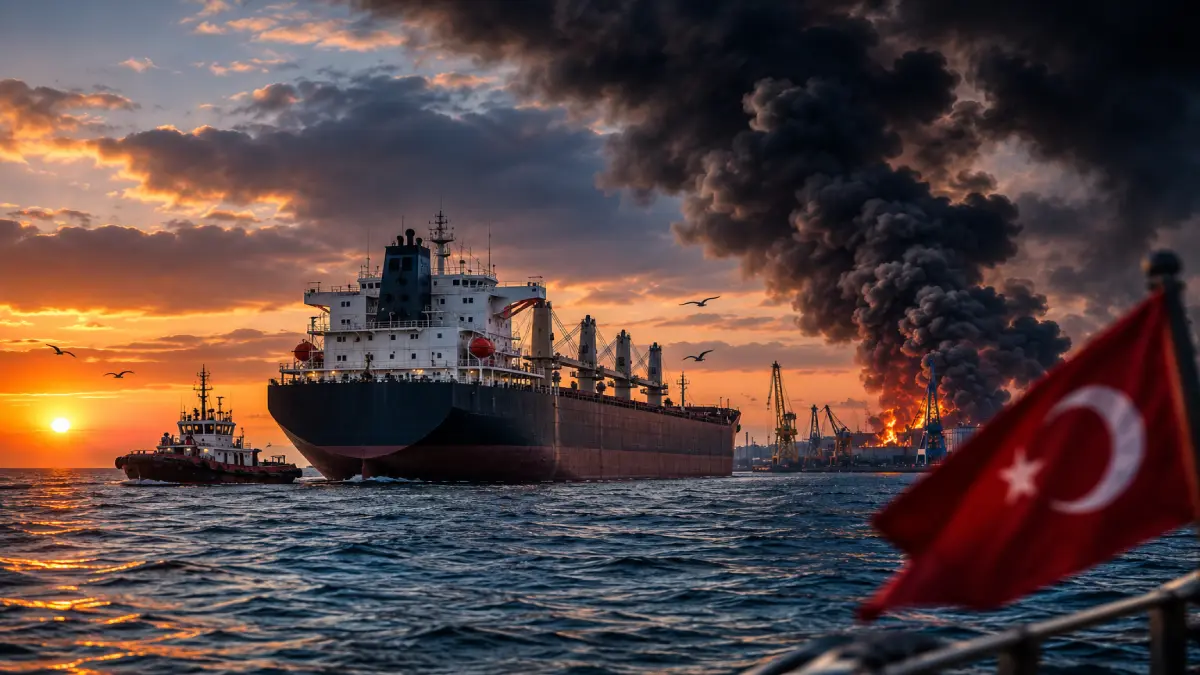
Türkiye has been drawn into that risk through ownership, crews, trade routes and now the Turkish flag itself.
On May 28, a dry cargo vessel owned by a Turkish company and sailing under the Vanuatu flag was attacked while travelling from Odesa toward Türkiye. Two Turkish crew members were lightly injured.
A second vessel owned by a Turkish company and sailing under the Panamanian flag was struck near Chornomorsk on June 22. Two Turkish citizens were injured.
Türkiye called for steps to reduce tensions and protect civilian navigation but did not publicly identify the attacker in either case.
Russian Foreign Minister Sergey Lavrov later pressed Ankara to take a stronger public position against Ukraine. He connected the incidents involving ships owned by Turkish companies to Kyiv's wider campaign against Russian maritime traffic and logistics.
Türkiye did not accept Moscow's attribution publicly. Ankara instead conveyed concerns to both Russia and Ukraine while maintaining that responsibility should not be assigned without verified evidence, as Bosphorus News reported following Lavrov's intervention.
The distinction between ownership and flag has become more significant with the Reyhan Sarı attack.
The vessels struck in May and June were owned by Turkish companies but sailed under foreign flags. Reyhan Sarı was operating under the Turkish flag while transporting ordinary commercial cargo between Russia and Türkiye.
On November 28, 2025, Ankara raised "grave concern" after the KAIROS and VIRAT tankers were attacked inside Türkiye's exclusive economic zone.
Foreign Ministry spokesperson Öncü Keçeli said the incidents had "posed serious risks to navigation, life, property and environmental safety in the region," adding that Türkiye was in contact with the relevant parties to prevent further escalation in the Black Sea.
The warning has gained fresh relevance as the danger has expanded from tankers linked to sanctions evasion near Turkish waters to ships owned by Turkish companies near Ukrainian ports and, most recently, a cargo vessel sailing under the Turkish flag and carrying coal from Russia to Türkiye.
Türkiye's concerns extend beyond the identity of individual ships.
The Black Sea carries energy products, grain, coal and other bulk cargo central to Turkish trade. Turkish companies own vessels registered under several flags, while Turkish crews work aboard ships serving both Russian and Ukrainian routes.
Each attack can increase war risk insurance, freight costs and pressure on shipowners to reconsider routes. Damage to tankers near Türkiye's coastline also carries the risk of a major oil spill and long term harm to the Black Sea environment.
Ankara faces a parallel diplomatic problem.
Russia wants Türkiye to condemn Ukrainian maritime attacks more explicitly. Ukraine argues that its operations are intended to weaken Russia's military supply system and export income. Türkiye continues to maintain political and commercial relations with both countries while calling on each side to keep civilian navigation and critical infrastructure outside the conflict.
The Reyhan Sarı attack sharpens that dilemma. Russia is damaging Ukraine's port and export network, while Ukraine is striking Russian shipping and maritime logistics. Vessels connected to Türkiye have now been exposed through ownership, crews, trade routes and the Turkish flag itself.
Sources: Bosphorus News reporting and review, Türkiye Ministry of Foreign Affairs, Reuters