
By Bosphorus News Geopolitics Desk
Houthi threats against vessels using Saudi ports opened a second front against Gulf energy exports as traffic through the Strait of Hormuz remained severely restricted. In the Black Sea, the confirmed death toll from a strike on a Turkish-linked grain ship reached 10, yet the attack drew a limited public response from Ankara.
Türkiye also said its S-400 dispute with the United States was closer to resolution, while the UN's Cyprus envoy prepared meetings in Brussels and Ankara ahead of António Guterres' visit to the island.
Houthi Threats Put Saudi Red Sea Route under Pressure
Yemen's Houthi movement warned shipping companies not to load or discharge cargo at Saudi ports, threatening vessels that ignore the order with sanctions and possible attack wherever they fall within the group's operational reach.
The warning was distributed to shipping companies by the Houthi-run Humanitarian Operations Coordination Center after the group declared what it called a naval blockade against Saudi Arabia.
At least two tankers carrying Saudi crude towards India and China changed course following the warning. Saudi Aramco continued loading at the Red Sea port of Yanbu, although some vessels took additional precautions, including switching off tracking signals.
The threat places new pressure on a route Saudi Arabia uses to reduce its exposure to the Strait of Hormuz. Crude can be moved by pipeline from the Gulf coast to Yanbu and then shipped through the Red Sea and Bab el-Mandeb.
That alternative is now exposed to Houthi action as Hormuz traffic remains close to paralysis. Disruption at both waterways would restrict Saudi exports from the east and west at the same time and increase the cost of moving Gulf energy to Europe and Asia.
Saudi Arabia rejected the Houthi declaration and said it would defend its maritime interests. U.S. President Donald Trump also warned that Washington would respond if the group attempted to block Saudi shipping.
The warning has already altered vessel behaviour without a confirmed attack on a Saudi cargo. That alone raises insurance, freight and security costs across a route intended to serve as an alternative during a Hormuz emergency.
Ten Killed on Turkish-Linked Ship as Ankara Keeps a Low Profile
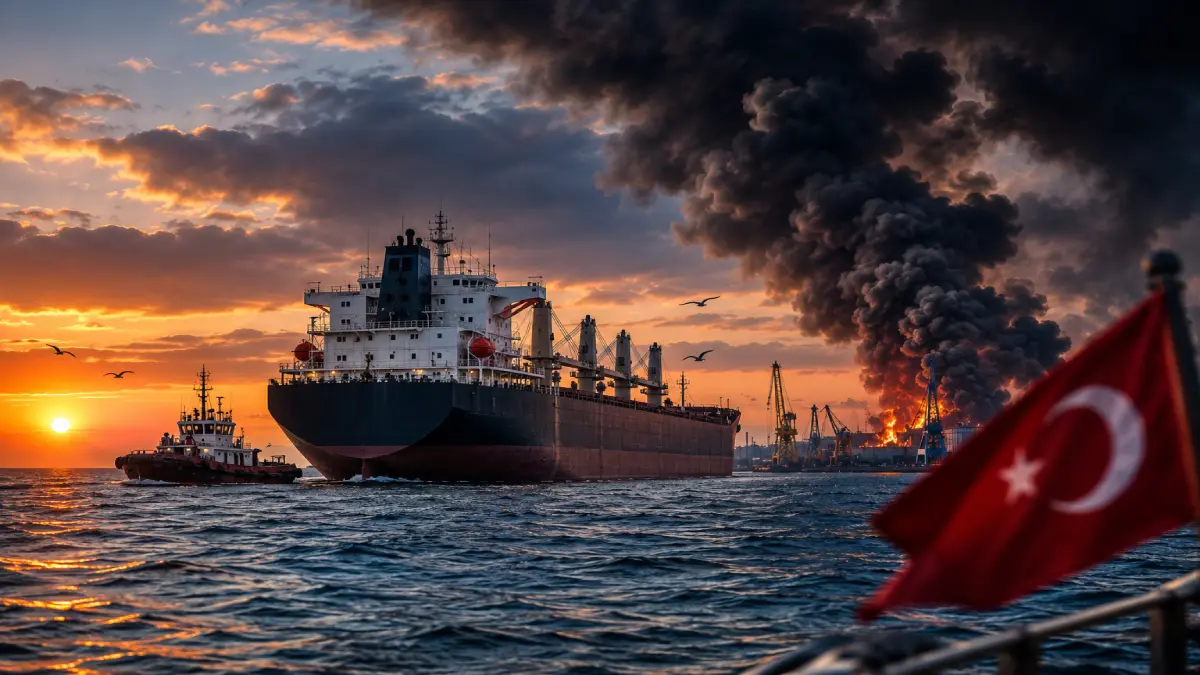
A Russian missile strike on the Guinea-Bissau-flagged Golden Leo near Odesa killed nine crew members and a Ukrainian maritime pilot, Ukrainian authorities said.
The vessel was hit by three cruise missiles while carrying corn. Eight of its 17 crew members were rescued after an overnight search-and-rescue operation.
The crew included Indian and Syrian nationals. Ukrainian officials and some media reports described the ship as Turkish-owned, although international reporting identified an India-based registered owner. The safer assessment is that it had reported Turkish commercial links.
The confirmed death toll of 10 makes the attack the deadliest incident in the latest escalation against foreign commercial shipping in the Black Sea.
The scale of the attack was not matched by an equally visible response in Türkiye. No separate Turkish Foreign Ministry statement addressing the Golden Leo strike had been identified by the time of publication.
Ankara has issued formal statements after previous attacks that injured Turkish seafarers or struck Turkish-owned vessels. It has also warned Russia and Ukraine against operations that threaten navigation, energy infrastructure and Türkiye's interests in the Black Sea.
There is no evidence that the Golden Leo attack was deliberately concealed by Turkish authorities or media. It was, however, underplayed in Türkiye's public debate relative to the death toll and the vessel's reported commercial connection to the country.
The limited response comes as other states become more vocal. Kazakhstan strongly condemned attacks on civilian tankers carrying crude through the Caspian Pipeline Consortium system, describing them as an attack on its economic interests and international energy trade.
Astana did not criticise Türkiye. Its demand for stronger international action nevertheless adds pressure on Black Sea states and partners to respond more visibly as attacks expand from ports and naval targets to grain ships, oil tankers and loading terminals.
Türkiye occupies a distinct position. It is a Black Sea coastal state, controls passage through the Turkish Straits and maintains political channels with both Moscow and Kyiv. Repeated attacks on foreign merchant ships are increasing scrutiny of whether Ankara will use that position to pursue a more active maritime security initiative.
Ankara Says S-400 Dispute Is Closer to Resolution
Türkiye is closer than before to resolving its dispute with the United States over the Russian-made S-400 air-defense system, Deputy Foreign Minister Levent Gümrükçü said.
The purchase led Washington to remove Türkiye from the F-35 fighter programme in 2019 and later impose sanctions under the Countering America's Adversaries Through Sanctions Act.
Gümrükçü said political and technical talks were continuing and that Ankara believed the issue could now be resolved. He declined to confirm reports that Türkiye may transfer the S-400 systems to the United Arab Emirates.
He said several options were being examined and that Türkiye was speaking with all relevant parties, including the United States and Russia.
Any transfer would require Russian consent under the terms governing the original sale. Ankara would also need assurances that removing the systems from Türkiye would lead to the lifting of U.S. sanctions and reopen access to the F-35 programme.
The reported progress does not amount to an agreement. Opposition remains in the U.S. Congress, where lawmakers have argued that Türkiye should not receive F-35 aircraft while retaining the S-400 system.
Türkiye has continued working that congressional channel. Bosphorus News previously reported that former defence minister Hulusi Akar met senior U.S. House figures as Ankara sought to rebuild support for defense cooperation and keep the F-35 issue active in Washington.
Gümrükçü's remarks show that Ankara is no longer presenting the dispute as frozen. The unresolved questions are whether a transfer mechanism can satisfy Russia and the United States, and whether the resulting arrangement can survive congressional scrutiny.
UN Cyprus Envoy Sets Brussels–Ankara Track before Guterres Visit
UN Cyprus envoy María Ángela Holguín will travel to Brussels and Ankara before Secretary-General António Guterres visits Cyprus next week.
Holguín is due to meet European Commission Cyprus envoy Raffaele Fitto in Brussels and is also expected to hold talks with European Council President António Costa.
She will then travel to Ankara for a meeting with Turkish Foreign Minister Hakan Fidan on Friday. The discussions are expected to cover the latest diplomatic contacts, the positions of the two sides and the agenda for Guterres' visit.
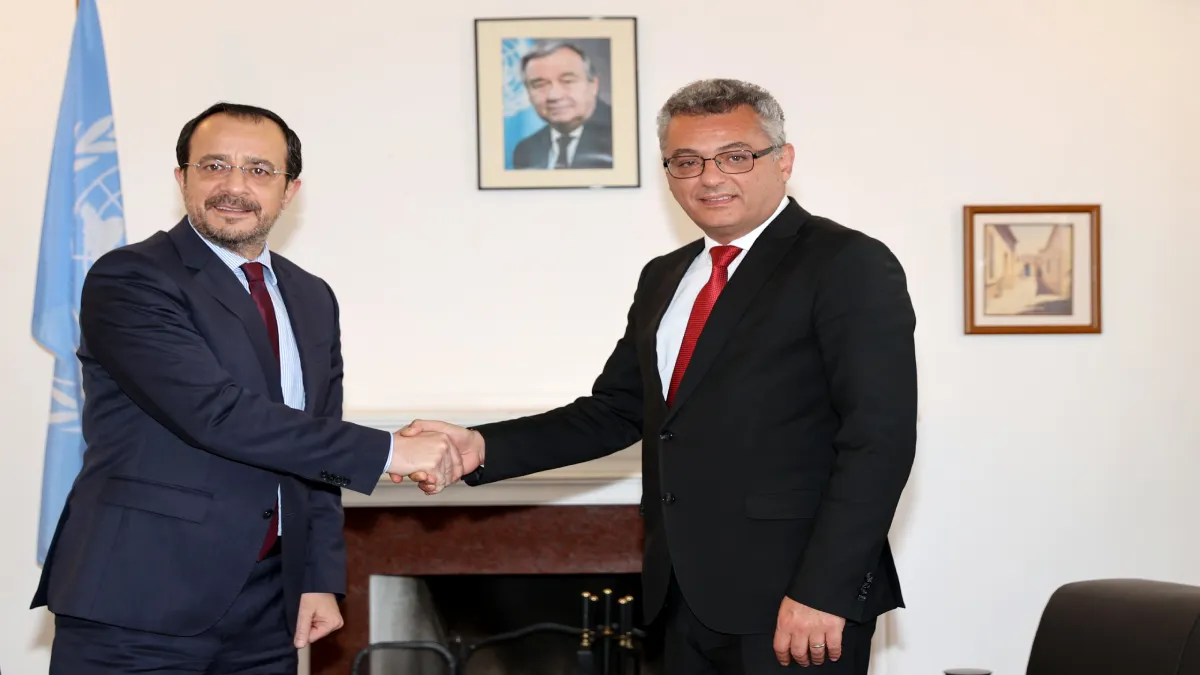
Guterres is scheduled to arrive in Cyprus on Monday. His programme includes an informal dinner with Greek Cypriot leader Nikos Christodoulides and Turkish Cypriot leader Tufan Erhürman, followed by separate meetings and a tripartite session.
The sequence brings the European Union, the United Nations and Türkiye into the same diplomatic track before the secretary-general reaches the island.
Bosphorus News previously reported that Holguín had resisted creating diplomatic momentum without corresponding political movement. Her position was that a broader negotiating format should follow concrete progress rather than substitute for it.
The Brussels and Ankara meetings will test whether the increased diplomatic activity has narrowed any of the core gaps over political equality, sovereignty and the basis for renewed negotiations.
No new negotiating framework or agreement between the sides has yet been announced.
Israel Begins Limited Pullback from Southern Lebanon
Pilot-zone operations linked to a phased Israeli withdrawal from southern Lebanon have begun under a U.S.-brokered framework.
The process covers the villages of Froun, Srifa and Zawtar al-Gharbiyeh, with the Lebanese army expected to assume security responsibility as Israeli forces leave and Hezbollah infrastructure is removed.
The practical scope remains disputed. Lebanese officials said two of the three locations already had no Israeli military presence, limiting the immediate territorial significance of the announcement.
The Lebanese army entered or expanded operations in the designated areas, while military coordination between the United States, Israel and Lebanon continued.
Lebanese President Joseph Aoun discussed the process with Trump at the White House. Trump said Israel had begun withdrawing and promised U.S. support for Lebanon.
The wider agreement links Israeli withdrawal with Lebanese army deployment and the disarmament of Hezbollah. Lebanon has argued that Israel must leave occupied areas before the weapons issue can advance, while Israel has demanded security guarantees preventing Hezbollah's return.
The pilot zones mark the start of implementation, not a complete withdrawal. The next test is whether the process expands to territory where Israeli forces maintain a clear operational presence.
Türkiye and Iraq Target 2026 Start for Development Road
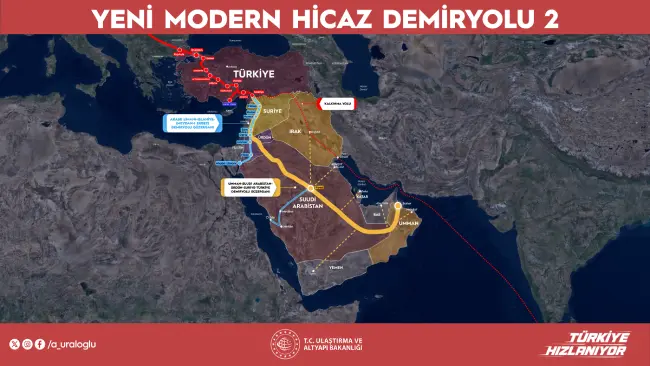
Türkiye and Iraq hope to begin the Development Road project before the end of 2026, Transport and Infrastructure Minister Abdulkadir Uraloğlu said after talks in Baghdad.
Uraloğlu said the project's technical preparation was close to completion and that only minor work remained. He described the start of construction as laying the foundation stone in Türkiye or placing the first stone in Iraq.
The main outstanding issue is financing. Uraloğlu said the Iraqi side had submitted proposals expected to be discussed during a future meeting between the Iraqi prime minister and President Recep Tayyip Erdoğan.
The project is intended to connect Iraq's Grand Faw Port to Türkiye and onward to Europe through rail, road and digital infrastructure. Türkiye, Iraq, Qatar and the United Arab Emirates signed a cooperation memorandum on the corridor in 2024.
Uraloğlu connected the project directly to the wars affecting surrounding transport systems. He referred to the Russia–Ukraine war and the conflict involving Iran, the United States and Israel as evidence that alternative corridors must be prepared before crises close existing routes.
The timing gives the project additional relevance. Shipping is under attack in the Black Sea, traffic through Hormuz is severely restricted and Houthi threats are placing the Red Sea route under new pressure.
The 2026 target remains conditional. No final financing package, construction award or confirmed groundbreaking date has been announced.
The Baghdad talks moved the project beyond a general strategic concept. Türkiye and Iraq are presenting the start of physical work as a near-term objective, with financing rather than technical design emerging as the principal remaining threshold.
Strategic Take
The maritime crises surrounding the Eastern Mediterranean are beginning to overlap.
Hormuz restrictions have disrupted Gulf oil and LNG movements. Houthi threats now place Saudi Arabia's Red Sea alternative under pressure, while attacks in the Black Sea are killing civilian seafarers and interrupting grain and energy flows.
Türkiye is responding unevenly across these files. It has remained restrained over the Golden Leo attack despite the vessel's reported Turkish commercial links and a death toll of 10. At the same time, Ankara is pursuing a possible S-400 settlement with Washington, entering a new round of Cyprus diplomacy and promoting the Development Road as a land-based trade alternative.
Türkiye retains channels to Russia and Ukraine, a place in U.S. defense negotiations, a formal role in the Cyprus process and the geography needed to connect Iraq with Europe.
Those positions carry practical value only when they produce secure maritime arrangements, enforceable defence agreements or financed transport infrastructure.
Sources: Reuters, Associated Press, Republic of Kazakhstan Ministry of Foreign Affairs, Caspian Pipeline Consortium, Cyprus Mail, TRT Haber, Bosphorus News reporting and review
Read Yesterday's brief: Eastern Mediterranean Strategic Brief | July 20, 2026