
By Bosphorus News Geopolitics Desk
Diplomacy over the Strait of Hormuz has produced its most detailed transit proposal since the war began, while Ankara has raised the pressure over attacks on civilian shipping in the Black Sea and joined Egypt and Qatar in a coordinated protest against Israeli operations in Gaza.
Senior Libyan security officials also held parallel talks in Ankara, Israel and Lebanon continued negotiations in Rome amid opposition from Hezbollah, and the Cyprus process entered another preparatory phase without a date for renewed formal talks.
Iran and Oman advance Hormuz transit proposal
Talks between Iran and Oman on restoring regular shipping through the Strait of Hormuz have advanced, although no final agreement has been reached and questions over control, fees and freedom of navigation remain unresolved.
US Secretary of State Marco Rubio said progress had been made and expressed hope that a breakthrough could come soon. Regional officials described an emerging arrangement under which ships would enter the Persian Gulf through a route controlled by Iran and leave through a separate route controlled by Oman.
The proposal also includes possible charges for security and environmental services, but negotiations are continuing and the final structure may differ from the model now being discussed.
US President Donald Trump has repeated his opposition to any system that would allow Iran to impose compulsory fees on vessels passing through the strait. Tehran says the negotiations are intended to establish secure two-way shipping routes while respecting the sovereignty and security concerns of Iran and Oman.
Qatar and Pakistan are supporting the mediation effort, whose immediate objective is to restore commercial traffic toward prewar levels.
The diplomatic signals pushed oil prices sharply lower on August 4. Brent crude fell by more than 5% to $79.36 a barrel, while West Texas Intermediate settled at $75.77 as markets responded to the prospect that an agreement could reduce pressure on Gulf exports, freight rates and maritime insurance.
Türkiye remains heavily exposed to imported energy costs and Gulf shipping conditions, meaning even a partial normalization could provide some relief. Bosphorus News previously examined how the Iran war lifted oil company earnings while increasing Türkiye's energy bill.
Türkiye protests attacks on two Turkish-owned Black Sea ships
Türkiye expressed serious concern after confirming that the Yaşar and Nadezhda, two civilian vessels owned by Turkish companies, were attacked by unmanned aerial vehicles after leaving Russia's Novorossiysk port on August 3.
The Foreign Ministry said a group of crew members, including Turkish citizens, had been injured and that their condition was being closely monitored.
Confirmation that two ships were involved widened an incident that was still developing when the previous brief was published. Ankara warned that the Russia-Ukraine war was spreading further into the Black Sea and increasingly affecting civilian shipping despite earlier calls for restraint.
The ministry urged all relevant actors, particularly Russia and Ukraine, to introduce concrete measures to protect maritime navigation, warning that further escalation could have wider consequences, including for food security.
Neither Russia nor Ukraine has claimed responsibility for the attacks.
The official statement follows the earlier attack on the Samsun-bound Nadezhda and comes amid restricted truck deliveries at grain terminals in Novorossiysk and Taman, along with mounting pressure on ships serving Russian Black Sea ports.
The warning carries added weight because of the volume of traffic moving through Turkish waters. Official data reviewed by Bosphorus News showed that more than 40,000 ships passed through the Turkish Straits during the first half of 2026.
Türkiye joins Egypt and Qatar in condemning Israel over Gaza
Türkiye, Egypt and Qatar issued a joint statement in their capacity as Gaza ceasefire mediators, condemning continued Israeli violations and, in particular, attacks on healthcare facilities and medical infrastructure.
The three countries said the targeting of medical sites and the resulting civilian casualties, including women and children, constituted a flagrant violation of international law and international humanitarian law.
They called for the protection of civilians, medical facilities and humanitarian personnel, as well as the unhindered delivery of aid and medical supplies throughout Gaza. The mediators also warned that continued violations could undermine efforts to implement the ceasefire's second phase after Hamas and other Palestinian factions accepted a roadmap that includes the confinement of weapons.
By acting alongside Egypt and Qatar rather than issuing a unilateral declaration, Ankara strengthened its criticism of Israel without stepping outside the mediation framework. The parties are now moving from the ceasefire's initial provisions toward the more difficult questions of withdrawal, disarmament and postwar governance.
A separate dispute has emerged over the order in which those steps would occur. The Board of Peace overseeing Gaza's transition says Israeli forces will not withdraw before Hamas completes disarmament, while Hamas insists it will not surrender its weapons before an Israeli withdrawal.
The disagreement threatens to delay the roadmap announced on July 30 and suggests that the second phase remains further from implementation than its initial presentation implied.
Foreign Minister Hakan Fidan is also due to attend a ministerial meeting on Jerusalem in Amman on August 5, extending Ankara's regional diplomacy beyond the Gaza mediation channel. No final declaration had been released at the time of publication.
Libyan security officials hold parallel talks in Ankara
Senior Libyan officials responsible for interior security, defense and national security held talks with Foreign Minister Hakan Fidan in Ankara on August 4.
Fidan received Government of National Unity Deputy Interior Minister Imad Trabelsi and separately met Deputy Defense Minister Abdulsalam Zubi and Ibrahim Dabaiba, national security adviser to Prime Minister Abdulhamid Dbeibah.
Türkiye's Foreign Ministry did not release a detailed agenda, although the range of officials involved suggests a broader security consultation rather than a routine bilateral meeting.
The talks took place as Libya prepares to host the Fourth Africa-Türkiye Partnership Summit in Tripoli on December 8-9. Bosphorus News reported that the gathering will open the next phase of Africa-Türkiye cooperation after the current joint action plan expires at the end of the year.
No official statement has connected the security meetings directly to the summit preparations.
Lebanon and Israel continue Rome talks amid Hezbollah pressure
Israeli and Lebanese delegations continued a seventh round of US-facilitated negotiations in Rome, with the meetings scheduled to run through August 6.
The talks are focused on implementing the June framework, including the expansion of pilot areas in southern Lebanon, Lebanese Armed Forces deployments and the pace of Israel's phased withdrawal.
Hezbollah leader Naim Qassem rejected the process, arguing that direct negotiations would produce further concessions and accusing President Joseph Aoun of abandoning the unifying role expected of the presidency.
Italian Foreign Minister Antonio Tajani urged the sides to maintain a constructive approach, while Lebanese Prime Minister Nawaf Salam said Beirut remained focused on securing successive Israeli withdrawals leading to a complete pullout.
No new agreement or timetable had been announced by early August 5.
As in Gaza, the central dispute concerns the order of implementation. Lebanon wants Israeli forces and operations removed from areas transferred to state control, while Israel seeks to retain the ability to act against perceived threats after withdrawing.
Türkiye and Greece raise wildfire readiness across the Aegean
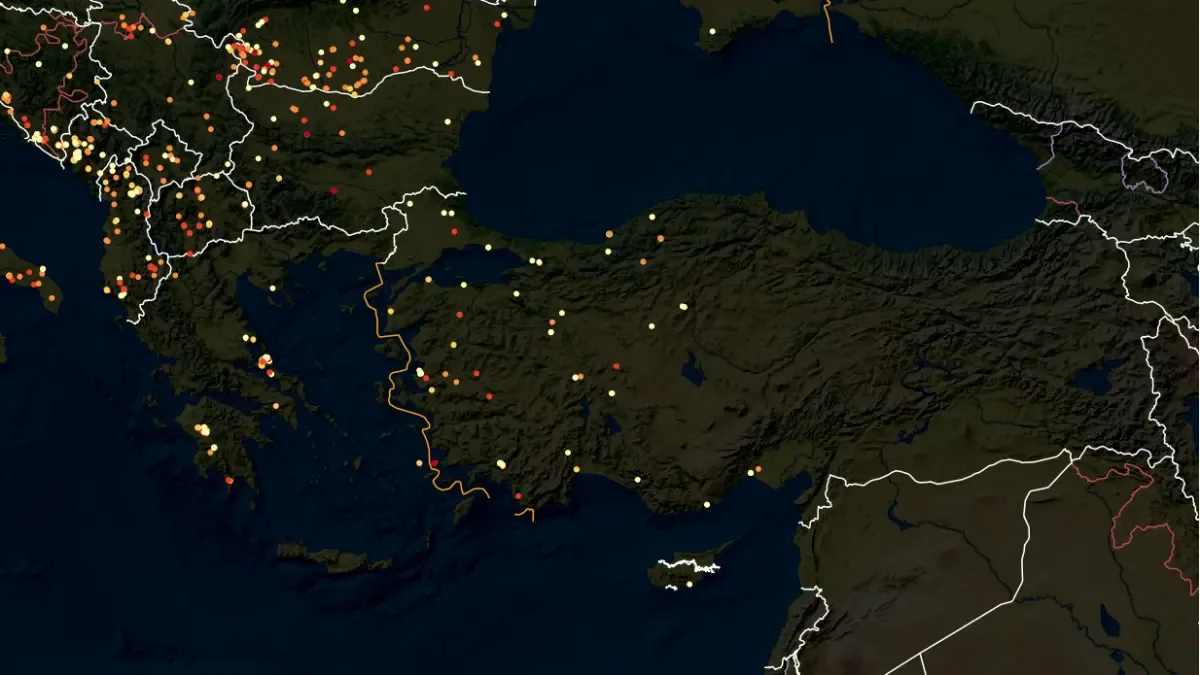
Türkiye and Greece increased wildfire readiness as strong winds, high temperatures and dry vegetation created a shared risk zone across the Aegean, prompting warnings in western Türkiye and alerts in Attica, Evia, Chios and Lesvos.
The weather system affecting both shores raises the possibility of simultaneous emergencies that could stretch firefighting capacity and complicate aerial operations.
Bosphorus News examined the cross-Aegean wildfire threat and the readiness measures introduced by Türkiye and Greece.
Cyprus talks remain in preparatory phase
The Cyprus process remains in a preparatory phase following UN Secretary-General Antonio Guterres' visit to the island and his separate meetings with Republic of Cyprus President Nikos Christodoulides and Turkish Cypriot leader Tufan Erhurman.
Christodoulides said preparations would continue during August, while European Union Cyprus envoy Raffaele Fitto remains involved. No date has been set for another enlarged meeting, which Guterres has said would require adequate work on confidence-building measures, methodology and substance.
Bosphorus News previously examined Guterres' rejection of a two-state settlement and the disputed accounts surrounding the latest Cyprus consultations.
Strategic Takeout
The emerging Hormuz proposal marks a shift from general calls for de-escalation toward an operational model for moving ships through a contested waterway. Yet Washington's opposition to Iranian control and compulsory fees means that the central sovereignty dispute has been managed, not resolved.
In the Black Sea, confirmation that two Turkish-owned vessels were attacked has pushed Ankara's response beyond concern for individual ships. By invoking navigation and food security, Türkiye has framed the incident as a threat to the commercial system connecting Russian ports, Turkish waters and wider supply chains.
Gaza and Lebanon are confronting variations of the same obstacle. Withdrawal, disarmament and the transfer of territory to state institutions are tied together, but the parties do not agree on which commitment must come first.
Ankara's activity across the Black Sea, Libya, Gaza and Jerusalem also reflects a broader pattern: Türkiye is attempting to protect its commercial exposure while maintaining access to the diplomatic channels shaping regional security.
Cyprus remains the quieter file. The process has not collapsed, but further movement depends on preparatory work rather than the opening of another formal negotiating round.
Sources: US Department of State, Associated Press, Republic of Türkiye Ministry of Foreign Affairs, Türkiye Directorate General of Maritime Affairs, Qatar Ministry of Foreign Affairs, Italian Ministry of Foreign Affairs, Office of the Lebanese Prime Minister, United Nations, Libyan Government of National Unity, Reuters, Bosphorus News review and reporting.
Read yesterday's brief: Eastern Mediterranean Brief – August 4, 2026: Cyprus, Lebanon, Hormuz