
By Bosphorus News Geopolitics Desk
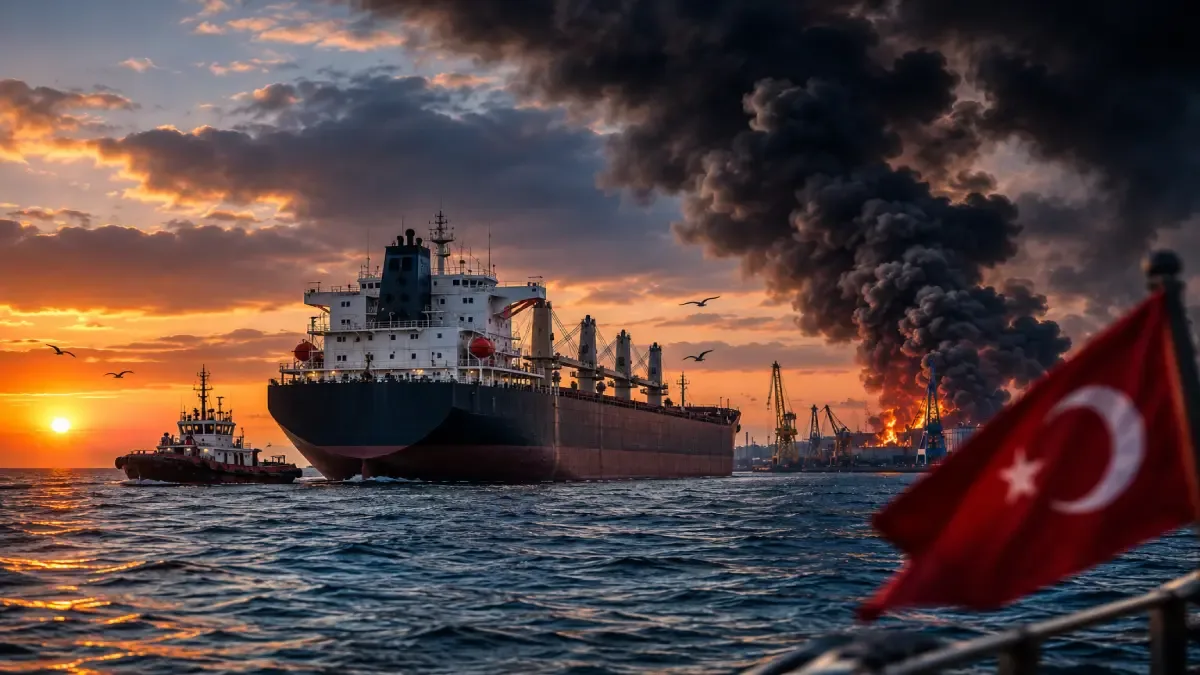
A drone struck the Ro-Ro cargo vessel Nadezhda as it sailed from Russia's Novorossiysk port to Samsun, seriously injuring three crew members and forcing the evacuation of everyone aboard.
Türkiye's Directorate General of Maritime Affairs said the ship came under attack about 20 nautical miles from Novorossiysk on August 3. The vessel was carrying 22 crew members, including 13 Turkish citizens.
All personnel were evacuated to Novorossiysk by Russian maritime units after coordination with the Maritime Rescue Coordination Center in the Russian port.
Initial assessments found damage to the ship's accommodation area and bow. A fire continued to burn aboard the vessel, while the Turkish maritime authority said rescue operations could not proceed because of the continuing risk of further drone attacks in the area.
Three crew members were reported to be in serious condition. The authority did not disclose their nationalities.
No state or armed group had claimed responsibility, and the origin of the drone had not been established.
Daily Sabah described the vessel as Turkish-owned, but the official statement released by Türkiye's maritime authority did not provide ownership or registration details. The ship is therefore identified here by its route, type and crew composition rather than as a Turkish vessel.
Turkish-linked shipping repeatedly hit
The attack adds Nadezhda to a series of Turkish-linked commercial vessels struck on Black Sea routes serving ports on both sides of the Russia-Ukraine war.
The Turkish-owned ATA 2 was previously hit by three drones after leaving Ukraine's Port of Chornomorsk with a cargo of corn. Its bridge and accommodation block were damaged, although all 13 crew members survived.
The Turkish-managed Golden Leo later sank off Odesa after a missile attack killed nine crew members and a Ukrainian maritime pilot. The Turkish-flagged MV Reyhan Sarı was also struck while transporting Russian coal.
The incidents have involved different flags, owners, operators, cargoes and routes. Their common feature is the exposure of commercial vessels with Turkish connections once they enter Black Sea corridors affected by the war.
The series of attacks on Turkish-linked shipping has developed alongside growing pressure on the port and logistics networks that support Russian and Ukrainian maritime trade.
Novorossiysk traffic already under pressure
The strike occurred as security measures were already disrupting vessel movements and cargo deliveries around Novorossiysk and Taman.
Three major Russian grain terminals recently restricted truck deliveries after attacks on commercial shipping and tighter controls in the Sea of Azov redirected more cargo towards Russia's main Black Sea export hubs.
Navigation at Novorossiysk has also been restricted during part of the night because of the drone threat, reducing operating flexibility at a port that handles grain, oil, coal, containers and other strategic cargoes.
The terminals remain open and there is no indication that shipments to Türkiye have stopped. The immediate effect is higher risk for crews and vessels, tighter navigation windows and less room for exporters to absorb delays.
The attack on a ship bound for Samsun gives that disruption a direct Türkiye connection. It also places the Novorossiysk-Samsun route inside a widening maritime risk zone that now covers vessels serving both Russian and Ukrainian trade.
Sources: Türkiye's Directorate General of Maritime Affairs, Reuters, Anadolu Agency, TRT Haber, Daily Sabah, Bosphorus News review and reporting.