
By Bosphorus News Geopolitics Desk
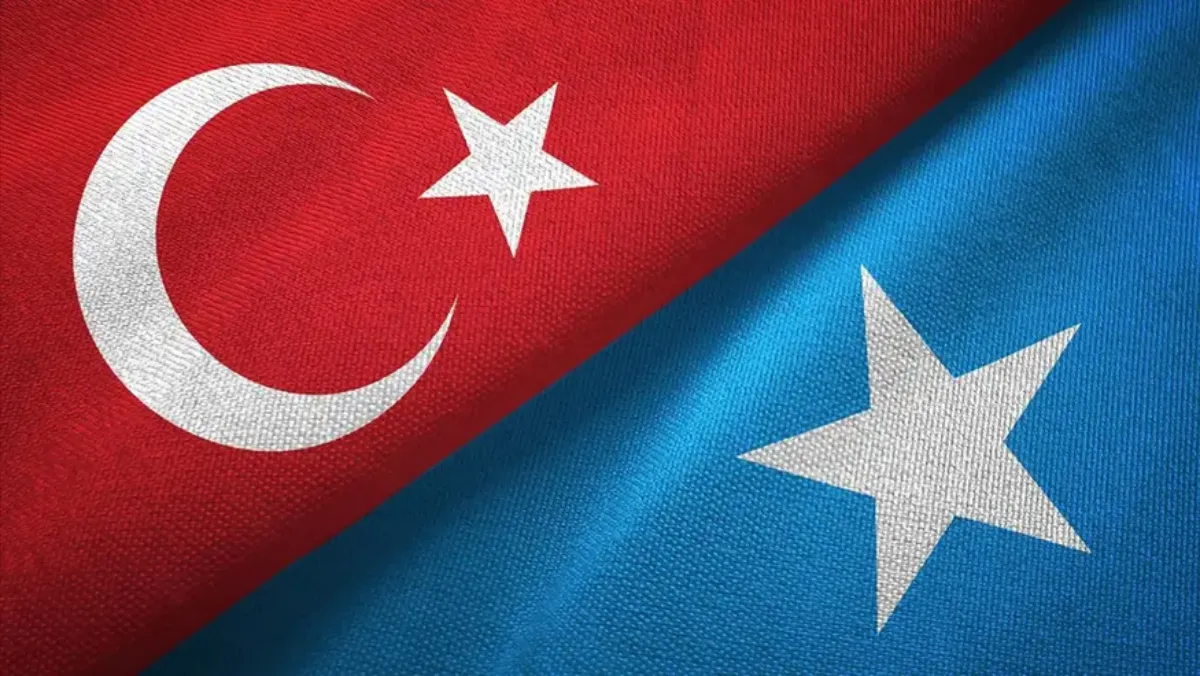
Türkiye and Somalia are widening cooperation beyond military training as naval support for the CURAD-1 drilling operation and new fisheries work add energy and maritime resources to the bilateral agenda.
Military training remains the institutional core, while offshore exploration and maritime protection have added new operational layers.
The TURKSOM military academy in Mogadishu continues to train Somali officers, non-commissioned officers and special forces personnel as the federal government works to strengthen national command structures.
Somali President Hassan Sheikh Mohamud attended the latest graduation ceremony at TURKSOM in July alongside Turkish Land Forces Commander General Metin Tokel. Somali officials presented the graduates as part of the future leadership of the Somali National Army.
Turkish naval groups have meanwhile rotated through Somali waters to provide logistical support, assist maritime operations and protect the fleet accompanying the Çağrı Bey drilling vessel.
The Turkish Defense Ministry said TCG Göksu, TCG Gelibolu and TCG Sancaktar carried out logistical transport and supported naval task group activities. Another group involving TCG Gaziantep, TCG Bafra and TCG Yüzbaşı Güngör Durmuş completed duties in the same area before beginning its return voyage.
The deployments show recurring naval support alongside Türkiye's permanent training mission in Mogadishu.
Parliament preserved the legal basis for those activities when it extended Türkiye's military and maritime mission in Somalia until July 2028.
The mandate covers terrorism, piracy, armed robbery at sea, illegal fishing, smuggling and threats to Somali economic resources. It also permits Turkish forces to operate in maritime areas jointly determined by the two governments.
CURAD-1 takes energy ties offshore
At CURAD-1, Çağrı Bey is conducting Türkiye's first overseas deep-sea drilling operation.
The well lies about 372 kilometres off Mogadishu in water nearly 3,500 metres deep. The operation is designed to reach a total depth of 7,500 metres, including more than 4,000 metres below the seabed.
Türkiye's Energy and Natural Resources Ministry said the campaign was planned to last about 288 days. The support vessels Altan, Korkut and Sancar are working with Çağrı Bey, while Turkish warships have been assigned escort and protection duties.
No oil or natural gas discovery has been announced. Neither government has released a reserve estimate or commercial assessment.
The drilling followed the Oruç Reis seismic campaign across three offshore blocks. The shift from seismic surveys to drilling brought a dedicated support fleet and Turkish naval protection into the operation.
Fisheries opens another maritime track
A Turkish delegation of government officials and fishing company representatives visited Mogadishu Port in July to assess a bilateral fisheries project.
The talks covered port facilities, fishing operations and possible processing and export capacity. Somali officials linked the plan to efforts against illegal, unreported and unregulated fishing, which has long limited the country's ability to benefit from its coastline.
The Turkish side has not fully disclosed the ownership structure, licensing arrangements or scale of the proposed operation.
Even at this stage, the project adds a commercial dimension to cooperation already extending across military training, naval activity and energy exploration.
Somalia remains Türkiye's deepest African partnership
Somalia occupies a distinct position in Türkiye's expanding defense network across Africa.
Türkiye has developed defense, training and equipment ties with several African states, but none combines a permanent military academy, naval deployments, offshore drilling, development programs and maritime industry work to the same extent.
Military training remains the institutional base, while naval support, energy exploration and fisheries are widening cooperation into new operational and commercial fields.
Al-Shabaab remains active, federal institutions face capacity limits and CURAD-1 has yet to produce a commercial discovery. Somalia has nevertheless become Türkiye's most extensive African partnership, bringing military training, naval support, offshore drilling and maritime industry cooperation into the same bilateral framework.
Sources: Türkiye's Ministry of National Defense, Türkiye's Ministry of Energy and Natural Resources, Somali National News Agency, Bosphorus News review and reporting.