
By Bosphorus News Defense Desk
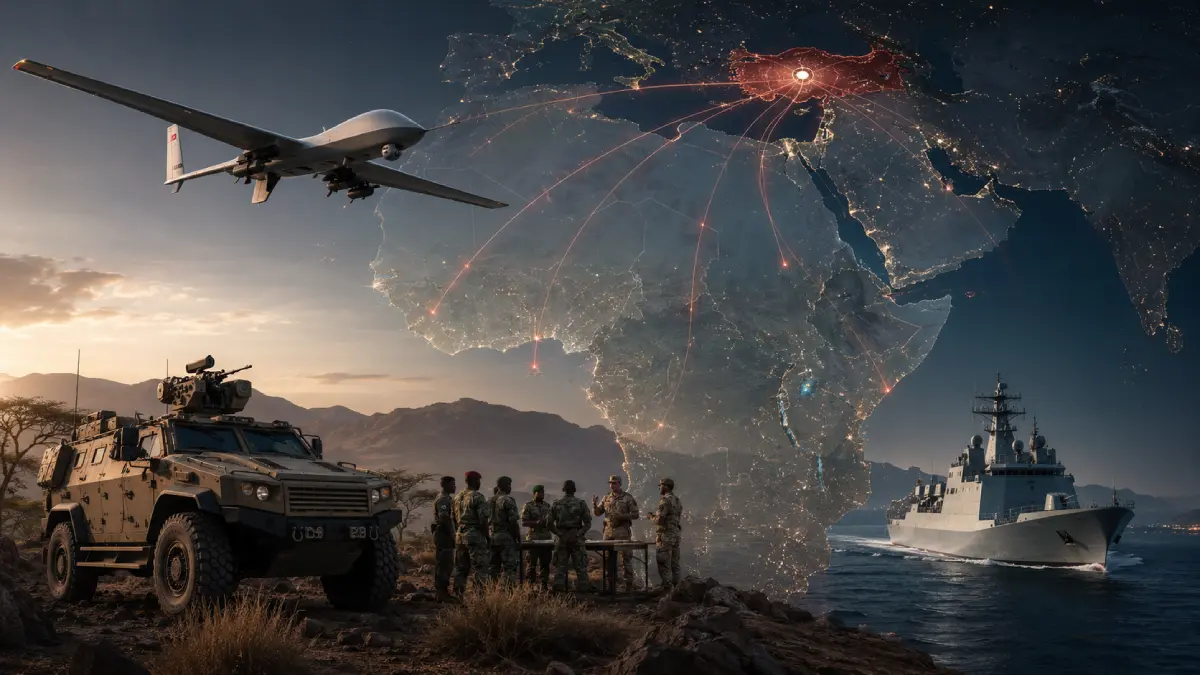
Türkiye's defense relationship with Africa no longer begins and ends with a drone sale.
Over the past five years, Ankara has moved through a consistent sequence across multiple African partners: entry through humanitarian or diplomatic channels, formalisation through training and cooperation agreements, equipment supply, and then a deeper layer of naval deployments, intelligence sharing and, in Somalia, reported direct combat support. The progression reflects deliberate sequencing, not opportunism. The result is a set of security relationships that now require training teams, naval access, maintenance networks and intelligence channels on the ground.
In 2025, Türkiye exported 328 million dollars' worth of defense products to African countries, maintained 37 military offices across the continent and had signed defense agreements with 25 countries in the region, according to Turkish defense industry data cited by Daily Sabah. Those numbers describe a supply chain. The agreements, deployments and protocols signed in the eighteen months since tell a different story.
Somalia: The Furthest Point
Somalia is where Türkiye's Africa model has travelled the greatest distance from its origins. The relationship began in 2011 with humanitarian aid. It now encompasses a major overseas military base, a naval task force, combat aircraft and reported ground force engagement against al-Shabaab.
On January 28, 2026, Somalia's Defense Minister Ahmed Moallim Fiqi confirmed that three Turkish F-16 fighter jets had landed at Aden Adde International Airport in Mogadishu to support operations against insurgent groups, the first confirmed deployment of Turkish manned combat aircraft to Somalia. The deployment followed Israel's recognition of Somaliland, a move Ankara opposed. Türkiye's National Security Council reaffirmed support for Somalia's sovereignty and territorial integrity the same day.
Local sources cited by Zona Militar and Saxafi Media reported that Turkish military personnel participated in a ground engagement against al-Shabaab in Middle Shabelle in early February 2026, involving armoured vehicles in a three-hour operation. Ankara has not released a formal statement on the ground operation.
The naval dimension was formalised in parallel. Turkish Navy vessels TCG Sancaktar, TCG Gökova and TCG Bafra docked at Mogadishu Port on February 11, confirmed by Türkiye's Ministry of National Defense, operating under a maritime cooperation agreement covering ports, maritime transport and offshore energy security. The vessels made a port call at Djibouti on February 6-7 before proceeding to Mogadishu, reflecting the Horn of Africa corridor Türkiye has established across both countries. As Bosphorus News reported, the deployment includes protection of the drillship Çağrı Bey during planned research in Somali maritime zones.
In December 2025, OYAK, the Turkish Armed Forces pension and investment fund, established a joint venture in Somalia reported to tie security assistance to maritime revenue within Somalia's exclusive economic zone. The arrangement's full terms have not been confirmed by either government.
Nigeria: The West African Gateway
Nigeria is Türkiye's most institutionally developed bilateral defense relationship in West Africa. The 2021 framework agreement gave Nigeria the legal basis to purchase Bayraktar TB2 drones, T129 ATAK attack helicopters and offshore patrol vessels, all of which entered operational service.
At the January 27, 2026 summit in Ankara between Erdoğan and President Bola Tinubu, nine agreements were signed. One was a Military Training and Intelligence Cooperation Protocol allowing Turkish experts to train Nigerian Special Forces and share intelligence for counterterrorism operations against groups including Boko Haram. Erdoğan confirmed that discussions covered military training, intelligence and closer defense industry cooperation, including meetings between Nigerian officials and leading Turkish defense companies. The Nigeria model, equipment sale creating an entry point, training deepening the relationship, intelligence cooperation following, is visible in compressed form across Türkiye's broader African portfolio.
Niger: Into the Sahel
Niger's military government, which expelled French and American forces after the July 2023 coup, has moved toward Türkiye as a preferred security partner on three tracks.
In July 2024, a Turkish delegation including Fidan, Güler, Bayraktar and Intelligence Director Kalın visited Niamey for talks with General Tiani covering energy, mining, intelligence and defense cooperation. A military financial cooperation agreement was signed at the International Defense Industry Fair in Istanbul in July 2025. In April 2026, Güler and Nigerien Defense Minister Mody signed a Protocol on the Provision of On-Site Training Support in Ankara, moving Turkish military instructors from courses held in Türkiye into Niger's own military bases. The shift from classroom to field is the clearest operational signal of how the relationship has deepened. Niger personnel participated in EFES 2026 in İzmir in May.
Libya: Rival Forces in the Same Exercise
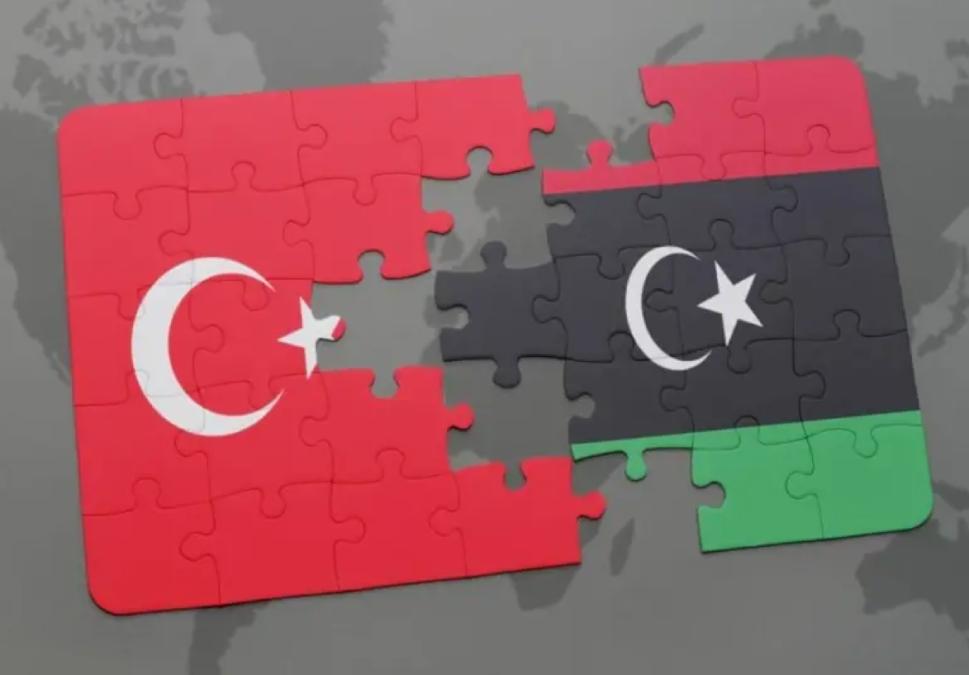
Libya is Türkiye's oldest and most complex African security file. Ankara's 2019 maritime boundary agreement with Tripoli remains in force, Türkiye's parliamentary mandate for military deployment was extended for 24 months in December 2025, and the defense industrial relationship has continued to expand.
In February 2026, Libya's Military Industrialisation Organisation signed an agreement with a Turkish defense firm to rehabilitate military factories and localise maintenance services, including technical training and infrastructure modernisation. As Bosphorus News reported, full documentation has not been released by either government.
The most operationally visible development came at EFES 2026. The Turkish Ministry of National Defense confirmed that 331 personnel from eastern Libya and 177 from western Libya participated in the same exercise alongside the fast-attack craft LNS Shafak. It was the second time within weeks that Libya's two rival military structures had trained together, following their joint participation in the US Africa Command-led Flintlock-2026 exercise. Ankara described the joint appearance as an important step toward Libyan unity and institutional alignment.
Senegal and the Post-French Transition
France completed the withdrawal of its permanent military presence from Senegal in July 2025. Türkiye has become more visible in Senegal's defense landscape in the same period, though the two developments should not be read as a direct substitution.
In August 2025, Defense Minister Güler and Senegal's Minister of Armed Forces General Birame Diop signed a Military Financial Cooperation Agreement in Ankara. Erdoğan said the two sides had discussed joint steps in security, defense industry and counterterrorism. As Bosphorus News reported, Africa Intelligence reported in March 2025 that Senegalese authorities had signed a contract worth approximately 317 million euros with a Turkish company to equip the army over three years. Neither Ankara nor Dakar has officially confirmed the value, equipment list or delivery timetable of that reported package.
The Industrial Layer
Behind the bilateral agreements sits a growing export capability. On the air systems side, Bayraktar has stated that more than 90 percent of its recent contracts are for export. TB2 drones are in operational service in Nigeria, Niger and Libya, and have been used in active conflict in Ethiopia and Somalia. T129 ATAK helicopters have been exported to Nigeria. On the land platforms side, Kirpi, Ejder Yalçın and Cobra armoured vehicles are in the Tunisian army's inventory, with similar platforms reaching Algeria, Morocco and Chad.
The Defense Industries Presidency's 2024-2028 Strategic Plan identifies Africa as a region of growing geopolitical and resource significance and calls for cooperation through a mutual benefit approach. In practice that means a defense export business that doubles as a foreign policy instrument, with training, intelligence and now direct military presence used to protect and deepen the relationships that equipment sales create.
The result is no longer only influence through exports. It is a set of security relationships that require training teams, naval access, maintenance networks, intelligence channels and, in Somalia's case, officialy soldiers in the field.
***Sources: Turkish Ministry of National Defense official statements, Anadolu Agency, Reuters, The War Zone, Middle East Eye, Military Africa, Defense News, Africa Intelligence, Horn Review, Somali National News Agency (SONNA), Türkiye Communications Directorate, Türkiye Defense Industries Presidency Strategic Plan 2024-2028.