
By Bosphorus News Defense Desk
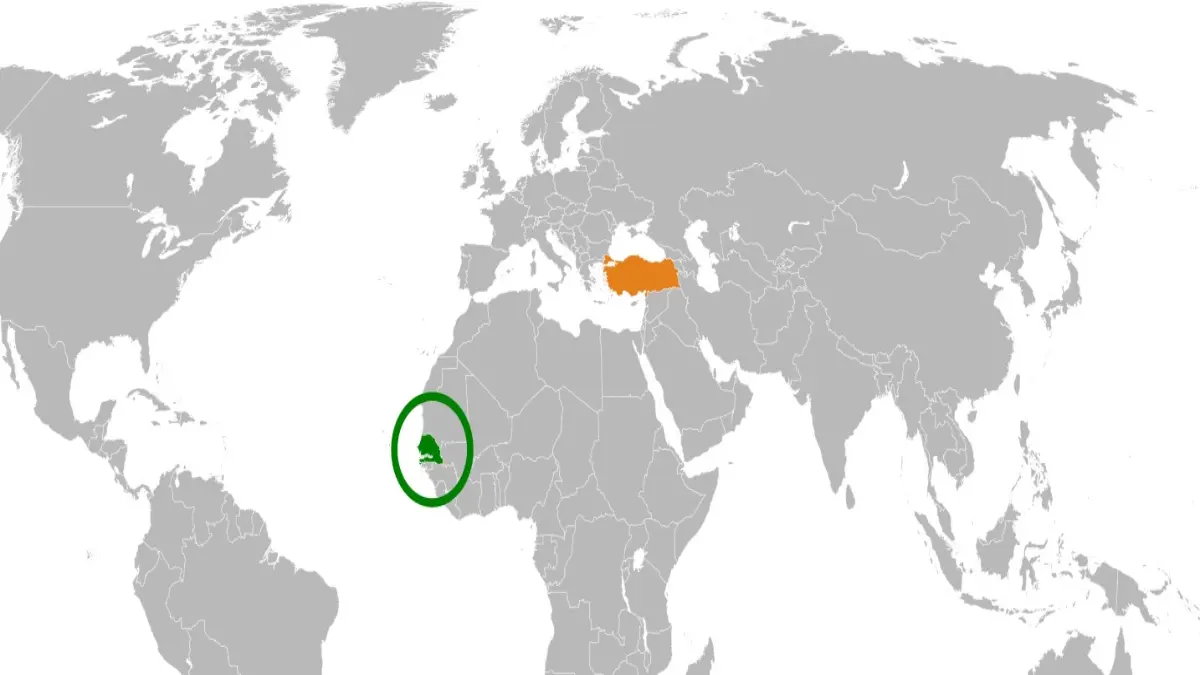
Senegal is widening its defence and maritime security cooperation with Türkiye after France ended its permanent troop presence in the country, a shift now sharpened by reports of a Turkish linked arms package worth 208 billion CFA francs that neither Dakar nor Ankara has publicly confirmed.
The official foundation is clear. Türkiye and Senegal signed four agreements in Ankara on August 7, 2025, during talks between President Recep Tayyip Erdoğan and Senegalese Prime Minister Ousmane Sonko. One of them was an Agreement on Military Financial Cooperation, signed by Türkiye's Defence Minister Yaşar Güler and Senegal's Minister of Armed Forces General Birame Diop, along with an amendment protocol linked to a 2020 cash assistance implementation protocol.
Erdoğan said after the meeting that Türkiye and Senegal had discussed joint steps in security, defence industry and counterterrorism. He also said Ankara was pleased by growing African interest in Turkish defence industry products and wanted to strengthen cooperation in that field.
The more sensitive layer is procurement. Africa Intelligence reported in March 2025 that Senegalese authorities had signed a €317 million contract with a Turkish company to equip the army over three years. The report identified ICC Yapi Yatirim as the Turkish company involved. Senegalese and regional outlets later echoed the figure, often rendering it as 208 billion CFA francs.
Neither Ankara nor Dakar appears to have publicly confirmed the full value, equipment list or delivery timetable of that reported package. That leaves the contract in a careful category: credible enough to report as a claim attributed to Africa Intelligence, but not strong enough to present as an officially confirmed arms deal.
The timing matters. France completed the withdrawal of its permanent military presence from Senegal in July 2025, handing over Camp Geille in Dakar and ending a deployment rooted in the post-colonial security architecture. Reuters reported that the handover marked the end of France's long-standing armed forces presence in Senegal, while Senegalese President Bassirou Diomaye Faye had earlier said French bases were incompatible with Senegalese sovereignty. The Associated Press also reported that the withdrawal completed a three-month process involving roughly 350 French troops.
That does not mean Paris has disappeared from Senegal's security landscape. French officials have framed the change as a move away from permanent bases and toward training, intelligence sharing and support based on requests from African partners. Senegalese officials have also signalled that cooperation with France will continue in a different format.
The Turkish track, however, has become more visible at the same moment. Official Turkish material confirms a defence cooperation framework. Regional reporting has tied the Turkish track to Senegal's coastal surveillance needs, including patrol vessels, monitoring systems, training and a possible maritime surveillance aircraft, but public official records reviewed by Bosphorus News do not confirm a platform list.
That distinction is important. The claim that Dakar is handing security to Ankara overstates what the public record shows. The stronger reading is that Senegal is using the post-French transition to broaden its defence options, with Türkiye emerging as one of the most active partners.
The reported package has drawn attention because of its scale and opacity. Senegal is operating under fiscal pressure, and large defence procurement can quickly become a domestic transparency issue. The Africa Intelligence report also noted that the contract would equip the Senegalese military over several years, while regional outlets have raised questions about the role of intermediaries and financing.
The maritime component gives the story wider strategic weight. Senegal faces illegal fishing, trafficking and coastal surveillance challenges across a coastline that sits on key Atlantic routes. Reports tying the Turkish track to patrol vessels, surveillance systems and training fit that operational need, but they should be treated as reported elements rather than confirmed deliveries.
There is also a platform question. Africa Intelligence has reported that the package could include a maritime surveillance aircraft potentially replacing Senegal's French Falcon 50. That detail remains unconfirmed in public official documents reviewed by Bosphorus News. It should therefore be framed as a reported possibility, not as a completed or announced replacement.
Türkiye's appeal in this space is not difficult to read. Ankara offers drones, naval systems, sensors, training, military finance arrangements and defence industrial packages without the colonial memory attached to France's long military presence in West Africa. Turkish companies have also built visibility across Africa through unmanned systems, armoured vehicles, naval platforms and infrastructure linked defence relationships.
Senegal's calculation is more complex. The end of permanent French bases gives Dakar a sovereignty win, but it also creates a practical requirement to sustain training, surveillance and readiness. Türkiye can fill part of that requirement. So can other partners. The question is not only who supplies equipment, but how Senegal avoids replacing one dependency with another.
The shift does not show Senegal handing its security architecture to Ankara. It shows Dakar trying to rebuild part of that architecture after the French drawdown, with Türkiye moving into the space through formal defence cooperation and reported procurement. The unresolved issue is transparency. Until Senegal or Türkiye publishes the contract value, suppliers and platform list, the story remains a mix of confirmed strategic realignment and an unconfirmed arms package large enough to shape the next phase of Dakar's security debate.
***Sources: Türkiye Directorate of Communications; Reuters; Associated Press; Africa Intelligence; regional Senegalese and West African media reporting.