
By Bosphorus News Geopolitics Desk
Türkiye's parliament has passed legislation tied to PKK disarmament with support extending well beyond the governing bloc, while vessels delayed during several days of uncertainty over Black Sea transit have begun moving through the Dardanelles again. Austrian Chancellor Christian Stocker used his first visit to Türkiye in office to discuss the Middle Corridor and Türkiye-EU trade, as new details emerged about Donald Trump's secret aircraft switch in Ankara and U.S.-Iranian demands complicated efforts to reopen the Strait of Hormuz.
Türkiye passes PKK disarmament law
The Grand National Assembly of Türkiye approved the National Solidarity and Social Integration law on August 10 after about 12 hours of debate, with the official parliamentary record showing 467 votes in favor, 87 against, seven abstentions and two duplicate votes.
AK Party and MHP were joined by CHP, DEM Party and lawmakers from other opposition groups, giving the legislation a majority well beyond the governing bloc. Bosphorus News reported the positions taken during the General Assembly debate before the final vote.
The vote completes the parliamentary stage but does not activate the provisions covering investigations, prosecutions or sentence enforcement. Security institutions must first determine that the Kurdistan Workers' Party (PKK), designated as a terrorist organization by Türkiye, the United States and the European Union, and formations covered by the law have ended their armed structure and surrendered their weapons, followed by the required National Security Council decision and publication in the Official Gazette.
What follows now depends on the verification process written into the law, not on another parliamentary vote.
Black Sea delays ease as vessels move through the Straits
Commercial vessels that had been waiting during several days of uncertainty over Black Sea transit have begun moving through the Dardanelles, even as Turkish officials maintain that Türkiye never imposed a general restriction on civilian shipping.
The crude oil tanker Aegean Dream entered the Dardanelles on August 9 after waiting since August 6 and was signaling the Caspian Pipeline Consortium terminal at Novorossiysk as its destination. Bloomberg had earlier reported delays or withheld transit permission for some vessels heading toward Russian and Ukrainian ports.
Turkish officials said passage remained open under the Montreux Convention and described the measures as temporary security precautions introduced after repeated attacks on commercial shipping. Bosphorus News reported the competing accounts and Türkiye's security measures on August 10.
Previously delayed vessels are now moving again, without Ankara announcing any change to its Montreux position.
Erdoğan and Stocker put Middle Corridor and EU trade on Ankara agenda
President Recep Tayyip Erdoğan hosted Austrian Chancellor Christian Stocker in Ankara on August 10 for Stocker's first visit to Türkiye since becoming chancellor, with trade, transport links, Türkiye-EU relations and regional security dominating the talks.
Erdoğan called for progress on modernization of the Türkiye-EU Customs Union and visa liberalization, while proposing closer cooperation with Austria on the Middle Corridor as well as green energy, critical minerals, high technology, transport and the defense industry.
More than 1,000 Austrian companies operate in Türkiye, Austrian direct investment has exceeded $11 billion and Turkish investment in Austria is approaching $1 billion, while bilateral trade reached nearly $4.5 billion in 2025 and Ankara is targeting $5 billion this year.
Stocker also called for the Strait of Hormuz to remain permanently open and freedom of navigation to be guaranteed, connecting the Ankara talks directly with the disruption affecting energy and shipping markets in the Gulf.
New details emerge over Trump's secret aircraft switch in Ankara
U.S. President Donald Trump was secretly transferred to a third aircraft after publicly boarding an older presidential plane in Ankara last month because of a reported Iranian threat, according to new reporting by the Washington Post subsequently carried by Reuters.
The account says Trump was moved from the aircraft in an airport catering vehicle and taken to a U.S. Air Force C-32A, which carried him separately to Britain, while the plane observers believed was carrying the president continued with members of the media and other personnel aboard.
The White House has not disclosed the intelligence behind the operation, saying only that it uses every available tool to address threats against the president, while the Pentagon declined to discuss the flight arrangements.
The aircraft change had been known since July, but the new reporting shows that Trump was covertly transferred to a third plane while another presidential aircraft continued with media and staff aboard.
Hormuz hopes weaken as Washington and Tehran add demands
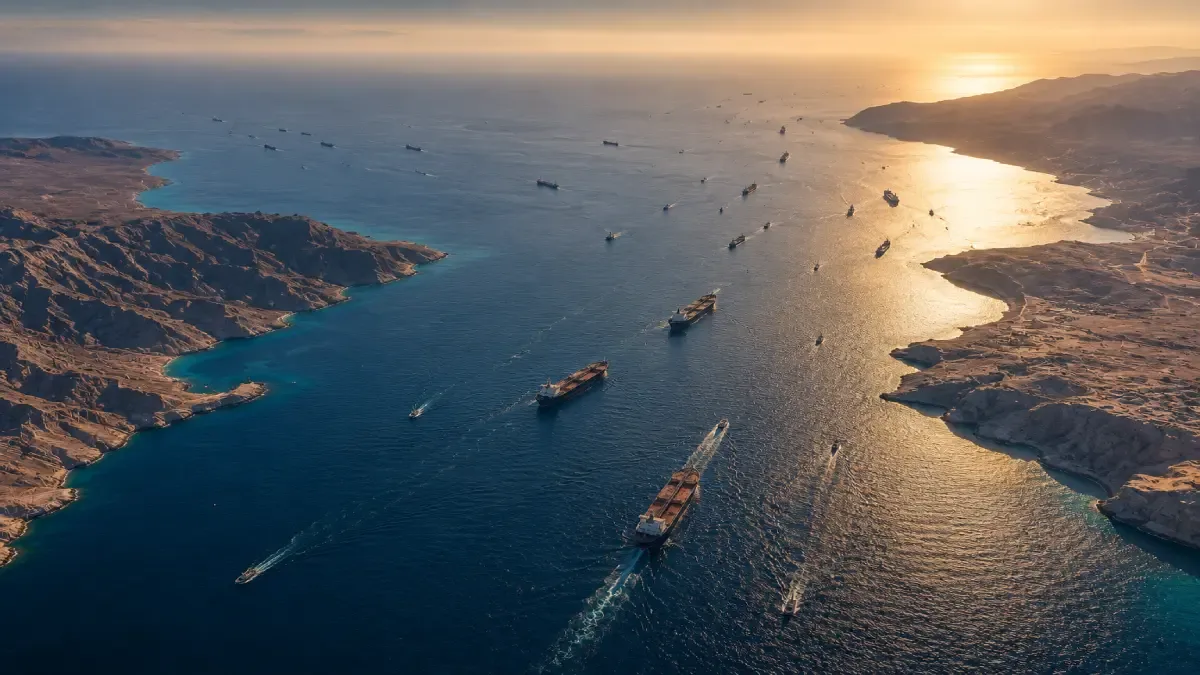
Iran says its talks with Oman over shipping arrangements through the Strait of Hormuz are close to agreement on the route itself, but conditions attached to a broader reopening have become harder to reconcile.
Tehran has demanded sanctions relief, compensation for U.S. attacks and an end to military threats, while Trump has countered that Iran should pay compensation for deaths and damage attributed by Washington to Tehran and its regional activities.
The exchange weakened expectations of a quick reopening and helped push Brent crude almost 5% higher on Monday to $87.72 a barrel.
Oman appears close to settling the route itself; the obstacle is now the political price Washington and Tehran attach to reopening it.
First organized return to Ras al-Ain encounters violence
More than 400 displaced Syrian Kurdish families set out from the Hasakah area on August 10 in the first organized return to Ras al-Ain and surrounding villages under the January agreement between Damascus and the Syrian Democratic Forces (SDF).
Reports of violence emerged during the journey, with a committee representing displaced residents accusing authorities in Damascus, security forces in Ras al-Ain and the local administration of failing to protect returnees. Those allegations have not been independently established.
The January agreement includes provisions for displaced residents to return as part of the wider process of integrating the SDF into Syrian state structures. Türkiye considers the YPG, the principal armed component of the SDF, linked to the PKK, while Ras al-Ain has remained particularly sensitive since Turkish forces and allied Syrian fighters took control of the town from Kurdish forces in 2019.
Libya warns of Zawiya shutdown after third drone attack
Libya's National Oil Corporation has warned that continued drone attacks on oil facilities in Zawiya could force it to declare force majeure and completely halt refinery operations after the third attack reported over Sunday and Monday.
The latest drone fell near an oil blending facility's main tank and pipeline network without causing casualties or material damage, while an earlier strike hit a fuel tank containing about 4.5 million liters of gasoline, causing a fire and the tank's collapse. Another drone struck an untreated naphtha tank and caused a leak that workers later contained.
No group has claimed responsibility for the attacks. Zawiya, about 40 kilometers west of Tripoli, can process 120,000 barrels per day and is currently Libya's largest operating refinery, leaving further attacks capable of affecting domestic fuel supplies as well as the wider oil complex.
Crossing points move up the agenda before August 26 Cyprus meeting
New crossing points are expected to be a central issue when Republic of Cyprus President Nikos Christodoulides and Turkish Cypriot leader Tufan Erhürman meet under United Nations auspices on August 26, according to sources cited by the Cyprus News Agency.
Negotiators from the two sides are expected to meet beforehand, while the United Nations is preparing a record of convergences reached in previous negotiations for circulation to the two sides and the three guarantor powers.
Bosphorus News has already reported the UN effort to link another enlarged meeting to progress on confidence-building measures. The fresh element is the concentration on crossing points ahead of August 26 rather than another round of public argument over the settlement model.
Strategic Take
The PKK law has cleared parliament, but its central provisions remain locked behind an official finding that disarmament has taken place, moving the decisive process from parliamentary arithmetic to security verification.
Ships delayed during the Black Sea episode are moving again without Türkiye acknowledging that the Straits were ever formally restricted, allowing additional security checks to ease without changing Ankara's stated application of Montreux.
Stocker's Ankara visit was more concrete on trade and transport than on Türkiye's stalled EU accession file, with the Middle Corridor, Customs Union modernization and railway links dominating the economic agenda. His call for Hormuz to remain open also tied the bilateral talks directly to the Gulf shipping crisis, where Washington and Tehran are making the political conditions for a full reopening harder to reconcile.
At Ras al-Ain, the first organized return of displaced families was disrupted before the process could establish a routine, while repeated drone attacks at Zawiya have brought Libya's largest operating refinery close to a possible shutdown.
Sources: Grand National Assembly of Türkiye, Presidency of the Republic of Türkiye, Austrian Federal Chancellery, Libya's National Oil Corporation, Reuters, Bloomberg, Cyprus News Agency, The National, Bosphorus News review and reporting.
Read Yesterday's brief: Eastern Mediterranean Strategic Brief – August 10: Türkiye Denies Black Sea Curbs, PKK Bill Goes to Floor