
By Bosphorus News Türkiye Desk
Türkiye's parliament opened debate on the National Solidarity and Social Integration bill on August 10, moving the legislation tied to the Kurdistan Workers' Party's disarmament into its final parliamentary stage as CHP and DEM Party declared support, İYİ Party said it would vote against the measure and Yeni Parti leader Özgür Özel said he would vote in favor despite objections to the way the legislation was prepared.
The 12-article bill covers investigations, prosecutions and sentence enforcement for specified PKK/KCK-related offenses, but none of its central suspension mechanisms can operate until security institutions determine that the organization has ended its armed structure and surrendered the weapons and ammunition under its control, with that finding then confirmed by a National Security Council decision published in the Official Gazette.
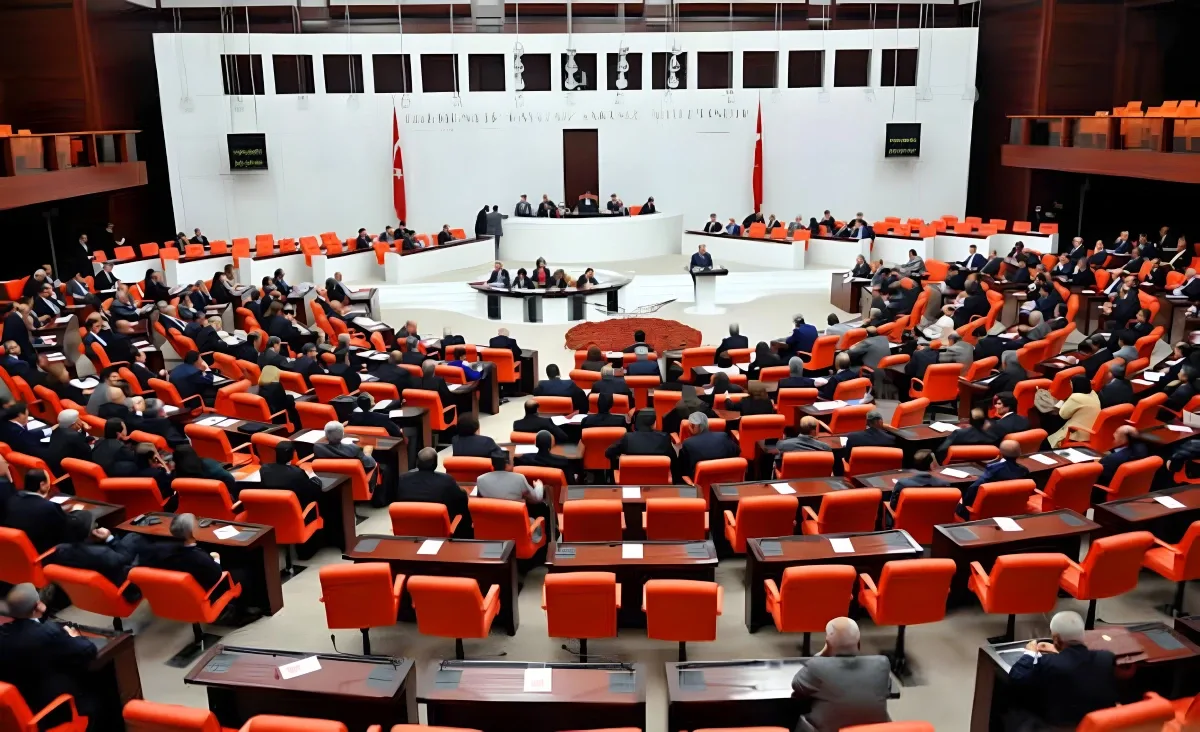
General Assembly opens debate
The Grand National Assembly of Türkiye began considering the bill on August 10 after the Justice Committee approved it early on August 8, bringing forward debate from an earlier parliamentary timetable that had pointed to August 11.
Lawmakers first approved moving to consideration of the bill's individual articles, with 269 members voting in favor and 28 against. Parliament has also agreed that deliberations will continue on August 11 and August 12 if the legislation cannot be completed on Monday, after which the chamber is expected to begin its summer recess and reconvene on October 1.
The legislation grew out of the work of parliament's National Solidarity, Brotherhood and Democracy Commission and covers the founding or leadership of the Kurdistan Workers' Party (PKK), membership in the organization, knowingly and willingly assisting it, propaganda offenses, crimes committed within its activities and terrorism-financing offenses committed on its behalf.
The PKK is designated as a terrorist organization by Türkiye, the United States and the European Union.
Bosphorus News previously detailed the bill's scope, suspension periods and disarmament conditions after it cleared the Justice Committee.
Disarmament must be verified before legal measures begin
Parliamentary approval alone would not activate the mechanisms at the center of the legislation.
Security institutions must first determine that the PKK/KCK and formations covered by the law have ended their effective organizational existence and surrendered all weapons and ammunition under their control. That finding must then be confirmed through a National Security Council decision and published in the Official Gazette before investigations, prosecutions or sentence enforcement can be deferred.
For offenses within the law's scope carrying a maximum sentence of 15 years or less, investigations and prosecutions could be suspended for five years, while cases involving sentences above 15 years, life imprisonment or aggravated life imprisonment could be suspended for 10 years.
The same periods apply to the enforcement of final prison sentences, with an enforcement judge authorized to defer sentences of 15 years or less for five years and longer sentences, including life and aggravated life imprisonment where covered by the law, for 10 years.
The legislation excludes intentional homicide committed within the organization's activities and also excludes life or aggravated life sentences imposed for offenses committed before June 1, 2005.
People seeking to benefit from the law would have six months after publication of the National Security Council decision to submit a written application to the relevant prosecutor's office or another institution designated under the legislation.
Weapons and equipment will be formally recorded
The legislation also sets out a formal procedure for weapons and other materials surrendered during implementation.
Weapons, ammunition, vehicles, equipment, explosives and other material brought in or declared by people covered by the law would be registered, with the Interior Ministry and National Defense Ministry responsible for establishing the procedures after consulting security institutions.
Implementation would be supervised by a board chaired by the vice president and including the ministers of justice, foreign affairs, interior and national defense, alongside the Presidential General Secretary, the head of the National Intelligence Organization and the secretary-general of the National Security Council.
The board would report regularly to parliament, while the Grand National Assembly would establish a separate monitoring commission to follow implementation and issue recommendations. The bill itself does not fix the number of members of that parliamentary commission.
CHP and DEM Party back the legislation
CHP Group Deputy Chair Rahmi Aşkın Türeli told the General Assembly that his party would support the proposal, saying CHP viewed the permanent end of terrorism, removal of weapons from politics and strengthening of democratic politics as grounds for backing the legislation.
DEM Party Group Deputy Chair Gülistan Kılıç Koçyiğit also called on lawmakers to support the bill, while co-chair Tuncer Bakırhan urged parliament to use the legislation to open a period in which armed conflict no longer determines political life.
Yeni Parti has taken a more qualified position. Its parliamentary representatives criticized the preparation of the bill and argued that recommendations on democratization contained in the earlier parliamentary commission report had not been carried into the legislation.
Özgür Özel nevertheless told the General Assembly that he would vote in favor, while leaving Yeni Parti lawmakers free to take account of their constituencies and individual concerns rather than imposing a uniform party position.
İYİ Party has opposed the legislation and argues that complete disarmament and dissolution should be independently verified before parliament introduces legal measures affecting investigations or sentence enforcement. Party leader Müsavat Dervişoğlu told the chamber that İYİ Party lawmakers would vote against the bill.
MHP, one of the principal forces behind the process, has repeatedly rejected descriptions of the proposal as a general amnesty, arguing that convictions remain in place and that the legislation instead creates conditional suspension and sentence-enforcement mechanisms once the disarmament requirements have been met.
The political division in parliament therefore centers increasingly on the sequence and safeguards surrounding implementation rather than on whether the PKK should disarm. With the governing bloc, CHP and DEM Party supporting the legislation and Özel declaring his own yes vote, the proposal enters article-by-article consideration with support extending well beyond the parties that initiated the process.
Sources: Grand National Assembly of Türkiye, Anadolu Agency, TRT Haber, Bosphorus News review and reporting.