
By Bosphorus News Geopolitics Desk
NATO's July summit in Ankara is moving beyond host-country protocol. With 35 days to go, the meeting is becoming the alliance's first major test of whether last year's defense spending pledge can be converted into usable capability while Washington presses allies to carry more of the conventional burden.
The summit will be held on 7-8 July 2026 at the Beştepe Presidential Complex in Ankara, according to NATO's official calendar. It will be Türkiye's second NATO leaders' summit after the 2004 Istanbul summit, giving Ankara a rare platform as the alliance confronts Ukraine funding, Iran-linked escalation, the Black Sea, the Balkans and defence-industrial capacity at the same time.
The political frame was set at the Hague summit in June 2025, when NATO allies committed to spending 5 percent of GDP on defence and defence-related expenditure by 2035. The target includes 3.5 percent for core defence spending and 1.5 percent for broader defence-linked investment. Ankara will test the harder part of that pledge: whether money can be turned into ammunition, air defence, fuel logistics, readiness and deployable forces.
NATO Secretary General Mark Rutte captured that shift before the Helsingborg ministerial meeting in May. The question, he said, is no longer whether allies need to do more, but how quickly they can turn commitments into capabilities. That sentence now sits at the center of the Ankara agenda.
Ankara has already tried to frame the meeting around alliance unity, defence production and capability gaps, a theme Bosphorus News covered in its look at Ankara's NATO unity and defence-industry message.
From Hague Pledge to Ankara Capability Test
The Hague commitment gave NATO a headline number. Ankara will expose the industrial and political limits behind it.
European allies and Canada spent a record 574 billion dollars on defence in 2025, according to NATO's annual assessment, a sharp increase from the previous year. The problem is no longer only aggregate spending. Ukraine has shown that stockpiles, air defence interceptors, artillery ammunition, drone resilience, fuel logistics and defence-industrial surge capacity matter as much as budget lines.
That is where Ankara sees leverage. Türkiye wants higher defense spending to translate into real production, and it has repeatedly argued that allied defense industrial restrictions weaken NATO's own readiness. Turkish officials have also linked the summit to a wider security view that includes Russia, Ukraine, the Black Sea, the Balkans, the Middle East, the Gulf and the alliance's southern flank.
Germany's role gives that agenda added weight. Berlin has become central to the debate over spending, production and NATO readiness, as Bosphorus News outlined in its earlier look at Germany, Türkiye and the defence agenda heading into the Ankara summit.
Rutte's April visit to Ankara underlined the same industrial agenda. The NATO chief met President Recep Tayyip Erdoğan, Foreign Minister Hakan Fidan and Defense Minister Yaşar Güler, and visited ASELSAN's technology base. His message was practical as much as political: NATO's next phase will depend on whether allies can expand production and integrate defence industries across the alliance.
Washington Brings the Force-Generation Problem to Ankara
The US role will sit at the centre of the summit. Donald Trump has reportedly told Erdoğan that he plans to attend the Ankara meeting, though the White House has not publicly confirmed the trip. Ukrainian President Volodymyr Zelenskyy has also been invited, with Rutte saying in May that he expected him to be there. The number and format of sessions involving Zelenskyy remain unclear.
Trump's expected presence gives the summit political weight, but it also raises the stakes. Washington has been pushing NATO toward a model in which Europe carries more of the conventional defence burden while the United States prioritises nuclear deterrence, the Indo-Pacific and selective crisis commitments. That does not amount to a formal US retreat from NATO. It does mean allies will face a harsher test of what they can deliver without assuming automatic American scale.
The same pressure is visible in the reported US plan to reduce forces and capabilities earmarked for NATO crises. As Bosphorus News examined in its earlier report on US NATO force cuts and the Ankara summit, the issue is no longer whether allies promise higher budgets, but what forces, stockpiles, factories and logistics corridors will replace capacity that Washington makes less available.
The Iran crisis has already strained that assumption. Trump has criticised NATO allies over their level of support for US operations, while US officials have publicly challenged Spain over access to military facilities. Reports of an informal Washington scorecard ranking allies by their support for the Iran campaign added to the sense that transactional politics is now part of the alliance atmosphere.
Türkiye is exposed to that shift more directly than most allies. It sits on the southern flank, faces the operational consequences of missile-defence pressure and carries a central role in energy security around the Black Sea, the Eastern Mediterranean and the Gulf. A summit in Ankara cannot treat southern-flank risks as an annex to the Russia file.
Ukraine Enters Ankara Without Funding Consensus
Ukraine will remain one of the summit's central files, but consensus on long-term financing is still fragile.
Kyiv expects NATO leaders to discuss sustained support at the Ankara summit. Yet a proposal for allies to allocate 0.25 percent of GDP to Ukraine's defence needs has struggled to secure broad backing. Several major allies have resisted binding formulas, while Germany and others have explored alternative bilateral or coalition-based funding models.
That leaves NATO searching for a formula that keeps weapons, training, air defence and ammunition flowing without forcing every ally into the same financial mechanism. Ankara may become the summit where predictable support is promised again, but with fewer illusions about how difficult common funding has become.
The issue is tied to the wider US reset. If Washington expects Europe to carry more conventional defence responsibility, Ukraine is the first place where that demand becomes measurable. Speeches about burden-sharing will matter less than production lines, delivery schedules and the speed at which depleted stockpiles can be rebuilt.
Türkiye Puts Fuel Logistics on the Table
Türkiye's most concrete summit-related proposal is logistical rather than rhetorical.
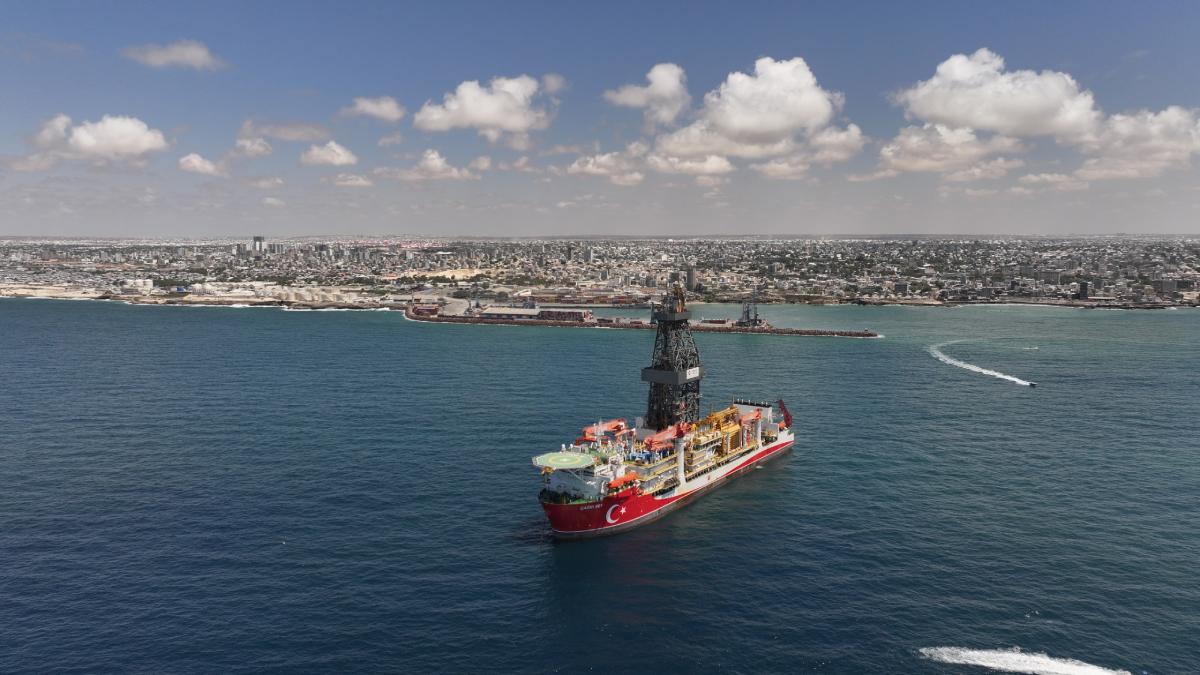
Ankara has floated a 1.2 billion dollar NATO military fuel pipeline running from Türkiye through Bulgaria to Romania. The proposal would give the alliance a land-based fuel route toward the eastern flank, reducing dependence on slower and more vulnerable maritime alternatives. Turkish officials argue that the route would be faster and cheaper than sea-based options and better suited to a crisis environment shaped by the Ukraine war and Hormuz instability.
As Bosphorus News detailed in its earlier coverage of Türkiye's NATO fuel pipeline proposal before the Ankara summit, the plan links Türkiye's geography directly to NATO's military mobility and fuel-security debate.
The proposal matters because fuel logistics rarely attract public attention until they fail. NATO's eastern-flank readiness depends on troops and weapons, but also on moving fuel quickly across allied territory. A Türkiye-Bulgaria-Romania route would connect Ankara's geography to NATO's eastern logistics map and give Türkiye a practical role in the alliance's military mobility debate.
The plan is still under NATO review and would likely require common funding. If advanced, it would make Türkiye's contribution to the summit more tangible than host-country diplomacy.
Defence Industry Moves to the Centre
The Ankara summit will also give Türkiye a stage to push defence industry as a core alliance issue.
The planned NATO Defense Industry Forum in Ankara is expected to run alongside the summit and has been framed by Turkish defence circles as one of the alliance's most ambitious industry-focused events. Its timing is deliberate. NATO is under pressure to expand production of air defense systems, missiles, artillery, drones, ammunition and electronic warfare tools. Türkiye wants its defence industry to be treated as part of that answer.
That message carries a political edge. Ankara has long argued that formal and informal restrictions on Turkish defence companies damage allied security. The Ukraine war, drone warfare, Iran-linked missile risks and the Black Sea security environment strengthen Türkiye's case that NATO needs more suppliers, faster production cycles and fewer political bottlenecks inside the alliance.
The forum will also test how far NATO and the European defence ecosystem are prepared to work with Türkiye's industrial base as EU-NATO defence production cooperation moves higher on the agenda.
The Southern Flank Expands Beyond the Mediterranean
The summit's location gives the southern flank unusual visibility.
Germany is preparing to deploy Patriot air defence systems to southeastern Türkiye for a six-month mission, while Spain's existing deployment remains part of NATO's air defence posture. These moves place Türkiye inside the alliance's live missile-defense architecture at a time when the Iran file, Israel's regional posture and Gulf energy routes are all feeding into NATO's risk map.
The Black Sea and the Balkans will also shape Ankara's summit agenda. Türkiye has been working with Romania and Bulgaria on Black Sea security, mine countermeasures, maritime movement and the careful application of the Montreux Convention. In the Western Balkans, Türkiye's role in KFOR, its command position in Kosovo, its defence ties with Pristina and its military communication with Belgrade make Ankara more than a distant observer.
The Western Balkans are not a side file for Ankara. Kosovo, Bosnia, Serbia and KFOR sit inside the same NATO map as the Black Sea and the Eastern Mediterranean, and they also shape how Türkiye and Greece read influence inside the alliance. Bosphorus News has already examined this through Türkiye's role in NATO's Western Balkan security agenda, a file that will matter as Ankara tries to prevent the summit from being reduced to the eastern flank alone.
That wider map is the point. Ankara does not want the summit reduced to a meeting focused only on Russia. Its preferred agenda places the Black Sea, the Balkans, the Eastern Mediterranean, the Middle East and the Gulf inside one NATO security conversation.
The Host Role Becomes Part of the Bargain
The Ankara summit will not resolve NATO's deepest tensions in two days. It will show how those tensions now sit inside the alliance's daily machinery.
The old language was burden-sharing. The harder test now is production, fuel movement, air defence, Ukraine support and the ability to sustain a military posture when Washington is less willing to carry the conventional load by default. That question runs through every major file heading to Ankara.
Ankara's leverage comes from the way the summit agenda now overlaps with Türkiye's own security map. A fuel route through Bulgaria and Romania, a defense-industry forum in Ankara, missile-defense pressure from the south, Black Sea security and the Western Balkans are not separate files in Ankara's view. They are parts of the same question: whether NATO can still turn geography, industry and logistics into usable capability when its threat map is expanding faster than its production base.
The Blue Homeland debate adds the maritime edge to that question. Türkiye has long argued that alliance security cannot be read only through the eastern flank or the Ukraine file. From Ankara's perspective, the Aegean, the Eastern Mediterranean, the Black Sea, the Balkans and the southern flank form a connected pressure belt, and NATO's readiness will look incomplete if that belt remains secondary in alliance planning.
That is the political weight behind the July summit as Türkiye will not only be hosting leaders in Ankara. It is using the summit to place its own security geography inside NATO's capability debate, from defense production and fuel logistics to maritime jurisdiction and southern-flank exposure. For a Turkish publication, the point can be stated plainly: Ankara is asking the alliance to see the map that Türkiye has been managing for years.