
By Bosphorus Geopolitics Desk
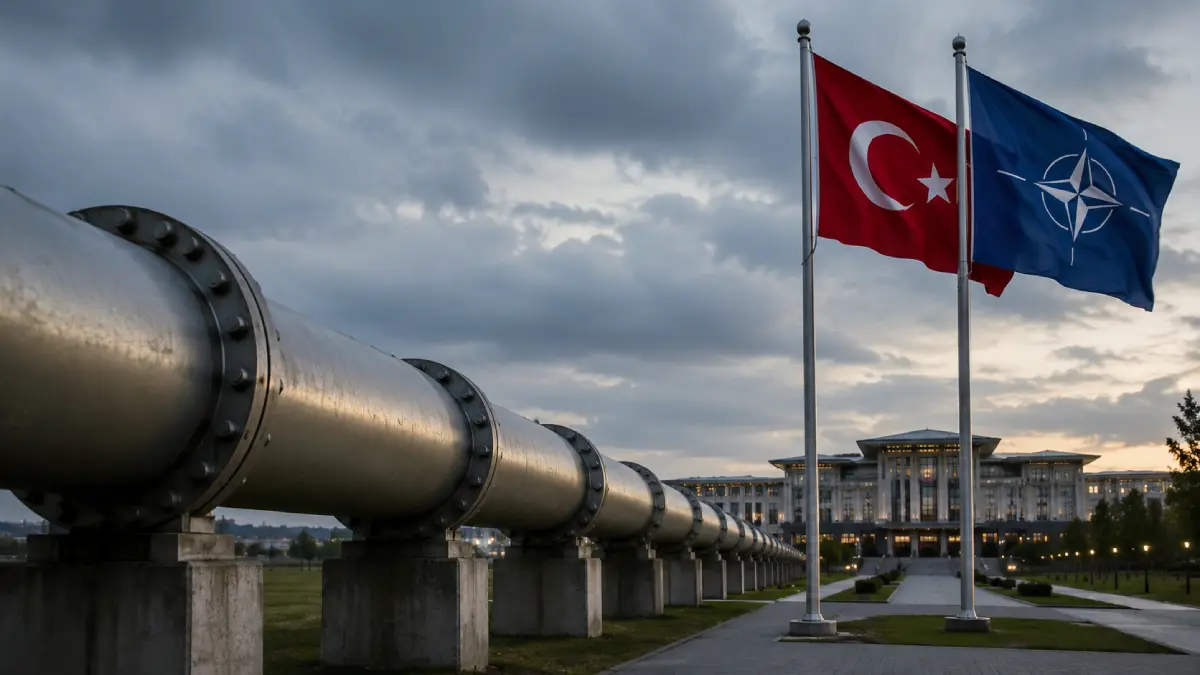
Türkiye is moving the Ankara NATO Summit build-up beyond public diplomacy, pairing Washington messaging on the Turkish-American alliance with a reported $1.2 billion fuel pipeline proposal designed to strengthen NATO's eastern flank through Bulgaria and Romania.
Bloomberg reported that Türkiye has proposed building a military fuel pipeline from Türkiye to Romania via Bulgaria, citing people familiar with the matter. The project would support NATO's push to expand its military pipeline network and help supply allies on the eastern European flank.
The reported proposal comes as Ankara prepares to host NATO leaders on July 7-8, 2026. NATO has said the summit will be held at the Presidential Complex in Ankara, making it Türkiye's second NATO leaders' summit after Istanbul hosted the alliance in 2004.
The fuel pipeline gives the summit build-up a concrete logistics dimension. It places Türkiye not only as the host of a major NATO meeting, but also as a potential provider of infrastructure for allied mobility, military fuel supply and eastern flank resilience.
The Washington messaging moved on a parallel track. Türkiye's Directorate of Communications said it organised a panel titled "The Turkish-American Alliance at the Heart of NATO's New Geopolitics" in cooperation with the SETA Foundation in Washington on May 14. The event was the fifth stop in a programme series held before the Ankara summit, following Madrid, Paris, London and Warsaw.
Presidential Communications Director Burhanettin Duran said Türkiye and the United States had faced many tests during their 74-year NATO journey and had overcome them through mutual loyalty. He described Türkiye as an "indispensable central state" in NATO's collective defence architecture.
Çağrı Erhan, chief adviser to President Recep Tayyip Erdoğan and vice chair of the Presidential Security and Foreign Policies Council, said Türkiye and the United States would play a leading role in the new era of transformation, comparing the current period with the early 1950s when both countries entered the alliance's Cold War architecture.
Former US Ambassador to Türkiye James Jeffrey placed that role in a wider regional frame, saying Türkiye, together with the United States, had played a decisive role in major security issues from Ukraine to the Caucasus, the Black Sea and the Balkans.
Rich Outzen, a former US State Department adviser and now with the Atlantic Council, tied the alliance debate to Türkiye's defence industry. He said the new paradigm was that Türkiye was producing products of such quality that US companies now wanted to buy them, and described Türkiye and the United States as the engine of NATO's real hard-power deterrence.
That defence industry message matters for the Ankara summit because NATO's debate is no longer limited to burden-sharing percentages. The alliance is also under pressure to solve production gaps, logistics vulnerabilities and infrastructure limits exposed by the war in Ukraine and the growing demands on the eastern flank.
Foreign Minister Hakan Fidan had already placed the summit inside a wider NATO adjustment. Reuters reported in April that Fidan said allies should use the Ankara summit to put relations with US President Donald Trump on a systematic basis and prepare for scenarios in which the United States reduces participation in some NATO mechanisms.
NATO Secretary General Mark Rutte's April visit to Ankara added another layer to that picture. Rutte met Erdoğan, discussed preparations for the Ankara summit and visited the ASELSAN Technology Base, where NATO highlighted Türkiye's defence industry role and the need for allies to produce more, faster and together.
The fuel pipeline report gives that argument a harder logistical edge. Defence production can expand NATO's arsenal, but fuel, mobility and supply networks decide how quickly allied forces can move and sustain operations across the eastern flank. A Türkiye-Bulgaria-Romania route would place Ankara directly inside that infrastructure debate.
The Washington panel and the reported pipeline proposal therefore point in the same direction. Türkiye is presenting the Ankara summit as more than a diplomatic hosting role. It is tying the summit to hard-power cooperation with the United States, defence industrial capacity and the infrastructure NATO needs to make eastern flank deterrence work in practice.
***Sources: Türkiye Directorate of Communications; Bloomberg; NATO; Anadolu Agency; Reuters; Bosphorus News.