
By Murat Yıldız
Greek Prime Minister Kyriakos Mitsotakis has rejected the idea that the Makkah Agreement for Joint Defence, known as the Mecca Pact, requires Athens to choose between emerging regional camps. Closer ties between Saudi Arabia and Türkiye, he said, do not automatically push Greece away from Riyadh.
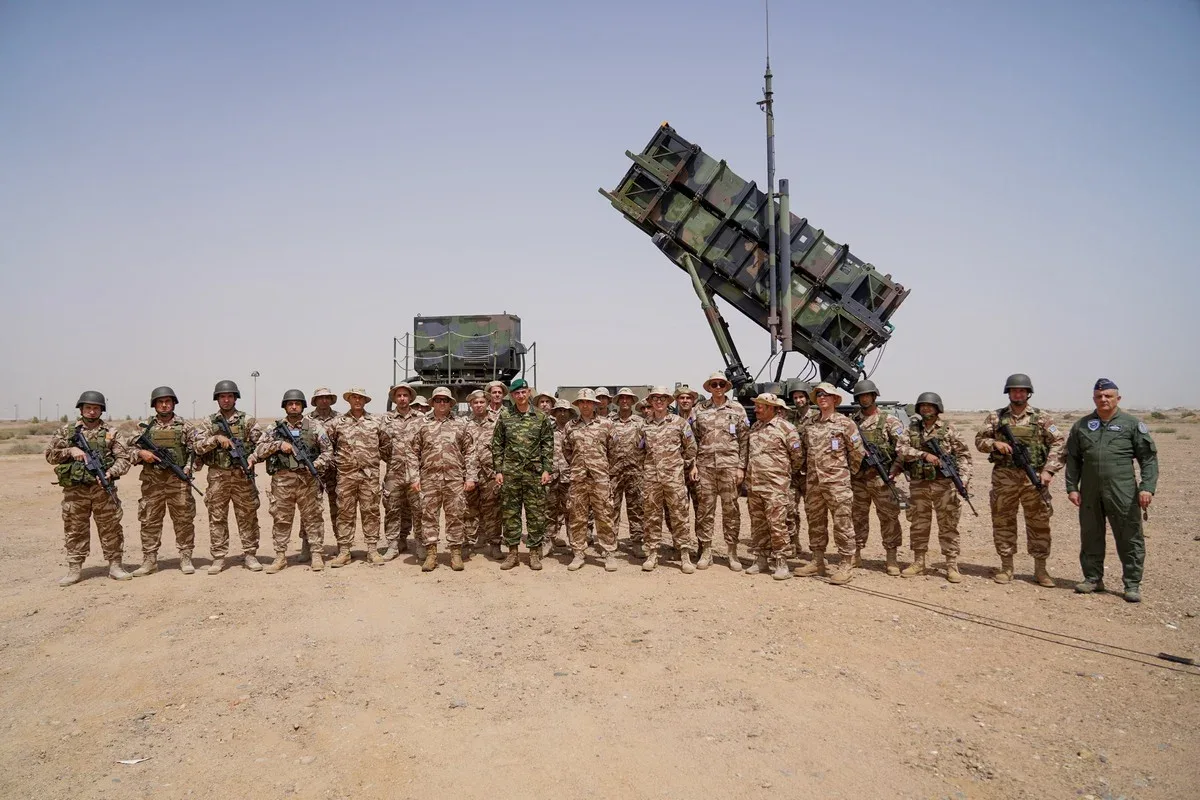
Greek personnel continue to operate a Patriot battery in Saudi Arabia, while Athens has signed the Achilles Shield air and missile defense agreement with Israel and maintains separate defense channels with the United Arab Emirates (UAE), Egypt and other Arab partners. The Patriot mission currently runs through November 2026, while Mitsotakis said on September 7 that he expected to visit Saudi Arabia "very soon."
KYRIAKOS MITSOTAKIS | PRIME MINISTER
"The fact that the Mecca agreement may have potentially brought Saudi Arabia and Türkiye closer does not mean that we automatically distance ourselves."
Bosphorus News translation from the official Greek transcript, Sept. 7, 2026
Mitsotakis Rejects the Two-Camp Reading
At the Thessaloniki International Fair on September 7, a journalist asked Mitsotakis how Greece would position itself if two camps were taking shape in the region, with Türkiye and Saudi Arabia on one side and Israel and the UAE on the other.
The question left out Pakistan, the third signatory to the Mecca Pact. On August 31, foreign and defense ministers and military chiefs from Türkiye, Saudi Arabia and Pakistan met in Istanbul for the inaugural meeting of the Strategic Political and Defence Committee established under the agreement. They also agreed to establish a secretariat in Saudi Arabia, initially headed by a Pakistani secretary-general for three years.
Mitsotakis rejected the idea that the relationships had to be read as opposing camps. He described Greece as capable of serving as a bridge between Europe, the Middle East and the Gulf and said the Mecca Pact was a development Athens would follow without changing its priority of maintaining strong relations with Gulf states.
He pointed to Saudi Arabia, the UAE and Qatar, as well as Greece's strategic relationship with Egypt. Israel also remained part of that network. In Mitsotakis' account, Greece's relationship with Israel did not require Athens to retreat from its Arab partnerships, just as Saudi Arabia's closer cooperation with Türkiye did not require Greece to distance itself from Riyadh.
The Saudi channel remained active after the pact was signed, with the Greek-Saudi defense relationship continuing alongside the new Türkiye-Saudi-Pakistan framework.
November Brings the Patriot Mission Back Into Focus
Greek personnel have operated a Patriot battery in Saudi Arabia since September 2021. A March 19 Hellenic Ministry of National Defence transcript records that the mission has been extended through November 2026.
On March 19, Defense Minister Nikos Dendias said after a working breakfast with European Union member-state ambassadors in Athens that the Greek Patriot battery had intercepted two ballistic missiles launched by Iran that morning and targeting Saudi refineries.
Separately, at the East Macedonia & Thrace Forum in Alexandroupolis, Dendias referred to Iranian missiles intercepted by Greek Patriots in Saudi Arabia. Following his meeting there with U.S. Permanent Representative to NATO Matthew Whitaker, he said the Greek Patriot battery was protecting Aramco facilities.
The Saudi official record does not identify the Greek battery in the interceptions it announced. Two Saudi Defense Ministry notices on March 19 reported the interception and destruction of ballistic missiles launched toward the Eastern Region, on the Gulf side of the kingdom, while the Greek battery is based in Yanbu on the Red Sea coast. Later that day, a separate Saudi notice reported the interception and destruction of a ballistic missile launched toward Yanbu Port but did not identify the system or unit responsible.
Yanbu contains major Saudi refining and export infrastructure and is the western end of Saudi Aramco's East-West pipeline, which links oil production facilities in the Eastern Province with the kingdom's Red Sea coast. The Patriot deployment sits within Saudi Arabia's Red Sea energy corridor and its alternative route to the Strait of Hormuz.
The mission was still active when the Mecca Pact was signed on August 7. On September 2, Crown Prince Mohammed bin Salman and Mitsotakis spoke by phone, with the Saudi Foreign Ministry describing the discussion in terms of the countries' bilateral relations and ways to strengthen them across several fields.
Gerapetritis Calls Greece a Gulf Security Exporter
Three days before Mitsotakis spoke, Foreign Minister George Gerapetritis described Greece's Gulf role in more explicit security terms.
Asked whether Greece's strategic relationship with Israel conflicted with its Arab partnerships, Gerapetritis said Athens had developed strategic relations across the Gulf and named Saudi Arabia, the UAE and Qatar. He pointed to the Patriot deployment in Saudi Arabia as an example of Greece providing security beyond its own borders.
GEORGE GERAPETRITIS | FOREIGN MINISTER
"Greece has in recent years become a security exporter to the Gulf countries."
From a Sept. 4, 2026 interview with Oikonomikos Tachydromos' OT FORUM hybrid channel at the Thessaloniki International Fair; official English translation published by the Hellenic Ministry of Foreign Affairs.
Gerapetritis also addressed Saudi Arabia's relations with other states. Riyadh, he said, could pursue discussions and cooperation with other countries without reducing the depth of its strategic relationship with Greece.
On August 31, Greece and Israel signed the intergovernmental agreement for the Achilles Shield air, ballistic missile and counter-drone system in Tel Aviv. The Hellenic Ministry of National Defence said implementation would begin immediately.
UAE Talks Continue, Qatar Link Predates the Pact
On September 9, Greek Deputy Defense Minister Thanasis Davakis met UAE Defense Ministry Undersecretary Ibrahim Nasser Al-Alawi in Athens. The Hellenic Ministry of National Defence said the talks focused on further expanding bilateral strategic cooperation in defense, security and technology.
The UAE relationship predates the Mecca Pact. The September meeting nevertheless placed another Greece-Gulf defense contact on the official record after the agreement was signed and two days after Mitsotakis rejected the two-camp reading.
Qatar belongs to the older layer of Greece's Gulf relationships. On April 1, Qatari Prime Minister and Foreign Minister Mohammed bin Abdulrahman Al-Thani met Dendias in Doha and discussed strengthening bilateral cooperation, particularly in defense. Gerapetritis then included Qatar alongside Saudi Arabia and the UAE when describing Greece's Gulf security relationships in September.
The three Gulf relationships are documented through separate bilateral channels. That overlap is part of the broader Arab and Turkic network across the Eastern Mediterranean, where Egypt, Saudi Arabia, the UAE, Qatar and Jordan maintain varying defense, maritime and strategic relationships with Greece and the Republic of Cyprus while pursuing their own ties with Türkiye.
Egypt and the Eastern Mediterranean Track Continue
On September 8, a day after the Thessaloniki press conference, Mitsotakis met Egyptian President Abdel Fattah el-Sisi and Republic of Cyprus President Nikos Christodoulides at El Alamein, continuing a trilateral format launched in 2014.
Mitsotakis called the Greece-Egypt-Republic of Cyprus mechanism a positive model for stability and prosperity in the Eastern Mediterranean. He said the leaders had discussed maritime security from the Strait of Hormuz through the Red Sea to Bab el-Mandeb and added that the format was not directed against another country.
The El Alamein declaration renewed positions on maritime jurisdiction, Libya, energy connections and the United Nations Convention on the Law of the Sea, without mentioning either the Mecca Pact or Türkiye.
On September 10, Greece, Egypt and the Republic of Cyprus opened MEDUSA 15/2026 south of Crete with French and Italian participation, continuing a military relationship that predates the Mecca Pact.
The next day, the Greek Foreign Ministry declared "full solidarity" with Saudi Arabia after the latest Houthi attacks, called for the protection of commercial shipping in the Red Sea and said Greece remained committed to regional and maritime security through its leading role in the European Union maritime security operation EUNAVFOR ASPIDES.
Mitsotakis has not given a date for his Saudi visit. The Greek Patriot mission runs through November 2026, and neither Athens nor Riyadh has announced whether the deployment will continue beyond its current term.
Sources: Office of the Greek Prime Minister, Hellenic Ministry of Foreign Affairs, Hellenic Ministry of National Defence, Pakistan Ministry of Foreign Affairs, Saudi Ministry of Foreign Affairs, Saudi Press Agency, Qatar Ministry of Foreign Affairs, Bosphorus News review and reporting.