By Bosphorus News Defense Desk
On November 25, 2026, Greece's cabinet approved a draft law to strengthen domestic defense production and military innovation, a day after Defense Minister Nikos Dendias reaffirmed the target of building an active reserve of 150,000 personnel.
Under Agenda 2030, Athens is seeking to make Greek industrial participation mandatory in new arms procurement programs. Dendias has set a minimum target of 25% and said on October 20 that the share would be enshrined in law. The bill also provides for government-to-government defense export agreements and proposes a new reserve unit for technology specialists.
The active volunteer reserve already has a legal basis under legislation enacted in January. The 150,000 figure remains a General Staff target; the current number of trained and available reservists was not disclosed.
Greek industry in arms procurement
On July 23, while presenting procurements approved by Greece's Government Council for National Security, Dendias outlined a minimum 25% domestic industrial share alongside requirements for access to military software.
The November bill seeks to formalize Greek companies' involvement in new procurement programs with reference to Article 346 of the Treaty on the Functioning of the European Union. The article allows member states, subject to legal limits, to take measures necessary to protect essential security interests connected to arms production or trade.
Kathimerini reported on November 25 that the proposed minimum is 25%. Cabinet approval does not enact the bill. Until the full text is available, the method for calculating that share, the contracts covered and any exceptions remain unclear.
A proposed Defense Industry Office would coordinate industrial policy and help Greek manufacturers establish international business relationships. The bill would also expand the powers of the Hellenic Center for Defense Innovation (ELKAK), including its ability to manage income from intellectual property.
Government-to-government export agreements would give Athens an additional channel for selling Greek defense products abroad. The scope of those sales will depend partly on the intellectual property and export rights Greek companies secure in agreements with foreign manufacturers.
Achilles Shield and software control
The €3 billion-plus Achilles Shield air and missile defense program offers a concrete reference for the proposed industrial rules. In July, Dendias said Greek industrial participation would exceed €700 million and described plans for Israeli manufacturers to establish production capacity in Greece.
He also argued that access to the source code of command-and-control systems was essential if Greece wanted to modify its military architecture without relying on foreign suppliers.
The subsequent dispute over Achilles Shield's command-and-control source code left that requirement unresolved. Moshe Patel, director of the Israel Missile Defense Organization, said the code was excluded from the licensing agreement he described. Whether Greece could secure access through separate arrangements remains unclear.
Assembly, maintenance and software development confer different industrial capabilities. Without details of the work and rights assigned to Greek companies, the value of domestic participation alone cannot establish Greece's ability to modify the system independently.
Training and retaining reservists
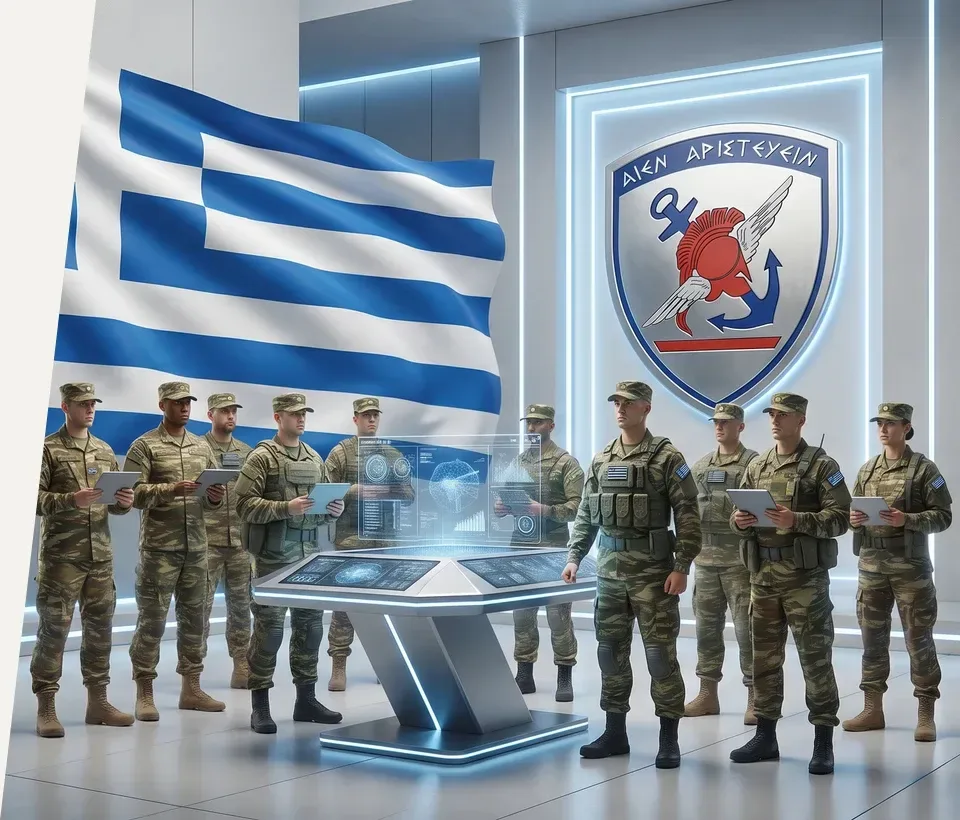
At the Hellenic Army Academy on November 24, Dendias outlined plans to expand reserve training. Centers at Avlonas and Litochoro have been renovated, and the minister expects a third center in Crete to be completed in the first half of 2027.
Article 265 of Law 5265/2026 established the active volunteer reserve in January. The Hellenic Army has since published procedures for participation, initial assessment and training. The law allows additional voluntary service without compensation, separate from compulsory reserve call-ups.
On July 29, Greece announced three new Special Operations formations in Attica, Central Macedonia and northern Evros, two of them to be staffed entirely by reservists. The plan assigns trained former personnel to specific formations. The ministry did not disclose their strength, command relationships or readiness dates.
The November bill would extend the use of specialist reservists to personnel who previously served at ELKAK or in the Hellenic National Defense General Staff's information technology and cybersecurity directorate. The unit could help the armed forces retain expertise developed during military service and draw on skills acquired later in civilian employment.
Demography and military organization
The new conscription model introduced in February reduced annual intakes from six to four, extended basic training to ten weeks and consolidated 46 specialty categories into 19. It also introduced greater exposure to unmanned systems and a pilot initiative offering certified technical skills.
Greece recorded 65,618 live births and 121,841 deaths in 2025, a natural population decline of 56,223, according to the Hellenic Statistical Authority's October 1, 2026 release. The decline was 58,449 in 2024. These figures point to a long-term demographic constraint on recruitment but do not measure the current pool of eligible conscripts or reservists.
Maintaining a reserve on the scale envisaged by the General Staff will require regular training and arrangements that allow volunteers to meet military commitments alongside civilian employment.
The reforms have proceeded alongside changes to the command structure. In January, the security council extended the terms of the service chiefs while the comprehensive military transition framework was taking shape. The reorganization has since included the removal of the First Army headquarters from the chain of command.
Greece's security planning and Türkiye
In July, Dendias acknowledged that Greece had fallen behind in military technology while a threat he did not identify had advanced. His subsequent procurement presentation included Aegean and Evros surveillance, transport to Cyprus and integrated air defense.
At the November 24 reserve conference, Dendias invoked the threat of war known in Greece as the casus belli. The reference concerns the Turkish parliament's 1995 resolution on a possible Greek extension of territorial waters in the Aegean to 12 nautical miles. Dendias cited the threat as part of his argument for strengthening the reserve.
Dendias linked reserve planning to the Aegean disputes. The industrial bill has a wider remit, covering domestic production, innovation and exports.
The substance of the industrial reform will become clearer in procurement contracts, particularly in the work assigned to Greek manufacturers, intellectual property provisions and access to military software. On the personnel side, enrollment, completed training and continued availability for duty will show how far the reserve program has progressed. The proposed specialist unit brings those two areas of reform together, but its staffing and operating arrangements remain to be clarified.
Sources: Hellenic Ministry of National Defence, Hellenic Government, Hellenic Army Mobilization Directorate, Greek Law 5265/2026, Hellenic Statistical Authority, EUR-Lex, Kathimerini, Euro2day, Bosphorus News review and reporting.