

By Bosphorus News Geopolitics Desk
United Nations Secretary-General António Guterres arrived in Cyprus on Monday evening for the first visit to the island by a sitting secretary-general in sixteen and a half years. He meets Nikos Christodoulides and Tufan Erhürman separately on Tuesday before a trilateral meeting on Wednesday.
Syrian President Ahmed al-Sharaa said his government is working toward a security agreement with Israel, the Turkish Shipowners' Association declared Black Sea risk unacceptable, and a United States forced-labour tariff on Turkish goods reached full effect.
Guterres Arrives as United Nations Denies Holding a Finished Plan
Guterres landed in Cyprus on the evening of July 27 and was received by his personal envoy María Ángela Holguín Cuéllar and the United Nations special representative on the island, Khassim Diagne. He is travelling with Rosemary DiCarlo, under-secretary-general for peacebuilding, and Jean-Pierre Lacroix, under-secretary-general for peace operations. The last sitting secretary-general to visit was Ban Ki-moon in early 2010.
Holguín met both leaders separately on Monday, having travelled to Brussels and Ankara before returning to the island. Guterres holds his own separate meetings at the leaders' official residences on Tuesday morning, visits the Committee on Missing Persons in the afternoon, and hosts both men at a private dinner in the evening. The trilateral meeting follows on Wednesday at the good offices mission inside the buffer zone.
Three positions are in play, not two. Christodoulides wants negotiations resumed from the point reached at Crans-Montana in 2017, under United Nations Security Council resolutions and European Union law. Türkiye and the Turkish Cypriot side require sovereign equality and equal international status to be accepted before formal talks begin. Cypriot and British press reports have described a third formula attributed to Holguín's contacts, built on two constituent states with political equality and a federal government of significantly reduced powers.
United Nations officials have denied that a completed plan exists. A diplomatic source in Brussels told the Cyprus News Agency that concrete results are needed from this visit and from the Wednesday meeting before the process can advance to a five-party conference. Asked about the reported framework, spokesman Stéphane Dujarric said only that the United Nations had seen and read the publication in question.
Government spokesman Konstantinos Letymbiotis described the administration as reservedly optimistic and said the visit is intended to create conditions for an enlarged conference. Greek Prime Minister Kyriakos Mitsotakis, receiving Christodoulides in Athens before the visit, tied the urgency to the secretary-general's departure at the end of the year. "Now is the time to explore the possibility of turning this into reality," he said.
Guterres spoke with Turkish Foreign Minister Hakan Fidan by telephone on July 26, ahead of his arrival. The Bi-communal Peace Initiative planned parallel rallies in the north and south under the slogan Federal Solution Now, timed for the same hour as the leaders' dinner.
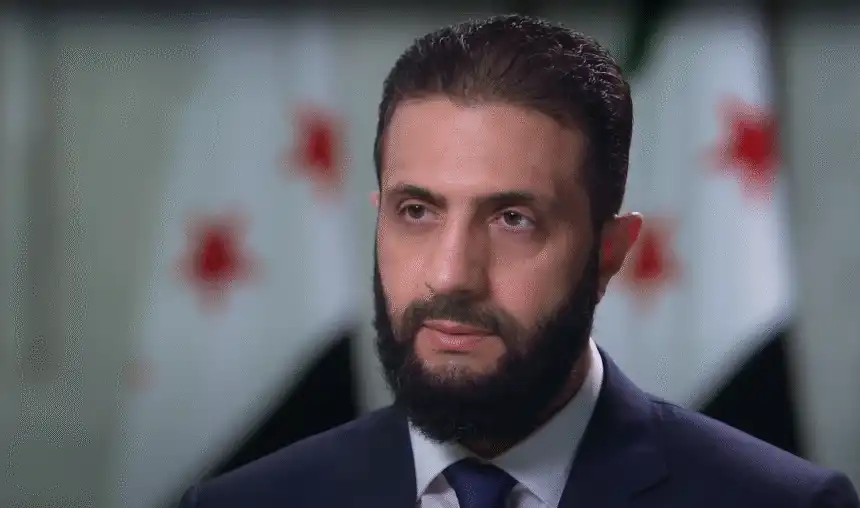
Damascus Seeks Security Agreement With Israel as United Nations Presses on Violations
Al-Sharaa told Al Jazeera that Syria is working toward a security agreement with Israel with the participation of several countries. He said that if such an agreement holds, it could open a second stage of talks on comprehensive peace, without Syria conceding its right to the occupied Golan Heights. He described Damascus as "avoiding confrontation with Israel because it is not in our interest" and said Syria is seeking international support to move Israel toward a more balanced policy.
He ruled out any Syrian military intervention in Lebanon while warning that a collapse of order there would reach Syria directly. In the same interview he said an expansion of the United States and Israeli campaign against Iran would carry consequences across the region.
Israel captured the Golan Heights in the 1967 war and annexed the territory in 1981. The 1974 Disengagement Agreement governs the separation of forces along the line.
Guterres addressed the same file from Damascus. On the closing day of a three-day visit, he said the United Nations recognises the Golan Heights as Syrian territory and announced that a detailed report on Israeli violations in Syria will go to the Security Council this month. He called violations of Syrian sovereignty and territorial integrity unacceptable and urged Israel to comply with the 1974 agreement. He met al-Sharaa and Foreign Minister Asaad al-Shaibani during the visit.
The telephone call between Fidan and Guterres on July 26 covered Syria and Cyprus in the same conversation.
United States and Iran Hold Fire for a Third Day
Washington and Tehran maintained a pause in strikes for a third consecutive day on July 27, after nearly two weeks of nightly exchanges. Mediators led by Qatar and Pakistan continued passing messages between the two capitals. The proposal under discussion asks both sides to return to their positions of July 9 as a route back to negotiations.
President Donald Trump said the United States halted its campaign at Iran's request. "They asked us very nicely, 'Please stop, let's meet,'" he told reporters, adding that strikes would resume if no agreement followed. Iran's Foreign Ministry said no negotiations are underway and that Tehran will not allow Washington to set the timing of war and peace.
A second channel has opened alongside the Qatari and Pakistani effort. Iranian negotiators met Omani counterparts over the weekend on restoring navigation through the Strait of Hormuz.
Traffic through the strait remains far below normal. Fewer than ten commodity ships passed on Monday, against roughly one hundred on a typical pre-war day. Saudi Arabia said it shot down drones fired by Iran-aligned militias in Iraq at its petroleum facilities, and Houthi forces claimed attacks on Aramco-linked sites at Jizan and Yanbu, which neither the Saudi government nor the company confirmed. Brent crude fell toward $87 a barrel, its lowest level in more than a week.
Fidan spoke by telephone on July 26 with Qatari Prime Minister and Foreign Minister Sheikh Mohammed bin Abdulrahman Al Thani and with Pakistan's army chief, Field Marshal Asim Munir, on the state of the negotiations.
Washington applied separate pressure on July 24. The Treasury's Office of Foreign Assets Control designated Istanbul-based Zedpay Finansal Sistem ve Hizmetleri and its chairperson Mehdi Rezazadeh, alongside three other individuals and eight entities tied to the network of Iranian financier Babak Zanjani. The Treasury said Zedpay supplied cross-border payment capability to the sanctioned Zedxion exchange and framed the designations as a response to Iranian attacks on commercial vessels in the Strait of Hormuz.
Turkish Shipowners Call Black Sea Risk Unacceptable
The Turkish Shipowners' Association said 136 commercial vessels have come under attack in Russian and Ukrainian ports and elsewhere in the Black Sea in recent months. It described the security risk as having reached unacceptable levels.
The association advised its members against sailing to Russian and Ukrainian ports and urged a wait-and-see approach to new freight contracts. It called on the International Maritime Organization, United Nations bodies and national authorities to act against further attacks on merchant shipping.
Turkish Exporters Assembly president Mustafa Gültepe set out the exposure. Maritime transport carries 57.4 percent of Türkiye's exports to Russia and 35 percent of its exports to Ukraine.
Attacks continued through the period. Russian drones struck the closed port of Mykolaiv overnight, hitting a vessel that has been trapped there since 2022 and killing one person. It was the third strike on the port in ten days. A Turkish-operated cargo ship was hit on the Danube the previous day.
Kazakhstan more than halved its daily oil output after Ukrainian drone strikes forced the closure of its main Black Sea export terminal, falling to about one million barrels per day from a June average of 2.16 million. The Caspian Pipeline Consortium resumed loadings on July 27 after a week-long suspension, easing one source of pressure on crude prices.
Forced-Labour Tariff on Turkish Goods Takes Full Effect
The United States imposed an additional 12.5 percent duty on covered imports from Türkiye on July 24, under Section 301 of the Trade Act of 1974. The measure covers 60 economies accounting for 99.4 percent of American imports and applies on top of ordinary customs duties. Goods already in transit were exempt only if entered for consumption before 12:01 a.m. Eastern time on July 28, a window that closes today.
Placement matters more than the rate. The lower 10 percent band covers economies that impose a forced-labour import prohibition without yet enforcing it effectively, named in the presidential memorandum as Canada, Ecuador, the European Union, Indonesia, Mexico and Pakistan, together with economies that have taken on commitments through an Agreement on Reciprocal Trade. Seventeen economies sit in that band, several of them direct competitors of Turkish exporters in textiles and apparel. Türkiye sits in the 12.5 percent band alongside China and Vietnam.
The action replaces the temporary 10 percent global tariff that expired the same morning, itself introduced after the Supreme Court struck down the administration's emergency-powers tariffs in February. The United States Trade Representative reached its findings after two rounds of hearings and more than 2,100 public comments.
A route down exists. Several economies moved from the higher band to the lower one by adopting a forced-labour import prohibition after the proposed rates were published.
Armenia Deepens European Defence Contacts as Israel's Genocide Vote Stalls
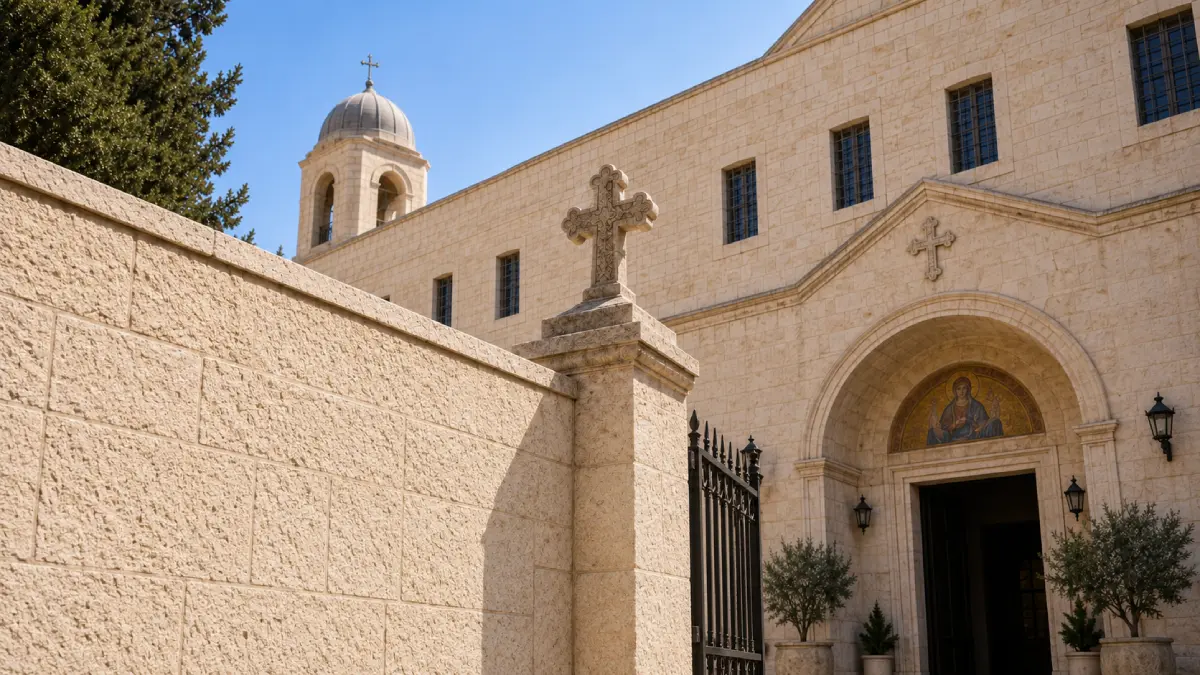
Armenia's ambassador to the Republic of Cyprus, Inna Torgomyan, met Defence Minister Vasilis Palmas on July 27 to review bilateral relations and possible cooperation linked to Yerevan's engagement with the European Union. No new defence agreement, procurement programme or exercise was announced.
The meeting followed the signing on April 22 of the 2026 bilateral and trilateral defence cooperation programmes between Armenia, Greece and the Republic of Cyprus. The format runs on annual plans rather than a formal alliance and covers joint exercises, special forces exchanges and military education. Its participants have not described it as directed against Türkiye or any other state.
A second Armenian file moved in the opposite direction. The Armenian Patriarchate of Jerusalem accused Azerbaijan of influencing the removal of a planned Knesset vote on Armenian genocide recognition. Israel's government approved recognition on June 28 and presented the decision to parliament on June 30, but the plenum vote did not take place. Haaretz reported that Prime Minister Benjamin Netanyahu blocked it following Azerbaijani pressure. Türkiye's Foreign Ministry rejected the Israeli recognition decision as politically motivated in statement number 121, issued on June 28 and circulated worldwide through Turkish diplomatic missions.
Otokar Starts Building Turkish Armour Inside the European Union
Otokar has begun delivering COBRA II armoured vehicles produced at its Mediaş plant in Romania, moving a 1,059-vehicle procurement programme into local serial production. The company acquired the former Automecanica facility in June, giving it its first owned manufacturing operation inside the European Union.
The contract, signed in November 2024, is worth about 857 million euros excluding value-added tax and is the company's largest single armoured vehicle export. The first 278 vehicles were built in Türkiye, with the remaining 781 scheduled for production in Romania over five years. More than 270 Türkiye-built vehicles had already been delivered before the Mediaş line became operational.
A dispute over earlier delivery delays remains unresolved. Romtehnica submitted payment claims relating to the production schedule, and Otokar made the disputed payments while filing legal actions seeking their cancellation.
The production base arrives while Türkiye remains outside the European Union's SAFE procurement instrument and while modernisation of the customs union stays unresolved.
Terror-Free Türkiye Legislation Moves Toward Drafting
President Recep Tayyip Erdoğan chaired a meeting of the Justice and Development Party's central executive board on July 27, with planned legislation tied to the terror-free Türkiye initiative at the top of the agenda. Party officials briefed him on preparations for the legal framework, and technical drafting is expected to begin after his assessment and approval.
The initiative is directed at completing the disarmament and dissolution of the PKK. The presidential cabinet convenes on July 29 after a two-week break, with the latest stage of the process and field assessments by the National Intelligence Organization among its main items. Economic policy is also on the agenda following the central bank's decision to hold the policy rate at 37 percent.
Strategic Take
The denial is the most informative element of the Cyprus visit. United Nations officials insist no completed plan exists, yet the reported formula circulating in Cypriot and British media, two constituent states with political equality and a weakened federal centre, sits between the two declared positions and belongs to neither. Christodoulides cannot accept a framework that dilutes the Crans-Montana baseline. Erhürman cannot accept one that stops short of sovereign equality. An unowned set of ideas is the only material that fits between them, which is why the sides are negotiating over method rather than substance, and why Wednesday's meeting will be judged on whether it produces enough to justify convening a five-party conference before Guterres leaves office.
Two maritime corridors are constricting at once and Türkiye is exposed at both ends. Hormuz traffic is running at a tenth of normal volume while the Turkish Shipowners' Association tells its members to stay out of Russian and Ukrainian ports. The association's advisory is a commercial judgment rather than a diplomatic one, and commercial judgments of that kind are slower to reverse than ceasefires. Insurance pricing and contract terms will carry the effect well past any pause in the fighting.
Washington is applying and withholding pressure on Türkiye through separate instruments. The forced-labour tariff places Turkish exporters above their competitors in the same product categories, and the Zedpay designations reach into Istanbul's financial infrastructure. Operational cooperation continues regardless, from the Baltic air policing rotation to the mediation contacts Fidan maintained with Doha and Islamabad. Otokar's Romanian plant shows the pattern in industrial form: with SAFE closed and the customs union unmodernised, Turkish defence manufacturing has bought its way inside the European Union rather than waiting to be admitted.
The Armenian file is moving on two tracks that point in opposite directions. Yerevan is building structured defence contacts with Greece and the Republic of Cyprus and routing them toward European institutions, while Baku is credited with reaching into the legislative agenda of a state that had already approved recognition at cabinet level. Neither development produced a formal outcome this week. Both establish where the contest is being conducted.
Sources: United Nations reporting, Cyprus News Agency, Cyprus Mail, Reuters, Al Jazeera, Haaretz, Turkish Foreign Ministry, US Treasury, Office of the United States Trade Representative, White House presidential actions, Turkish Shipowners' Association, Turkish Exporters Assembly, Armenian Embassy in the Republic of Cyprus, Otokar, Bosphorus News review and reporting
Read yesterday's brief: Eastern Mediterranean Strategic Brief | July 26, 2026