
By Bosphorus News Geopolitics Desk
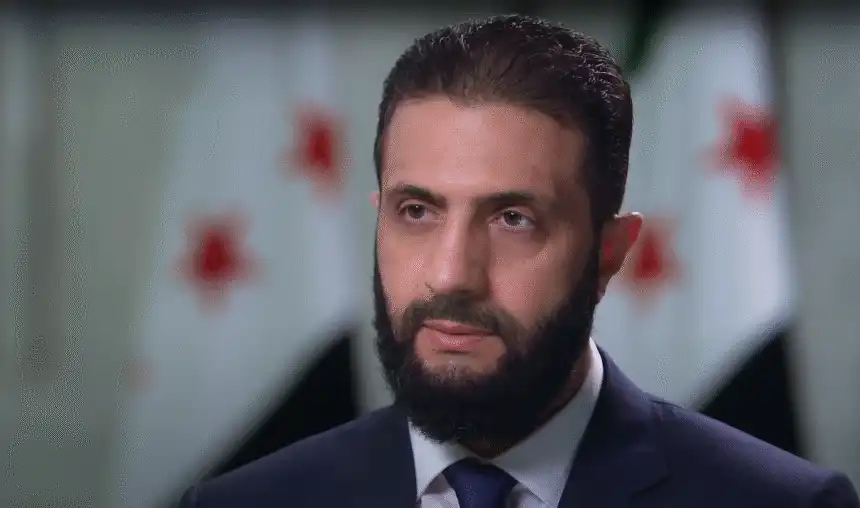
Syrian President Ahmed al-Sharaa said Damascus is working with several countries toward a security agreement with Israel that could lead to broader negotiations, while ruling out any Syrian military intervention in Lebanon.
In an interview with Al Jazeera on July 26, al-Sharaa said Syria wants to avoid confrontation with Israel and is seeking international support for an arrangement that would contain further escalation. He said Damascus would not abandon its claim to the occupied Golan Heights.
Damascus Pursues Security Agreement With Israel
Al-Sharaa said several countries were involved in the talks but did not identify them or disclose the terms under discussion.
He described the initiative as a security arrangement rather than a completed peace settlement, suggesting that an initial deal could create space for wider negotiations.
The talks follow Israel's expansion of its military presence inside Syria after the fall of Bashar al-Assad's government in December 2024. Israeli forces moved into strategic positions, including areas around Mount Hermon, while air strikes continued elsewhere in the country.
Al-Sharaa said Damascus was avoiding a military response and relying on diplomacy to limit further Israeli action. The Golan Heights would remain outside any immediate arrangement. Israel captured the territory in 1967 and later annexed it in a move that is not internationally recognized.
Al-Sharaa Rejects Intervention in Lebanon
Al-Sharaa also rejected suggestions that Syria could send forces into Lebanon to address instability or confront Hezbollah.
He said Damascus was discussing possible measures with the Lebanese government but would leave Beirut to decide whether and how to use them.
The Syrian president acknowledged that instability in Lebanon could affect Syria directly, but said his government was not considering military intervention. The position marks a break with Syria's former role in Lebanon, where its forces remained for decades before withdrawing in 2005.
Lebanon is working through a US-backed framework involving Israeli withdrawal from parts of the south, a larger Lebanese army deployment and efforts to place weapons under state control.
Hezbollah rejects disarmament, while Lebanese officials say continued Israeli operations are obstructing the army's deployment.
US President Donald Trump has suggested that Syria could help contain Hezbollah, particularly by restricting supply routes. Al-Sharaa's comments indicate that Damascus may cooperate on border security and political coordination but will not send forces into Lebanon to impose a settlement.
Golan Claim Remains Outside Immediate Talks
Al-Sharaa's comments draw a clear distinction between the two security files.
Damascus is seeking an arrangement with Israel that could reduce air strikes, incursions and the risk of direct conflict without settling the Golan dispute. In Lebanon, it supports stronger state control over security and weapons but rejects a return to the military role Syria held before 2005.
The approach allows Damascus to distance itself from Hezbollah while reassuring Beirut that Syria is not seeking to restore its former influence through force.
Sources: Al Jazeera, Reuters, Associated Press, Lebanese official statements, Bosphorus News reporting and review.