

By Bosphorus News Geopolitics Desk
Commercial vessels have resumed limited movement through the Strait of Hormuz after renewed attacks brought tanker traffic close to a standstill. The ships now entering or leaving the Gulf are doing so amid reduced traffic, altered routes, disabled tracking signals and mounting insurance pressure.
In the Black Sea, Türkiye, Romania and Bulgaria have widened their joint naval mission beyond drifting mines to the protection of energy, telecommunications and other critical infrastructure. Syria, meanwhile, says it has detained an Islamic State-linked cell behind bombings carried out during French President Emmanuel Macron's visit to Damascus.
Hormuz Traffic Returns Under War Conditions
Several liquefied natural gas tankers entered the Strait of Hormuz on Friday, while more vessels connected to Japanese operators left the Gulf following days of renewed military escalation.
The crossings offered the first sign of movement after tanker traffic fell to its lowest level in weeks. They did not mark a return to normal shipping. Some vessels switched off their automatic identification systems, while others used routes closer to the Iranian coast as operators sought to reduce their exposure.
War-risk insurers continued to reassess coverage after attacks on commercial vessels near the strait. Some underwriters advised shipowners to postpone voyages, raising the cost and uncertainty surrounding one of the world's most important energy routes.
The changes are visible even without a formal closure of the strait. Shipowners are deciding when and how to cross according to military risk, insurance availability and the likelihood of being identified or targeted.
The Ankara Declaration adopted at this week's NATO summit called for freedom of navigation through Hormuz. Traffic data since the renewed attacks show how little commercial certainty remains behind that principle.
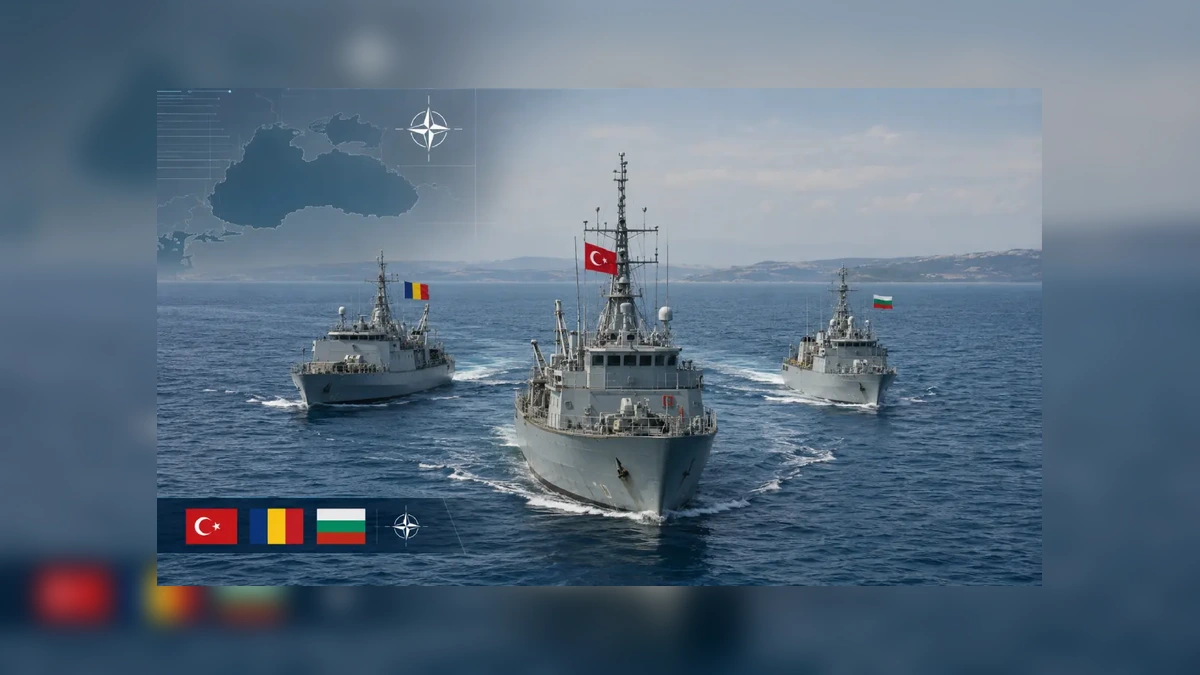
Black Sea Mission Moves Beyond Mine Clearance
Türkiye, Romania and Bulgaria have expanded the mandate of the Mine Countermeasures Black Sea Task Group to cover critical maritime infrastructure.
The three defence ministers signed the amendment during the NATO summit in Ankara. The mission, established in 2024 to detect and destroy drifting mines, will now include energy installations, telecommunications links, pipelines and other infrastructure on and beneath the seabed.
The decision moves the group into a wider field of maritime security. Black Sea governments are confronting the risk of sabotage and unmanned attacks alongside the mine threat created by the Russia-Ukraine war.
The expansion also gives the three coastal allies a mechanism under their own command rather than waiting for a permanent NATO naval deployment. Bosphorus News examined the new mandate and its operational implications in a separate report on the Türkiye-Romania-Bulgaria mission.
The infrastructure covered by the mission sits inside a broader competition over how energy reaches Europe. The suspension of the BOTAŞ-Bulgargaz gas agreement has exposed the commercial and political limits surrounding Türkiye's gas-hub ambitions.
An emerging Türkiye-Azerbaijan electricity corridor toward Southeast Europe adds another layer. Protecting the Black Sea seabed is becoming inseparable from the pipelines, cables and electricity routes being built or renegotiated around it.
Damascus Links Bombing Cell to Islamic State
Syrian authorities said preliminary investigations had linked a detained cell to the Islamic State group following a series of bombings in Damascus.
The attacks took place during Macron's visit, the first by a European Union head of state since the fall of Bashar al-Assad. Explosions struck close to the hotel where the French president had stayed and overshadowed talks with Syrian President Ahmed al-Sharaa on reconstruction, security cooperation and Syria's return to international diplomacy.
Islamic State has not claimed responsibility. The link rests on the Syrian authorities' initial investigation and should not yet be treated as an independently established attribution.
The arrests confront the Sharaa government with a security problem at the centre of its diplomatic opening. Western governments are moving toward engagement with Damascus, but investment, reconstruction and sanctions relief depend partly on whether the new authorities can prevent underground cells from operating in the capital.
The bombings were timed to challenge that claim of control. They placed Syria's most important European visitor beside the security vacuum the new government is trying to close.
Lebanon's Pilot Withdrawal Has Yet to Begin
A U.S. official said Washington expected the first withdrawal from an Israeli-held pilot area in southern Lebanon to begin within days, allowing the Lebanese army to assume control.
The pilot-zone proposal is part of a U.S.-backed framework discussed since June. It envisages phased Israeli withdrawals followed by Lebanese army deployments in areas from which Hezbollah and other armed groups would be excluded.
No transfer had been independently verified by Friday. Israeli and Lebanese officials previously rejected a U.S. claim that an initial withdrawal had already taken place.
Israel continues to link a broader withdrawal to Hezbollah's disarmament and the removal of its forces from southern Lebanon. Hezbollah rejects those terms, leaving the pilot plan dependent on the same dispute that has delayed the wider agreement.
The immediate question is whether Israel, the Lebanese state and Hezbollah will accept the conditions required to change control on the ground.
Strategic Take
Hormuz has entered a phase in which maritime traffic can move without regaining commercial normality. The strait remains open, but the decision to cross now depends on military exposure, tracking practices and insurance.
The Black Sea task group has taken an existing mechanism and given it a larger job. Syria and Lebanon have diplomatic plans, but neither has settled the question of who can enforce them.
Sources: NATO, Reuters, Associated Press, Romanian Ministry of National Defence, Syrian authorities, Bosphorus News review and reporting.
Yesterday's brief: https://www.bosphorusnews.com/article/eastern-mediterranean-strategic-brief-july-9-2026-1783585285792