
By Bosphorus News Energy Desk
Akkuyu's first reactor was still awaiting startup when the World Nuclear Industry Status Report 2026 went to press, three years after its original target. The report draws attention to a clause in the 2010 Türkiye–Russia agreement that could affect the electricity price after a delayed startup.
Released in September, the independent assessment also finds that solar generated more electricity than nuclear power for the first time in 2025, while reactor construction remained concentrated in China and Russian-backed projects.
Akkuyu's Delays and the Electricity Price
Construction of Akkuyu-1 began in April 2018, with startup originally planned for 2023. Energy Minister Alparslan Bayraktar said he hoped to generate first electricity by October 29, 2026, but maintained year-end as the target if that date could not be met.
Under Article 10(11) of the 2010 intergovernmental agreement, the electricity sale price is to be adjusted if a reactor enters operation after the agreed schedule, except in force majeure cases specified in the power purchase agreement. First electricity generation and commercial operation are separate milestones.
That power purchase agreement remains confidential. The report cannot establish whether the delays qualify for an exemption or how any adjustment would be calculated. Missing the October 29 first-power target would not, by itself, trigger the clause.
Blocked Transfers, New Russian Funding
The report cites US banks' blocking of transfers worth at least $2 billion. Rosatom later said the issue had been resolved, and Türkiye announced about $9 billion in additional Russian funding in December 2025.
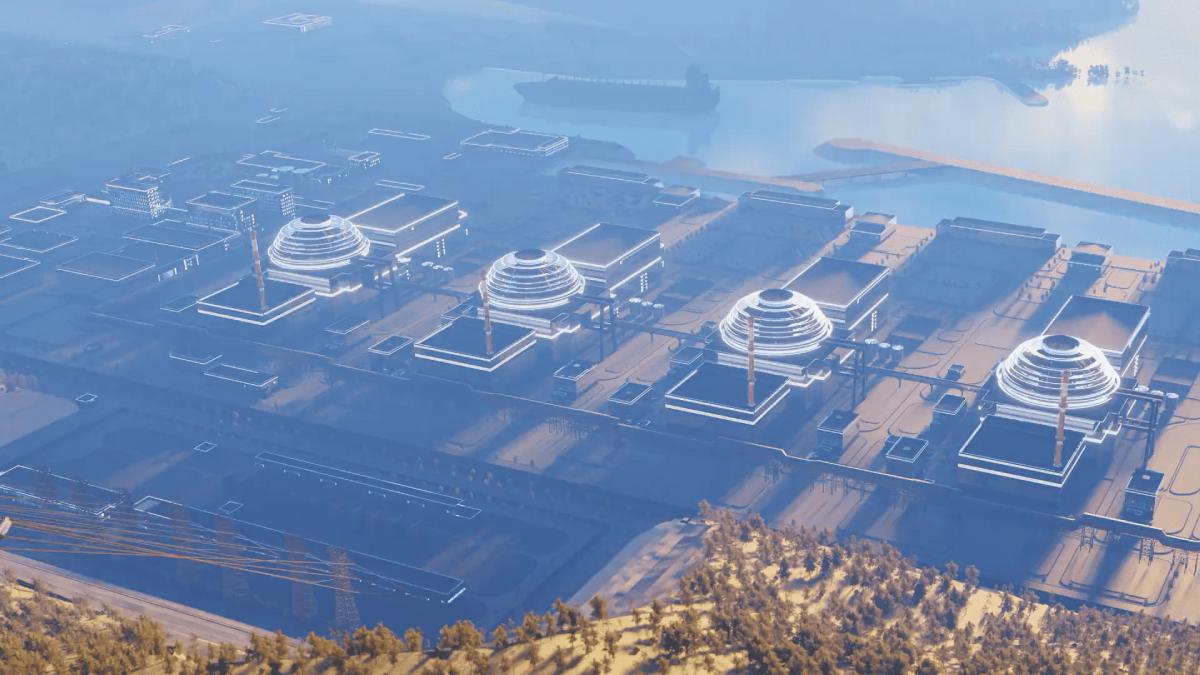
Rosatom is building the four-reactor, 4.8-gigawatt plant under a Russian-owned and operated model. It has also discussed selling a stake to Turkish investors, though the report records no completed sale. The talks add to questions over Akkuyu's financing and long-term Russian role.
Türkiye's Expanding Solar Fleet
Renewables generated 43.4 percent of Türkiye's electricity in 2025, including 16.03 percent from hydropower, 11.1 percent from wind and 10.5 percent from solar. Installed solar capacity reached 26 gigawatts by the end of March 2026.
Türkiye ranked tenth worldwide for new solar installations in 2025, according to the report. Rooftop systems at industrial sites and small businesses accounted for an estimated 84 percent of additions.
Ankara targets 120 gigawatts of combined solar and wind capacity by 2035 and up to 20 gigawatts of nuclear capacity by 2050. The report questions how those goals fit projected demand, coal generation and 33.1 gigawatts of preliminary licenses for storage-linked wind and solar projects. That figure does not represent installed battery capacity.
Türkiye is also considering suppliers for nuclear projects in Sinop and Thrace, alongside US small modular reactor technologies. The report records no final vendor decision for those plants.
Solar Passes Nuclear as Construction Expands
Global nuclear generation rose 1.1 percent to a record 2,703 terawatt-hours in 2025, with the increase entirely attributable to China. Output elsewhere declined 0.2 percent, while nuclear's share of global electricity fell to 8.8 percent.
Of 73 reactors under construction at mid-2026, 37 were in China. Chinese or Russian companies were implementing 63 of the projects. All 16 reactors connected to the grid during 2023–2025 missed their original construction schedules.
Solar generated 2,783 terawatt-hours of net electricity in 2025, passing nuclear's 2,703 terawatt-hours for the first time. Wind produced approximately 2,690 terawatt-hours.
Sources: World Nuclear Industry Status Report 2026, Türkiye's Ministry of Energy and Natural Resources, 2010 Türkiye–Russia Intergovernmental Agreement, TEİAŞ, Energy Institute, Bosphorus News review and reporting.
Full Report here.