
By Murat Yıldız
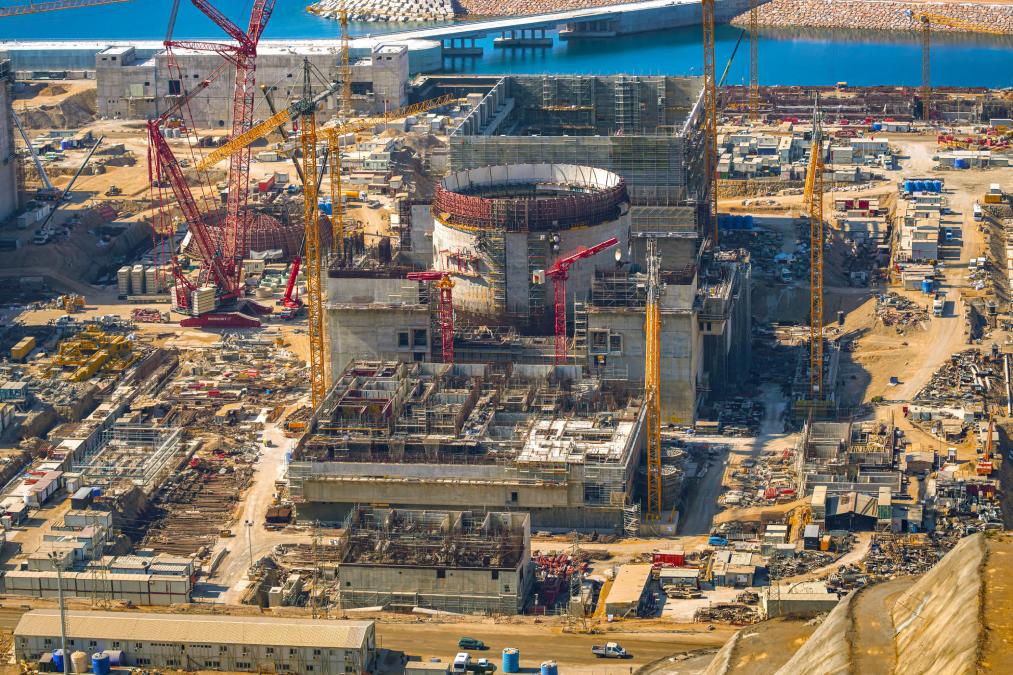
Türkiye has entered the commissioning year of its first nuclear power plant. At Akkuyu, the real point of no return is not when electricity reaches the grid, but when the reactor achieves first criticality. Once the chain reaction becomes self-sustaining, the plant is no longer a project under construction. It becomes a functioning nuclear installation, governed by permanent legal, safety, and international obligations.
From that moment on, Akkuyu cannot simply be paused, reversed, or politically re-examined. Shutting down a reactor after criticality is not a policy choice. It is a long term liability with legal, financial, and environmental consequences. First power may be the public milestone. First criticality is the irreversible one.
Until that point, delays and objections can be absorbed. After it, they cannot. An operating nuclear plant reshapes the state around it. Grid planning, emergency protocols, regulatory routines, and foreign commitments all begin to orbit a system that must keep running. Akkuyu's activation therefore marks not completion, but entrenchment.
The road to this stage was not smooth. Western export restrictions delayed key components, including electrical systems supplied by German firms. These obstacles were eventually bypassed through alternative sourcing. Inside Türkiye, this was framed as success under pressure. Strategically, it meant something else. Akkuyu no longer depended on Western approval. The project moved onto a closed bilateral track between Ankara and Moscow.
Once first criticality is reached, that shift becomes permanent. Akkuyu stops being a long construction story and becomes a fixed feature of Türkiye's energy system, shaping choices far beyond the political moment that launched it.
The Domestic Framing: Energy Independence
Inside Türkiye, Akkuyu is presented as an energy independence project. The argument is simple and effective. Nuclear power promises steady electricity, lower import bills, and relief from long-standing dependence on gas. Official projections suggest the plant will supply around ten percent of national electricity demand and reduce annual gas imports by roughly one and a half billion dollars.
This framing also fits Türkiye's climate goals. Nuclear energy is described as the stabilizing backbone of the transition, supporting renewables by providing constant output. In this narrative, Akkuyu is not controversial. It is corrective.
There is also symbolism. Producing nuclear power is portrayed as a mark of strategic maturity. Electricity is generated on Turkish territory, regulated by Turkish authorities, and consumed by Turkish industry. Independence, in this telling, is measured by where power is produced and how reliably it arrives.
This framing is not false. It is incomplete.
It defines independence by outcome, not by control. It focuses on supply, not authority. What it leaves unanswered is whether a state that consumes electricity also commands the system that produces it.
The Independence Paradox
This is where the paradox emerges.
Akkuyu reduces Türkiye's exposure to short-term energy markets. At the same time, it creates a deeper and longer dependence that cannot be adjusted quietly or gradually. Nuclear power does not behave like other energy sources. Once the system is operating, alternatives narrow sharply.
Fuel supply, maintenance, software, training, and daily operation remain tied to a single external actor. In Akkuyu's case, that actor is Russia, acting through its state-owned nuclear company. This is not a commercial relationship that can be rebalanced over time. It is an operational dependence renewed every day the plant runs.
Türkiye's nuclear regulator has grown alongside the project. Yet its authority has developed inside a framework designed, supplied, and operated by Russia. Oversight exists, but it operates within rules written elsewhere. Institutional capacity has expanded. Strategic freedom has not expanded with it.
This is the independence paradox at the heart of Akkuyu. Türkiye gains electricity while surrendering control over the system that generates it. Consumption becomes domestic. Authority remains shared.
A Geopolitical Anchor
Akkuyu's importance cannot be separated from its political endurance. The project survived the collapse of Türkiye–Russia relations after the 2015 jet incident. It continued through sanctions, diplomatic freezes, and the war in Ukraine. While many areas of cooperation stalled or reset, Akkuyu moved forward.
This durability is structural. Nuclear projects operate on timelines measured in decades, not governments. With costs exceeding thirty billion dollars and obligations that cannot be suspended without severe consequences, withdrawal is no longer a realistic option for either side.
Sanctions tested this directly. When Western restrictions targeted key components in 2024 and 2025, the project adapted rather than halted. Alternative suppliers were found. Progress continued. The message was clear. Akkuyu could not be stopped from the outside.
Ownership reinforces this permanence. The plant is owned and operated by Russia. Russian personnel, systems, and capital will remain on site for decades. Regulation, however, is formally Turkish, exercised by the Nuclear Regulatory Authority. The result is a built-in tension between domestic oversight and foreign operational control. This is not a temporary presence or a service contract. It is a long-term Russian operational footprint on Türkiye's Mediterranean coast, embedded in a critical sector of a NATO country.
Akkuyu is therefore not just a power plant. It is a geopolitical anchor.
Dependence That Grows Over Time
Ownership defines permanence. Fuel defines duration.
Nuclear dependence is renewed repeatedly. Every refueling cycle extends the relationship. Every waste decision binds future governments to today's choices. This horizon stretches far beyond the working life of any reactor and far beyond the political logic that justified its construction.
Under the 2010 intergovernmental agreement, the return of spent fuel to Russia is framed as a possibility, not an unconditional guarantee. Any take-back arrangement requires separate future agreements. This means the relationship does not conclude at commissioning or even at operation. It must be revisited, renegotiated, and renewed repeatedly over decades.
Fuel supply and waste handling remain under Russian control. These are not technical footnotes. They sit at the core of daily operation and long-term liability. Unlike other energy arrangements, there is no clean exit once the system is active. Each cycle deepens commitment and narrows alternatives.
This long view rarely appears in public debate. Discussions focus on annual savings and near-term stability. Nuclear power operates on a different clock. Its dependencies accumulate slowly, then become immovable.
Energy Security Versus Energy Sovereignty
Akkuyu exposes a distinction that is often blurred but strategically decisive.
Energy security is about supply.
Energy sovereignty is about control.
Akkuyu strengthens energy security. It delivers steady electricity and reduces exposure to short-term disruptions. On those terms, it succeeds.
Energy sovereignty operates on a different axis. It is defined not by output, but by control and the ability to alter course under stress.
At Akkuyu, key operational systems remain outside unilateral Turkish authority. Under normal conditions, this works. Under crisis conditions, the limits become visible. Security cushions risk. It does not replace sovereignty.
This is why Akkuyu is both stabilizing and constraining. It removes certain vulnerabilities while creating others that cannot be managed through short-term policy choices.
Western Acceptance
As commissioning approaches, Western opposition has faded. This is not because concerns disappeared, but because leverage did.
Once it became clear that restrictions could be bypassed and the project would proceed regardless, pressure gave way to adjustment. At the same time, Western governments and companies shifted focus toward Türkiye's future nuclear plans. Ankara is now in active discussions with U.S. firms on small modular reactors and with South Korea over new large-scale projects, including at Sinop.
In this context, opposing Akkuyu has given way to competing for what comes next. Silence reflects recalibration, not approval. Akkuyu is now treated as a fact to be managed, not a decision to be reversed.
After First Criticality
Once Akkuyu achieves first criticality, the balance shifts decisively.
In the short term, Türkiye gains. Around ten percent of national electricity will come from a single site. Import bills fall. Stability improves. These benefits are immediate and visible.
At the same time, leverage collapses. When one facility carries that much weight in the grid, disruption becomes unthinkable. Any attempt to reopen ownership or operational terms runs into the same barrier. The cost of interruption is too high.
After first criticality, the question is no longer whether Akkuyu benefits Türkiye. It is how much freedom remains once the system is switched on.
The independence paradox is complete. Türkiye reduces exposure to markets, but locks itself into long-term dependence on Russia that cannot be renegotiated without risk. Energy is secured. Sovereignty is constrained.