
By Bosphorus News Geopolitics Desk
Aleksandar Vučić has twice referred to the commander of NATO's Kosovo Force by his nationality rather than his rank. Ankara has said nothing.
The Handover
KFOR announced on August 10 that it had begun a gradual transition of its permanent presence on the main bridge over the Ibar, known in Albanian as the Ibër, along with the gradual integration of Kosovo Police into the security structure at the Visoki Dečani monastery. The mission cited an improved security situation.
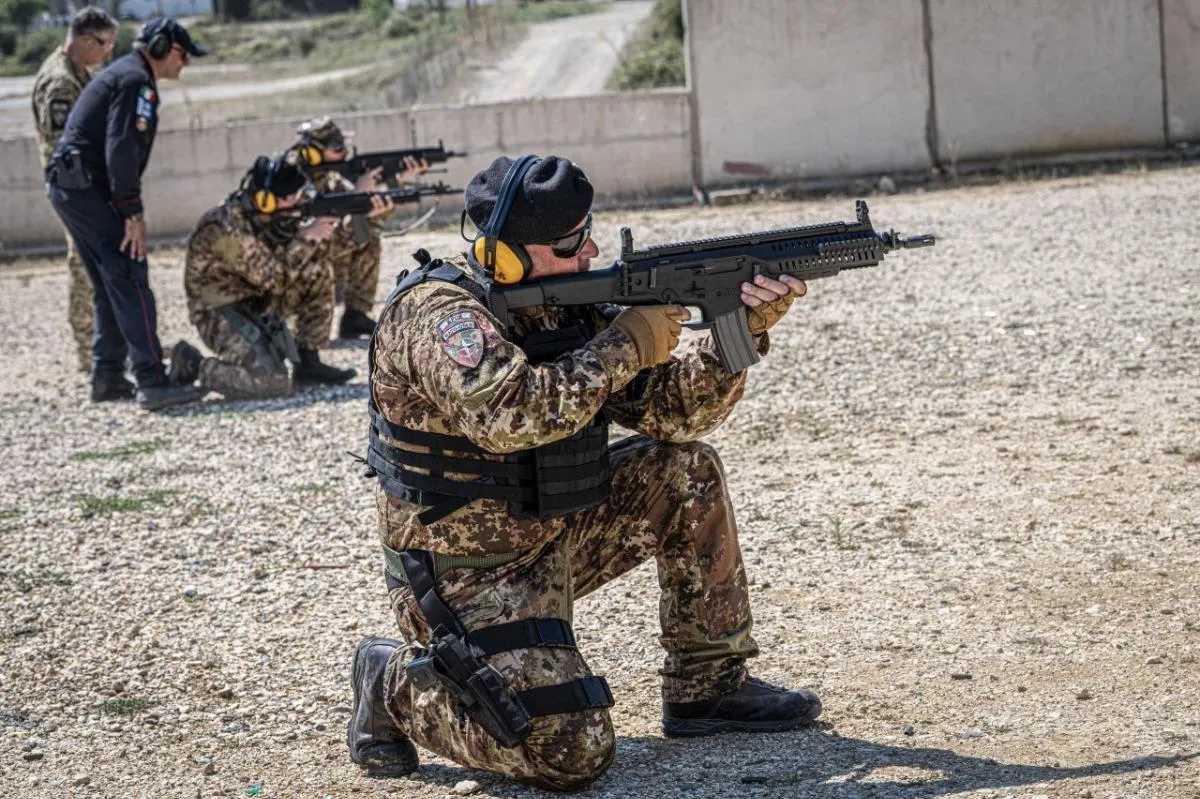
The post is 27 years old, held since 1999 and most recently by Italian Carabinieri at the northern end. The bridge separates the Serb-majority north of Mitrovica from the Albanian-majority south and has marked that division since the war. The transition follows a broader reduction in KFOR's troop levels.
KFOR said it remains the first responder for the monastery and will keep working with the Serbian Orthodox Church, Kosovo institutions, international organisations and the Serbian Armed Forces. The mission operates under United Nations Security Council Resolution 1244 and is the third security responder, after Kosovo Police and the European Union Rule of Law Mission (EULEX).
Major General Özkan Ulutaş called the move an optimisation of KFOR's deployment. Meeting Serb List representatives at Camp Film City, at the request of party president Zlatan Elek, he said the transition is in its initial phase, is conditions-based, can be reversed if developments threaten regional stability, and will leave KFOR with a strong presence in North Mitrovica once complete. Elek was accompanied by deputy leader Igor Simić, party MP Jovana Radosavljević and North Mitrovica Mayor Milan Radojević.
What Vučić Said
Touring construction work at a Belgrade clinic on August 18, the Serbian president said the bridge could never have been opened without the consent of the Serb mayors, particularly the mayor of North Mitrovica, and added that this is what the KFOR commander, the Turk Ulutaş, is doing. He announced the same day that he would write to NATO Secretary General Mark Rutte, and said he did not expect a reply.
The sharper formulation came when he described the meeting between Ulutaş and General Milan Mojsilović, chief of the general staff of the Serbian Armed Forces. Vučić said Mojsilović had spoken with the commander, Ulutaš, the Turk, who told him there was no problem and that the so-called Kosovo police would work alongside KFOR. He then said that now we see why you did everything you did in 1999, that there is no great philosophy to it, and that at least from this angle we know who we are dealing with. He told the mission to stop pretending it was there for dialogue. Republika Srpska public broadcaster RTRS carried the remarks.
The second passage puts a Turkish officer inside a sentence about NATO's 1999 bombing of Serbia. Vučić has previously accused Türkiye of Ottoman ambitions in the region. Serbia's presidency has not clarified the language.
The Letter
The letter reached Rutte on Thursday and was circulated by the Kosovo Online portal.
Vučić wrote that more than 800 ethnically motivated incidents against Serbs and other non-Albanians were recorded between 2021 and 2026. He asked that the bridge not be opened to vehicle traffic and called for implementation of the 2013 Brussels Agreement, particularly the association of Serb-majority municipalities, an obligation Belgrade has pressed for years and Pristina has not implemented.
He wrote that the bridge and its surroundings have become a hotspot for attacks against Serbs and other non-Albanians, and that residents of Kosovska Mitrovica view its opening with fear, as technical preparation for the continuation of their ethnic cleansing. He drew a parallel with Dečani and called the process a great disgrace and disappointment, saying it reflected nervousness among international actors seeking to force Serbia to accept Kosovo's independence. Those are Vučić's characterisations. Kosovo institutions reject them.
Belgrade Knew
Serbian broadcaster N1 asked why Belgrade was caught unprepared when Serbian officials knew the decision was coming.
Ulutaş met Mojsilović on July 23 and indicated then that KFOR would hand management of the bridge to Kosovo Police. KFOR told N1 that Mojsilović had been informed. Before that meeting, in mid-July, former Serbian official Aleksandar Vulin said his sources indicated KFOR would be fully removed from the bridge in early August and Italian personnel gradually removed from Dečani.
The information reached Belgrade weeks in advance through the correct military channel. The public reaction arrived in August, calibrated for a domestic audience rather than for NATO.
Nobody Owns the Decision
Asked about the bridge, KFOR directed the question to the European Union and Kosovo institutions, saying any reopening should address the needs of all communities and that the mission supports EU diplomatic efforts. Ulutaş met the EU representative in Kosovo, Eva Palatová, and a NATO official afterwards repeated that framing. The European Union has stated that the technical and security conditions for reopening have been met, and that the schedule of the NATO mission is a matter for NATO.
Each institution points to the other. The transition proceeds anyway, run by an officer whose mission says the political decision is not his to make.
Ulutaş Defended the Post in 2024
Ulutaş is on his second tour. He took command in October 2023 from Italian Major General Angelo Michele Ristuccia as KFOR's 28th commander and its first Turkish one, handed over to Italian Major General Enrico Barduani a year later, and returned in October 2025, part of a growing Turkish presence in NATO's senior command positions. Türkiye deployed 500 troops to KFOR in June 2023 after clashes in the north.
His first tour cut the other way. In August 2024, when Kosovo Prime Minister Albin Kurti moved to open the bridge to vehicles over the objections of NATO and the Quint, Ulutaş met Kurti and called on all actors to refrain from unilateral statements and actions that could create tensions. He maintained then that any decision on the bridge had to come through the dialogue framework, and that KFOR would keep its permanent presence there. Then-US Ambassador Jeffrey Hovenier said publicly that it was not the time.
The commander who defended the post in 2024 is dismantling it in 2026. KFOR calls that a change in conditions. Belgrade reads it as a change of sides, which is why the attack has landed on the man rather than the mission.
Ankara's Silence
Türkiye has a general commanding a NATO mission on the Balkan front, the visible return on decades of troop contributions to Bosnia, Kosovo and Afghanistan. This is what that visibility costs. A NATO decision goes against Belgrade and the officer's nationality becomes the target.
Turkish coverage of the dispute has been minimal. No statement has come from the Turkish foreign or defence ministry about a head of state describing a serving Turkish general this way while tying him to the 1999 campaign.
The silence is probably deliberate. Ankara has been rebuilding its relationship with Belgrade around trade, infrastructure and defence contacts that recently extended to a first joint NATO exercise with Serbia, and answering Vučić publicly would drag a NATO command dispute into a bilateral file Türkiye has worked to keep commercial. That holds as long as the handover stays quiet. If the bridge opens to vehicles and the north reacts, a Turkish officer's name goes on whatever follows.
Sources: KFOR, Allied Joint Force Command Naples, Kosovo Online, KoSSev, N1, Danas, Klix, RTRS, Prishtina Insight, Periskopi, RFE/RL, Bosphorus News review and reporting.