
By Bosphorus News Geopolitics Desk
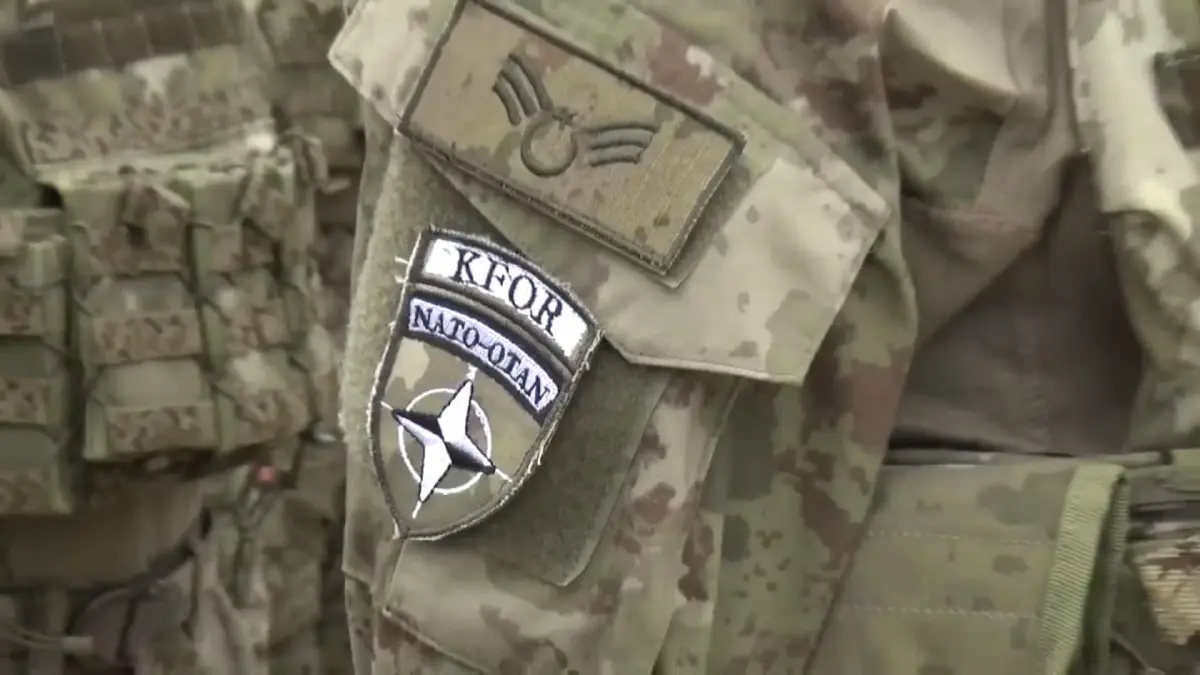
NATO will gradually adjust the strength of its Kosovo Force (KFOR) mission over the next year after an improved security situation allowed the alliance to optimise the mission, the Supreme Headquarters Allied Powers Europe (SHAPE) said in a statement on June 12.
SHAPE said the security situation in Kosovo had continued to improve over recent years, allowing NATO in January to end the deployment of reserve forces to KFOR after more than two years of continuous rotation.
"As the security in Kosovo remains generally steady, NATO will optimise KFOR's posture in Kosovo and gradually adjust its current strength over the next year," SHAPE said in its statement.
The decision marks a shift away from the emergency reinforcement cycle that followed the 2023 rise in tensions and violence, including attacks against KFOR peacekeepers in Zvečan. SHAPE said KFOR received its largest reinforcement in more than a decade at that time, with nearly 1,000 additional troops deployed.
"With the security situation now stable, KFOR's posture can be adjusted accordingly while effectively maintaining a safe and secure environment for all people and communities living in Kosovo as well as freedom of movement, at all times and impartially," SHAPE said.
The mission continues under its long-standing United Nations mandate, based on UN Security Council Resolution 1244 of 1999, and in coordination with Kosovo Police and the European Union Rule of Law Mission in Kosovo (EULEX).
"NATO and KFOR are fully committed to safety and security in Kosovo," said U.S. Air Force Gen. Alexus G. Grynkewich, Supreme Allied Commander Europe. "It is this commitment that has led to increased stability as the security organisations in Kosovo have become more capable. The current conditions provide an opportunity to optimise KFOR's size and posture further."
Grynkewich also said NATO would not allow a security vacuum to emerge in the Western Balkans, a region he described as strategically important for the alliance and directly linked to Euro-Atlantic security.
SHAPE said the optimisation follows a review and intelligence-based assessment of the security situation. The reductions are expected to follow national rotational deployment and redeployment cycles between now and next year.
The adjustment will be gradual, tied to conditions on the ground and reversible if security developments require a change.
NATO also said it would continue supporting the EU-facilitated dialogue between Belgrade and Pristina, urging both sides to resolve outstanding issues in a way that respects the rights of all communities.
The Kosovo decision comes as the Western Balkans remain a sensitive security file for NATO and the European Union. Bosphorus News has previously reported on Türkiye's defense support to Kosovo and the wider Balkan security frame, as well as EU efforts to keep the Western Balkans tied to gradual integration while the Ukraine accession track stalls.
The KFOR adjustment does not mean NATO is leaving Kosovo. It signals that the alliance now sees room to move from the 2023 reinforcement period toward a more calibrated mission, while keeping open the option of reversing reductions if the security environment worsens.
***Sources: SHAPE, NATO background, Bosphorus News review.