
By Murat Yıldız, with reporting contribution from Nihat Helvacı
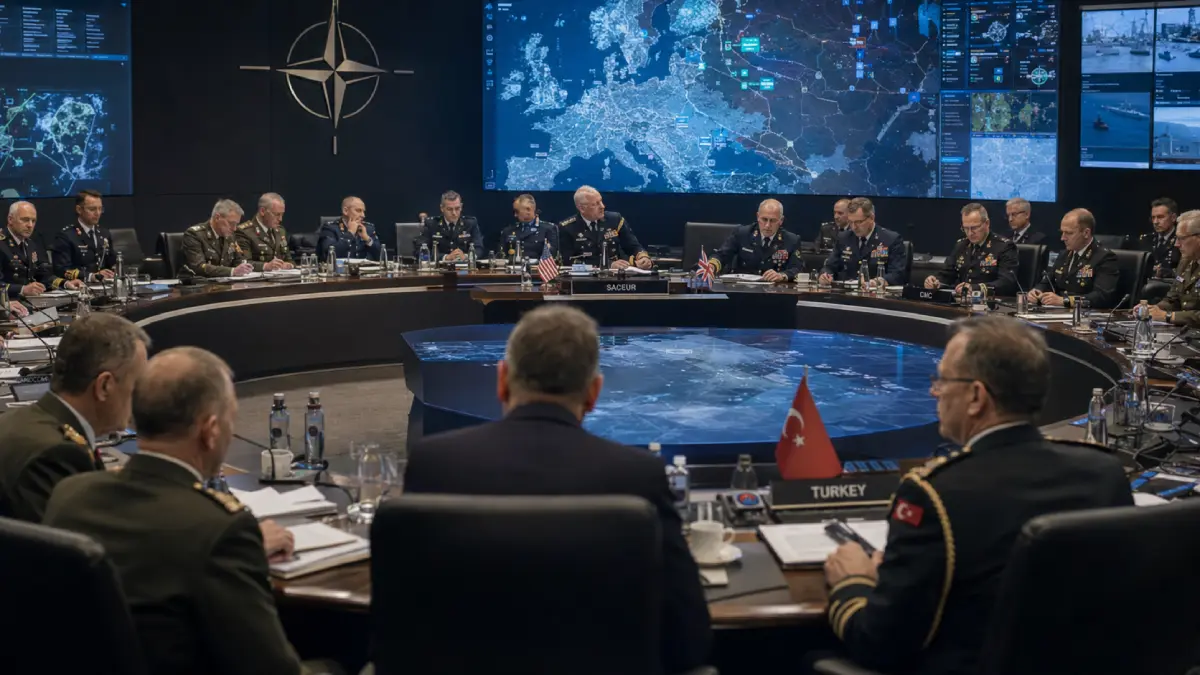
NATO has no difficulty seeing Türkiye when the alliance looks at geography, troops, bases and reach. The harder question begins when that same weight is measured against command.
That question matters after the Ankara summit because Türkiye's place in Western security is still discussed mostly through hardware and market access: F-35s, Eurofighters, air defense, KAAN engines, sanctions and export licenses. As Bosphorus News argued in its analysis of the F-35 file, a warmer political mood does not automatically move the hard files behind it. The same imbalance appears one floor higher, inside NATO's own command architecture.
Türkiye carries weight across the alliance's map. It does not carry the same weight at the senior command table.
NATO does not publish a single public country-by-country list of all general and admiral posts in its command structure, so a clean open-source ratio is not possible. The visible map is still enough to raise the question. Türkiye has the alliance's second-largest army, hosts key NATO infrastructure, contributes to missions from Kosovo to Iraq and sits on geography the alliance cannot treat as marginal. Its defense posture has also been consolidated through a mix of domestic readiness and external coordination, as Bosphorus News previously examined. Türkiye has joined the alliance's hard-readiness cycle, from Steadfast Defender 2024-linked deployments and exercises in Poland and the Mediterranean to the Turkish Air Force's 2021 enhanced Air Policing deployment from Malbork, Poland, on NATO's eastern flank. Its senior command presence still looks thinner than that operational value.
The visible map
There are Turkish generals in NATO. The question is where they sit.
Lt. Gen. İsmail Turan serves as Türkiye's Military Representative to NATO, a senior position in Brussels and an important institutional channel. It is also the kind of seat every ally has. It shows representation, not necessarily a rise up the command chain.
Maj. Gen. Eray Üngüder's appointment as Director of the Cooperative Security Division in NATO's International Military Staff tells a more unusual story. NATO lists him in that role from August 2025. Turkish reporting based on the Ministry of National Defense presented the appointment as the first time a Turkish general reached director level in NATO's International Military Staff in Brussels. If that claim stands, it turns a personnel appointment into a much longer institutional question.
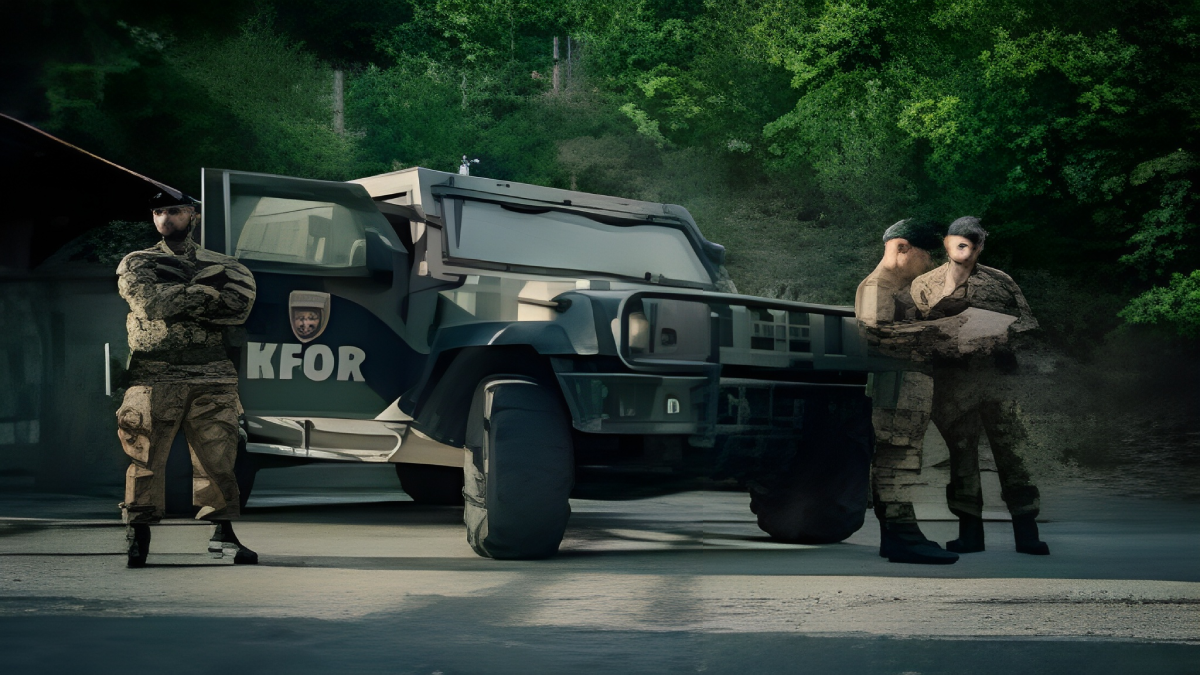
Other Turkish posts point in the same direction. Lt. Gen. Muammer Alper is Chief of Staff at Allied Land Command in İzmir, a serious staff role at a command hosted by Türkiye but led by an American general. Maj. Gen. Özkan Ulutaş commands KFOR in Kosovo, a real NATO operational command under a United Nations mandate, though still a rotational mission command rather than a permanent seat in NATO's core command structure. Maj. Gen. Sezai Öztürk commands the NATO Rapid Deployable Corps - Türkiye, an important high-readiness headquarters inside the NATO Force Structure, but not the same thing as the integrated NATO Command Structure.
None of these posts is symbolic. None of them should be dismissed. They still describe a pattern: Türkiye is present in representation, staff lines, rotational missions and force-structure roles more often than it is visible at the top of the permanent command table.
Where the top chairs sit
NATO's senior command architecture makes that pattern clearer.
The Supreme Allied Commander Europe has traditionally been an American officer. SHAPE's deputy command and chief-of-staff posts are tied to the United Kingdom and Germany. In 2026, NATO announced a new distribution of senior command roles that gives European allies more visible leadership: Joint Force Command Norfolk to the United Kingdom, Joint Force Command Naples to Italy, and Joint Force Command Brunssum to a Germany-Poland rotation. The United States keeps the main component commands: Allied Maritime Command, Allied Land Command and Allied Air Command.
Türkiye is not in that senior redistribution.
This is where the imbalance becomes more than a Turkish complaint. NATO is making room for more European command ownership, but Türkiye remains mostly visible through geography, missions, hosting and staff roles.
That does not mean Türkiye should command NATO because it has a large army. NATO command is not a census of personnel. It is shaped by money, nuclear roles, political trust, command habits, language, clearance culture, staff pipelines and old institutional memory. Germany, Italy, the United Kingdom, France and the United States do not sit where they sit only because of personnel numbers.
The Turkish case is still difficult to ignore. The alliance counts Türkiye's army when it needs deterrence, mobility, the Black Sea, the Middle East, migration pressure, energy corridors and Ukraine-Russia geography. It also counts Turkish units when NATO tests rapid deployment, air policing, maritime readiness and reinforcement routes from the Baltic to the Mediterranean. That same weight travels less easily when the conversation moves to command.
İzmir tells the story
Allied Land Command in İzmir captures the imbalance better than any abstract chart.
Türkiye hosts the alliance's land command. Turkish geography gives the site strategic meaning. Turkish officers work inside the structure. A Turkish lieutenant general serves as chief of staff. The commander, however, is American.
There is a logic to that arrangement. The United States still carries unmatched military weight inside NATO, and Allied Land Command sits inside a wider command design. İzmir still says something important about Türkiye's position.
Türkiye can host. It can staff. It can contribute forces and carry risk in the regions around NATO's edge. The final command chair usually sits somewhere else.
That is the personnel version of the wider defense-access debate. Ankara is central to NATO's map, but its access to the alliance's highest military-management layer remains narrower than its operational role suggests.
The post-2016 break
The imbalance did not begin with the failed coup attempt in 2016. It became harder to repair after it.
Reuters reported at the time that Ankara recalled or removed large numbers of Turkish officers serving in NATO posts. It said 149 military envoys at NATO headquarters and command centers were ordered to return to Türkiye within days, about 400 military envoys had been removed, and the Turkish delegation at NATO was sharply reduced. Gen. Curtis Scaparrotti, then NATO's Supreme Allied Commander Europe, later said the departure of around 150 Turkish officers from NATO posts had a noticeable effect, especially because many were experienced senior officers.
That episode hit the part of the system where future influence is built. NATO command influence does not begin when a flag officer receives a senior post. It is built years earlier through staff tours, classified planning culture, personal networks, operational habits and accumulated trust inside headquarters.
Türkiye did not only lose individual officers after 2016. It lost continuity inside the NATO machinery, and continuity is one of the currencies of command.
Second army, thinner command weight
The Ankara summit made this contrast easier to see.
President Recep Tayyip Erdoğan used the summit to argue that Türkiye should not be excluded from defense markets while Europe rebuilds its security architecture. The same argument has a personnel dimension. If Türkiye is too important to be left outside Europe's defense-industrial map, its limited place at NATO's senior command table also deserves scrutiny.
There are reasons for the gap. Some are institutional. Some come from Ankara's own choices. Others belong to NATO's older hierarchy. Türkiye's S-400 purchase, disputes with allies, post-2016 trust questions, domestic purges and strained relations with parts of the Western security establishment have all made the command question harder. NATO allies do not distribute senior military trust by counting brigades alone.
Still, the map leaves a blunt impression. Türkiye is indispensable in crisis geography, active in NATO's operational cycle and difficult in institutional politics, yet underrepresented in the rooms where senior command authority is distributed.
That is not only a matter of prestige. If NATO is rebuilding deterrence, expanding readiness, strengthening the Black Sea posture, watching Russia, managing instability across the Middle East and designing a new European defense architecture, Türkiye is not a peripheral actor. It sits inside the operational core.
The alliance already knows this when it asks for troops, bases, corridors, air policing and missions. The command table tells a narrower story.
Sources: NATO, SHAPE, Allied Land Command, KFOR, NRDC-T, Reuters, Turkish Defense Ministry, TRT Haber / Turkish Defense Ministry sources, Bosphorus News review and reporting.