
By Bosphorus News Defense Desk
President Donald Trump's expected meeting with President Recep Tayyip Erdoğan at the Ankara summit is moving Türkiye's U.S. defence-access file back into North Atlantic Treaty Organization (NATO) diplomacy, with F-35 access, KAAN fighter-jet engines and Israeli objections now tied to the same week.
The talks come after the Trump administration moved forward with a more than $700 million engine sale for Türkiye's KAAN combat aircraft, while Israeli Prime Minister Benjamin Netanyahu urged Washington not to provide Ankara with F-35s or fighter-jet engines.
The U.S. defence-access file
Reuters reported last month that the Trump administration had formally notified Congress of its intent to sell General Electric F110 engines to Türkiye. The engines are intended to power KAAN, Türkiye's first indigenous combat aircraft, and would mark one of the clearest U.S. defence moves toward Ankara before the NATO summit.
The engine sale does not reopen the F-35 programme. Türkiye was removed from the programme after its 2019 acquisition of Russia's S-400 air-defence system, and U.S. law still blocks F-35 transfers while the S-400 issue remains unresolved.
Bosphorus News previously mapped the Countering America's Adversaries Through Sanctions Act, F-35 and KAAN triangle, noting that Ankara's U.S. defence-access file now runs through sanctions law, aircraft politics and the engine needs of Türkiye's national combat-aircraft programme.
Congressional opposition has also continued. Reuters reported that Democratic lawmakers warned against moving defence cooperation forward without clearer conditions.
That leaves the KAAN engine file in a narrow position. It gives Ankara a concrete U.S. defence channel without solving the larger F-35 and sanctions dispute. Bosphorus News reported ahead of the summit that the engine sale had opened a 15-day congressional review window overlapping with NATO's Ankara calendar.
Netanyahu enters the fighter-jet dispute
Netanyahu added a new political obstacle on July 6, saying Türkiye should not be given F-35s or engines for its fighter jets. Times of Israel reported the remarks as Trump headed to Türkiye for the summit.
The Israeli objection matters because Türkiye's possible return to the F-35 track has never been only a U.S.-Türkiye file. Israel, Greece and members of Congress have treated advanced U.S. aircraft access for Ankara as a security issue, especially after the S-400 acquisition.
Netanyahu's intervention does not decide U.S. policy. It puts Israeli opposition into the open just as Trump and Erdoğan prepare to meet in Ankara, where Türkiye is expected to press for defence trade restrictions to be lifted and for allied procurement channels to open.
Trump-Erdoğan channel
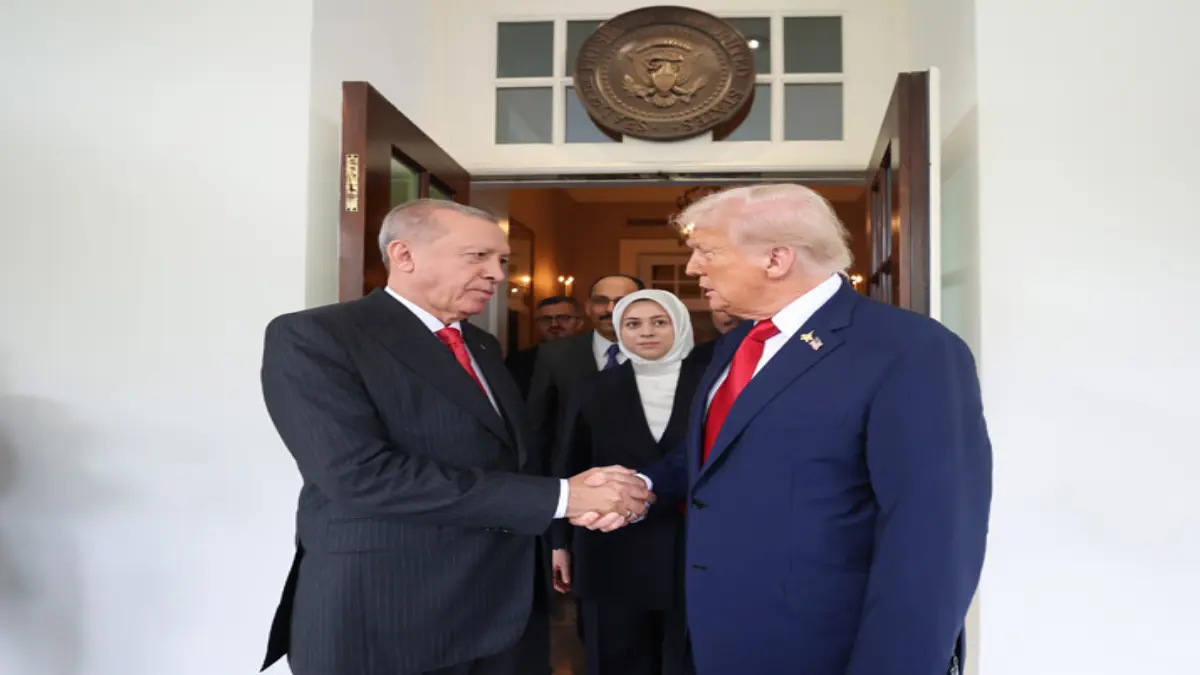
Associated Press reported that Trump is expected to meet Erdoğan during the Ankara summit, along with Ukrainian President Volodymyr Zelenskyy and Syria's Ahmad al-Sharaa. Reuters also listed Trump among the leaders attending the July 7-8 summit, which will bring all 32 NATO members to Ankara.
Ankara has tried to turn Trump's attendance into a sign of political access. Anadolu Agency reported earlier that Erdoğan described Trump's participation as valuable for alliance cohesion, while Foreign Minister Hakan Fidan said the U.S. president's presence could help reduce tensions inside NATO.
That political channel now matters because the defence agenda is concrete. Türkiye wants movement on F-35 access, sanctions, engine sales and defence trade restrictions. The United States wants European allies to spend more, carry more of NATO's defence burden and expand production capacity.
NATO's burden-sharing bargain
NATO's official Defence Industry Forum will open in Ankara on July 7, with the alliance describing it as a high-level event on transatlantic defence production, investment and innovation. Reuters reported that the summit will focus on defence spending, industrial output, Ukraine support, Iran and Türkiye's push to improve defence ties with Washington.
That agenda gives Türkiye a sharper argument than in previous NATO cycles. Ankara is hosting a summit built around burden-sharing, defence production and industrial capacity while arguing that allies cannot demand more Turkish contribution and keep major defence-access barriers in place.
Bosphorus News reported earlier that Ankara would use the summit to press the gap between its strategic value to NATO and the limits it faces inside allied defence markets. The same logic now runs through the U.S. file: KAAN engines are moving, F-35 remains blocked, and Netanyahu's warning shows how quickly regional objections can re-enter the debate.
A wider access cluster
The U.S. track now joins a broader defence-access cluster around Türkiye. Bosphorus News reported on July 6 that France had become more open to a possible SAMP/T air-defence sale to Türkiye, according to Reuters, though no sale had been approved.
Together, the SAMP/T and KAAN/F-35 files show Ankara testing the European and American sides of NATO's defence market. One track runs through France, Italy and air defence. The other runs through Washington, Congress, the S-400 dispute and Israel's security objections.
Bosphorus News argued ahead of the summit that NATO's next phase would be judged by whether Türkiye is kept only inside the shield or allowed inside the defence bargain. The Ankara summit is now putting that question into specific procurement files.
Türkiye has not returned to the F-35 programme. The KAAN engine sale is not a full reset. Netanyahu's warning adds pressure on Trump rather than a formal veto. But the Erdoğan-Trump meeting gives Ankara a rare NATO-stage opening to test whether access to the White House can produce movement on aircraft, engines, sanctions and defence-market restrictions.
Sources: Reuters, Associated Press, NATO, Times of Israel, Anadolu Agency, Bosphorus News review and reporting.