
By Bosphorus News Geopolitics Desk
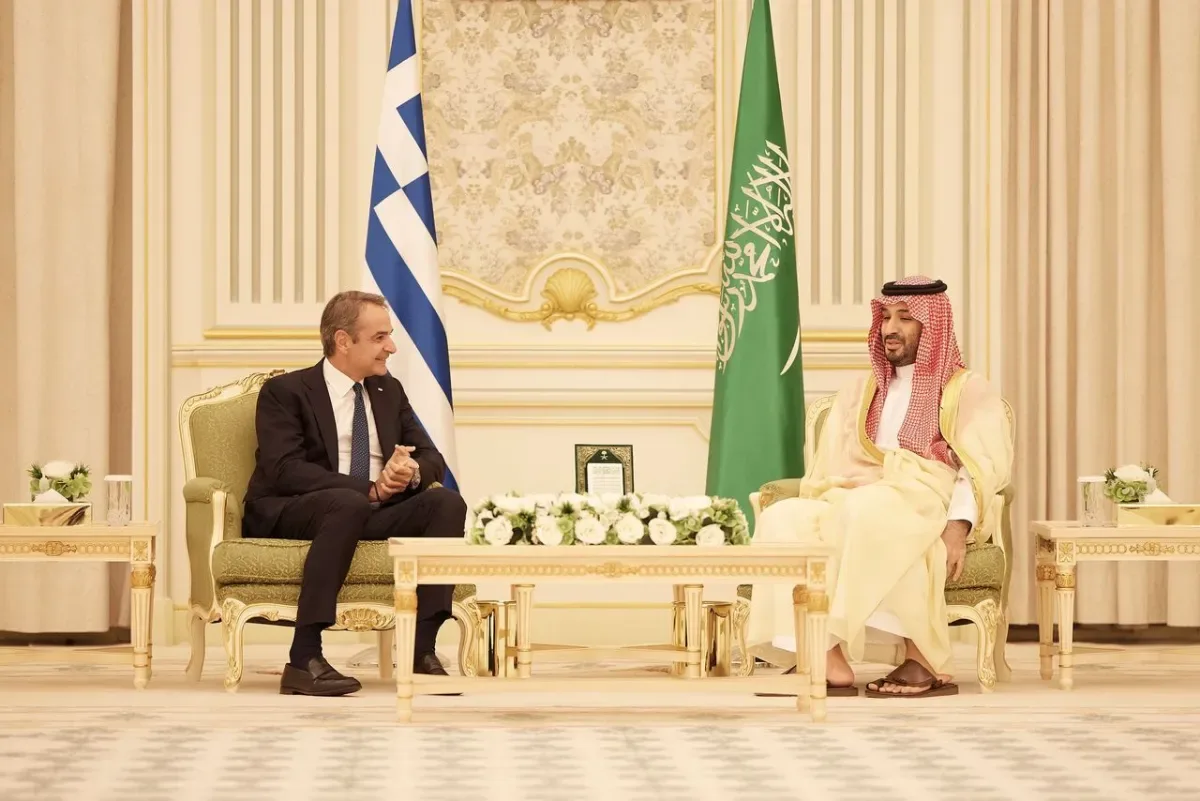
Greek Prime Minister Kyriakos Mitsotakis told Saudi Crown Prince Mohammed bin Salman on October 25 that Athens had responded positively to Riyadh's request to keep its Patriot air-defense battery in Saudi Arabia. Greek forces have protected energy infrastructure on the Red Sea coast since 2021.
Mitsotakis conveyed the response at Al-Yamamah Palace in Riyadh, according to a briefing sent directly to Bosphorus News by the Greek Prime Minister's Office. The talks also covered Iran, maritime navigation and a proposed data link between Europe and Asia.
Athens responds to Riyadh
Mitsotakis condemned attacks on Saudi Arabia and pledged continued Greek support. The Patriot battery is deployed at Yanbu, the Red Sea terminus of Saudi Arabia's East-West oil pipeline.
On March 19, Greek personnel operating the battery intercepted two Iranian ballistic missiles, Greek Defense Minister Nikos Dendias said. Reuters and Janes also reported the engagement, although the precise targets of the missiles were not independently established.
It was a combat engagement for a mission that began in 2021. Saudi Arabia's East-West pipeline allows some oil exports to reach the Red Sea at Yanbu without passing through the Strait of Hormuz. The mission's regional implications were examined in an earlier Bosphorus News analysis of Greece's Iran-war deployments.
Greece had already extended the mission through November 2026. Dendias visited Riyadh on October 15 for talks with Mohammed bin Salman and Saudi Defense Minister Prince Khalid bin Salman, then met Greek troops at Yanbu.
Dendias said the talks covered arrangements for the battery to remain in Saudi Arabia. On October 20, he said he would propose extending the mission. Five days later, Mitsotakis conveyed Athens' positive response to the crown prince.
The Greek briefing gave no new end date, financial terms or details of an extension agreement.
Red Sea shipping and regional security
The leaders discussed Iran and developments in the wider Middle East, including the safety of shipping routes. Mitsotakis warned against restrictions on freedom of navigation and called for respect for international law. Disruptions to maritime trade are a direct concern for Greece's large commercial shipping fleet.
The Saudi Press Agency confirmed the meeting and discussions on bilateral and regional security. It did not announce a new Patriot agreement.
The Greek deployment continues as Riyadh deepens defense ties with Türkiye. On September 7, Mitsotakis rejected the idea that the Türkiye-Saudi-Pakistan Mecca Pact forced Greece to choose sides and said closer Turkish-Saudi relations would not push Athens away from Riyadh. The pact did not appear in the October 25 Greek briefing.
A data corridor through Greece and Saudi Arabia
The leaders also discussed the East to Med Data Corridor (EMC), planned to carry data between Europe and Asia through Greece and Saudi Arabia. The Greek briefing listed connectivity, energy and defense as priorities, without announcing new financing or a construction timetable.
They reviewed cooperation since the first meeting of their Supreme Council for Strategic Cooperation in January 2025 and discussed holding a second session. No date was announced.
Sources: Office of the Greek Prime Minister, Saudi Press Agency, Hellenic Ministry of National Defence, Reuters, Janes, Bosphorus News review and reporting.