
By Bosphorus News Geopolitics Desk
Türkiye has widened its maritime surveillance coverage between Mersin and northern Cyprus as Greece moves ahead with a defense network spanning the Aegean, Evros and Cyprus.
Hormuz tanker traffic has nearly stopped. Maersk is diverting cargo from a Ukrainian Black Sea port, while Washington has threatened Iran and the Houthis after attacks on Saudi tankers.
Türkiye Expands Eastern Mediterranean Vessel Monitoring Network
Türkiye has opened an integrated vessel traffic monitoring system linking a control centre in Gazimağusa with three coastal surveillance stations and maritime infrastructure in Mersin.
The HAVELSAN-built Eastern Mediterranean Vessel Traffic Services network includes stations at Dipkarpaz, Sadrazamköy and Çayırova. Radar, cameras, communications equipment, meteorological sensors and Automatic Identification System data feed into the system.
The information can be monitored from Gazimağusa and transmitted to Türkiye's Vessel Traffic Services centre in Mersin.
The network is formally civilian maritime traffic and safety infrastructure. It supports vessel identification, navigational warnings, traffic management and emergency coordination during accidents, fires and other incidents.
The Mersin connection gives Türkiye a permanent nationally controlled view of vessel movements between the Turkish mainland and Cyprus.
The system's coverage and operating structure are detailed in Bosphorus News reporting on Türkiye's Eastern Mediterranean vessel tracking network.
Greece Builds €3 Billion-Plus Defense Network Across Aegean, Evros and Cyprus
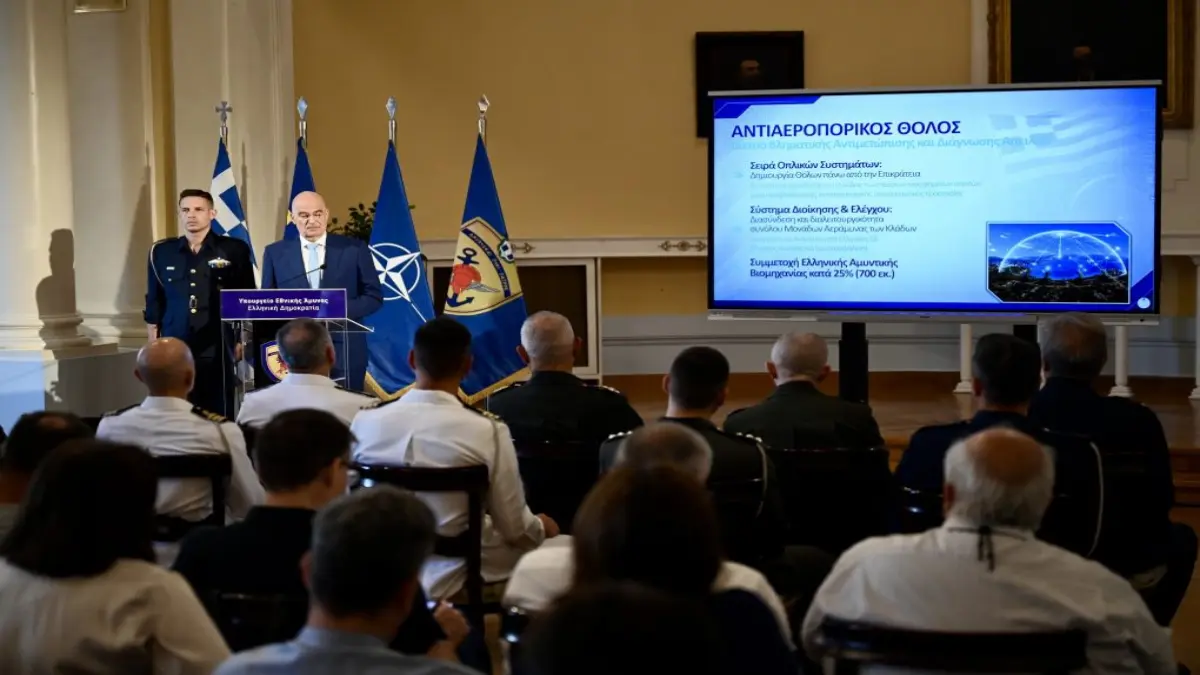
Greece has approved a group of defense programs centered on Achilles Shield, a nationwide air, ballistic missile and counter-drone network expected to cost more than €3 billion.
Greek Defense Minister Nikos Dendias said the system would connect sensors, weapons and command structures through a C5ISRT architecture combining command, control, computing, communications and cyber functions with intelligence, surveillance, reconnaissance and targeting.
The package includes 10 additional V-BAT unmanned aircraft for the Aegean and Evros, another Heron 1 unmanned aircraft, electromagnetic counter-drone systems and Greek participation in a small-satellite constellation.
Three C-390 Millennium aircraft will add faster military transport and aerial refueling capacity. Dendias used Cyprus as the main example, saying the aircraft would shorten transport missions to the island and extend the endurance of Greece's Rafale and Mirage fighters through in-flight refueling.
Before the KYSEA approvals, Dendias had said Greece had fallen behind in military technology while an unnamed threat advanced, particularly in unmanned systems. He did not identify Türkiye as that threat.
The warning and its place in Greece's 2030 overhaul were examined in earlier Bosphorus News coverage of the technology gap identified by Dendias.
The procurement plan also makes source-code access and a minimum Greek industrial share of 25 percent central requirements. Domestic participation in the Achilles Shield order is expected to exceed €700 million.
The Government Council for National Security, known as KYSEA, also approved Greece's National Strategy for the Resilience of Critical Entities for 2026-2030.
The strategy covers the continuity and protection of essential services and infrastructure against military, hybrid, cyber, human-made and natural threats. Its approval alongside Achilles Shield places military modernization and civilian infrastructure security under the same national security framework.
The wider package, including the planned transition away from the S-300 era, is detailed in Bosphorus News reporting on Greece's new defense architecture.
Holguín Heads to Ankara as Cyprus Contacts Intensify
United Nations Secretary-General's Personal Envoy on Cyprus María Ángela Holguín Cuéllar is expected to meet Turkish Foreign Minister Hakan Fidan in Ankara.
The talks are due to cover the positions of the sides and preparations for United Nations Secretary-General António Guterres's planned Cyprus visit.
Türkiye is one of the three guarantor powers under the 1960 Treaty of Guarantee and remains a direct actor in discussions on security and guarantees.
Holguín's visit comes as the Republic of Cyprus government and Greece coordinate their positions and European Commission Special Representative Raffaele Fitto prepares to take a more active role alongside the United Nations process.
No common basis for renewed formal settlement negotiations has been announced.
Hormuz Tanker Traffic Falls to One Vessel in 24 Hours
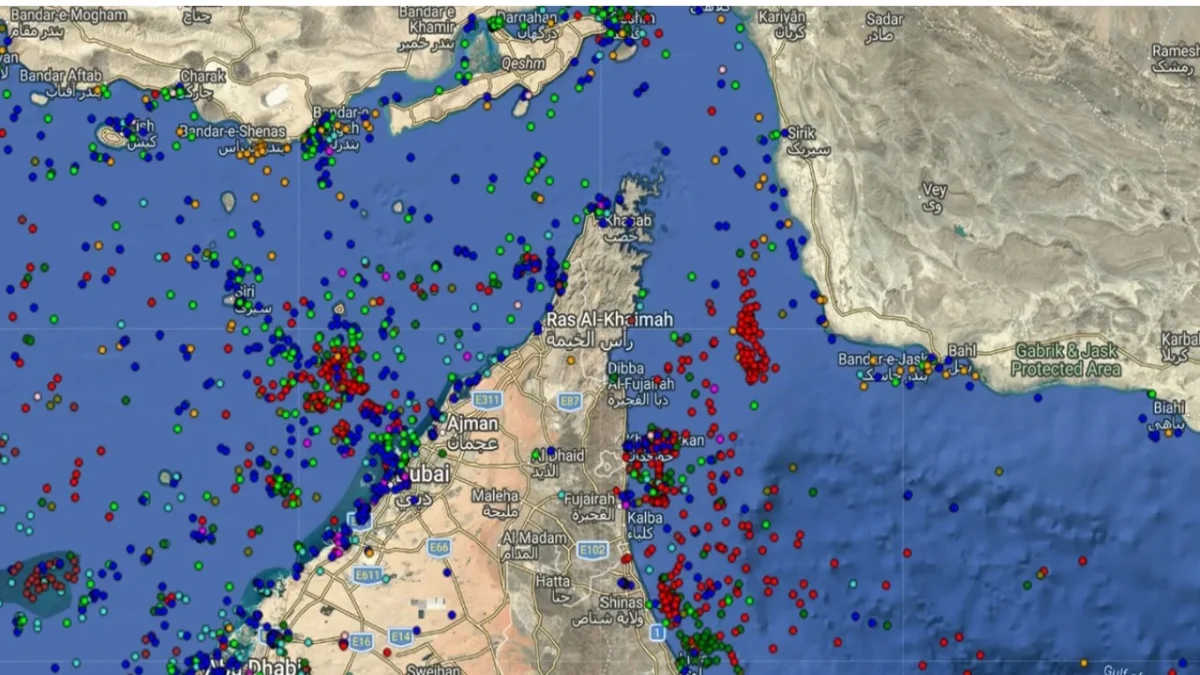
Only one oil tanker crossed the Strait of Hormuz on July 23, the lowest daily level since May 7, according to shipping data.
The vessel was carrying about two million barrels of Iraqi Basrah crude. No tankers entered the strait during the same period.
Washington says the waterway remains open, but commercial traffic has fallen close to a standstill as United States and Iranian operations continue across the Gulf.
The decline is increasing pressure on alternative routes through the Red Sea, the Arabian Peninsula and overland pipeline networks.
Maersk Pulls Back as Black Sea Shipping Risks Deepen
Maersk has suspended service through Ukraine's Chornomorsk Fishing Port as Russian attacks on civilian vessels and port infrastructure drive commercial operators away from the Black Sea grain corridor.
Cargo booked for the service is being redirected to Romania's Constanța port. Ukraine's main deep-water port at Chornomorsk remains open, but the carrier's decision adds to a wider withdrawal driven by attacks, war-risk insurance costs and crew safety concerns.
Ukrainian officials said shipowners, not the government, had suspended vessel arrivals.
Between June 20 and July 20, 28 civilian ships were targeted and 21 people were killed, according to prosecutors in Ukraine's Odesa region. Ukraine has lost about one-third of its Black Sea grain export capacity.
The ports remain open, but fewer shipowners, insurers and traders are prepared to use them.
Türkiye is exposed through Black Sea shipping, insurance costs and the flour and pasta industries' dependence on imported grain. Cargo diverted through the Danube, Constanța and overland European routes moves more slowly and costs more than direct deep-water shipping.
The attacks, Maersk's withdrawal and the consequences for Türkiye are examined in Bosphorus News analysis of the contraction in Ukraine's Black Sea grain corridor.
Trump Threatens Iran and Houthis After Red Sea Tanker Attacks
United States President Donald Trump threatened major military punishment against Iran and Yemen's Houthis following attacks on the Saudi tankers Encelia and Layla in the Red Sea.
Washington said Tehran would be held responsible for further Houthi operations as pressure spread from Hormuz to Saudi Arabia's western oil export route.
Moldova's Designated Prime Minister Calls Gagauzia a Bridge to Türkiye
Moldova's designated prime minister Vasile Tofan described the autonomous region of Gagauzia as an important bridge to Türkiye while presenting his government program to parliament.
Tofan said he wanted to work with Gagauz leaders to strengthen relations with Ankara.
The message follows a Moldovan Constitutional Court ruling that reduced the Gagauz People's Assembly's influence over regional election administration and appointments while leaving the autonomy's formal status intact.
The statement does not reverse those changes. It gives Ankara a channel into the incoming government's approach to Gagauzia, where Türkiye retains cultural, economic and political influence.
Strategic Take
Türkiye's vessel traffic system links coastal sensors in northern Cyprus with maritime infrastructure in Mersin. Greece's Achilles Shield combines Aegean and Evros surveillance, drones, satellites, missile defense, Cyprus airlift and aerial refueling under one command architecture.
The KYSEA decision extends Greek security planning into energy, transport, communications and essential civilian services through the Critical Entities Resilience Strategy.
Maritime pressure is growing across three routes. Hormuz tanker movements have almost stopped, Houthi attacks are threatening the Red Sea and Maersk's withdrawal from Chornomorsk shows how an open port can lose traffic when shipowners and insurers judge the risk too high.
Holguín's Ankara visit may clarify Türkiye's position before the next United Nations initiative, but the sides have not agreed on a basis for renewed negotiations.
Moldova's Gagauzia message opens a political channel after the constitutional court ruling, though its value will depend on decisions concerning regional elections, appointments and relations with Gagauz institutions.
Sources: Türkiye's Transport and Infrastructure Ministry, Greece's government and Defense Ministry, United Nations reporting, Reuters, Maersk, Moldpres, Ukrainian officials, Bosphorus News review and reporting
Read yesterday's brief: Eastern Mediterranean Strategic Brief | July 23, 2026