
By Bosphorus News Geopolitics Desk
The United States is preparing to reinstate its blockade of Iranian ports as renewed strikes spread across the Strait of Hormuz. The European Union has returned to the Cyprus file with a new special representative, while Israeli and Lebanese delegations have opened talks in Rome.
US Sets Iran Blockade Restart as Tanker Strikes Escalate
U.S. President Donald Trump said the blockade of Iranian ports would be reinstated at 4 p.m. Eastern Time on Tuesday, targeting vessels entering or leaving Iran as military exchanges around the Strait of Hormuz intensified.
Trump also proposed charging foreign cargo passing through the strait an amount equal to 20 percent of its value in return for U.S. protection. No collection mechanism, legal basis or enforcement procedure has been published.
The announcement advances the confrontation described in Monday's brief. Washington had previously demanded toll-free passage through every shipping lane. Trump is now seeking payment for U.S.-protected access while maintaining that Iran cannot impose its own terms on commercial traffic.
U.S. forces carried out a five-hour series of strikes against Iranian missile, air-defence and coastal military targets, including positions around Bushehr, Bandar Abbas and Abu Musa.
Iran responded with attacks across the region. Two Emirati tankers were struck by Iranian cruise missiles in or near Omani waters, killing one Indian crew member and injuring eight others, according to the United Arab Emirates Defence Ministry.
The renewed attacks pushed oil prices to a one-month high. Brent crude rose above $86 a barrel as traders assessed the risk of prolonged disruption in a waterway that carried about one-fifth of global oil and liquefied natural gas supplies before the conflict.
Oman continues to promote a navigation proposal separating the strait into two controlled routes. The plan would allow open passage through a southern route near Oman while requiring Iranian approval for traffic using the northern route. The proposal has not been accepted by Washington or Tehran.
Türkiye's direct energy exposure remains lower than that of Gulf-dependent importers because much of its oil and gas arrives through pipelines from Russia, Azerbaijan and Iran. Higher crude prices, freight charges and insurance costs still transmit the Hormuz crisis into Turkish markets.
The latest escalation follows the security warning that prompted Trump to switch aircraft after leaving the NATO summit in Ankara.
EU Names Fitto as Cyprus Representative
The European Commission appointed Executive Vice-President Raffaele Fitto as its special representative for Cyprus, restoring a position left vacant earlier this year.
Fitto will support United Nations-led efforts and coordinate with María Ángela Holguín Cuéllar, the UN secretary-general's personal envoy for Cyprus. The Commission said the appointment followed renewed activity around the negotiations.
Türkiye described the appointment as an internal matter for the European Union but rejected the bloc's claim to neutrality.
The Turkish Foreign Ministry argued that the EU lost its impartiality after admitting the Republic of Cyprus in 2004 and said negotiations should proceed between the Turkish Cypriot and Greek Cypriot sides on the basis of sovereign equality and equal international status.
The Turkish Cypriot side also rejected the appointment, saying the Commission had acted without its consent and could not assume an impartial role in the dispute.
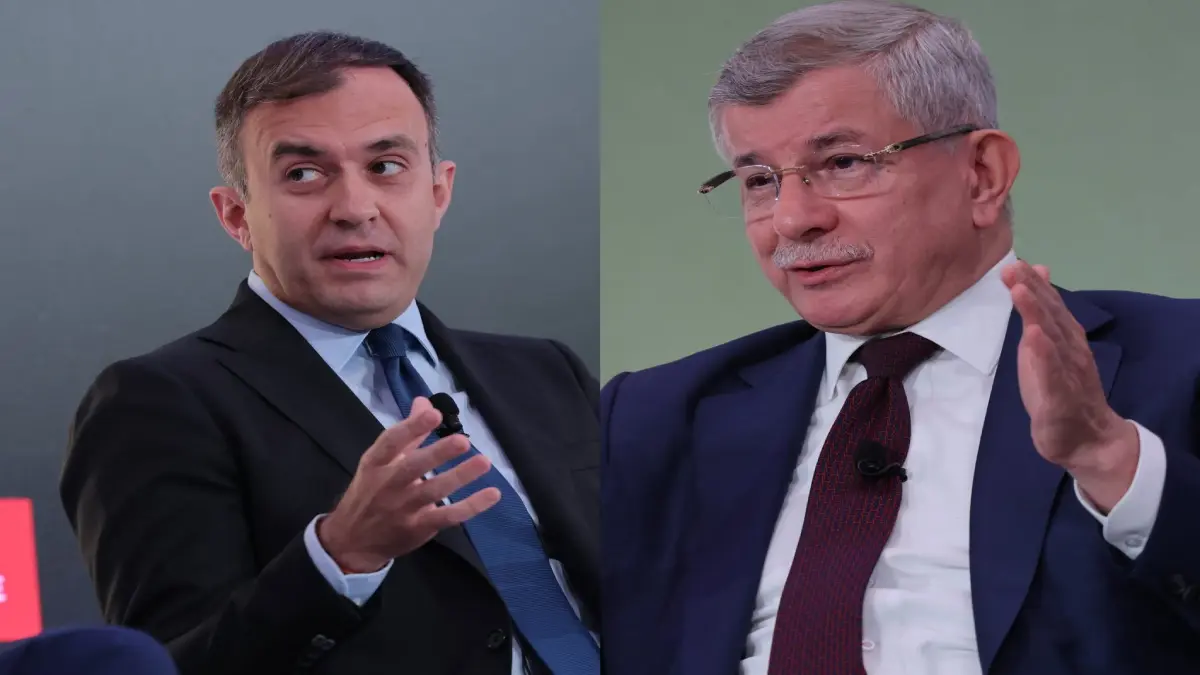
The move comes as European institutions and member states increase their activity around Cyprus. The debate over the basis of a settlement also surfaced at an Athens forum where Ahmet Davutoğlu and a Greek deputy minister presented competing positions.
The EU appointment follows a separate expansion of Türkiye-TRNC infrastructure ties through the planned 101-kilometre bidirectional natural gas pipeline.
Israel and Lebanon Open Rome Talks
Israeli and Lebanese delegations began U.S.-brokered talks in Rome on implementing the security framework agreed in Washington on June 26.
The framework links a gradual Israeli withdrawal from southern Lebanon to the disarmament of Hezbollah and other armed groups, the deployment of Lebanese troops and the creation of pilot areas where the sequence can be tested.
Israel currently maintains a buffer zone extending roughly 10 kilometres into southern Lebanon. The Lebanese government is seeking a timetable for withdrawal, while Israel says it requires guarantees that Hezbollah cannot return to the border area.
Hezbollah has rejected disarmament and is not a direct party to the Rome negotiations. Its opposition leaves the Lebanese government negotiating an implementation plan that it may not be able to enforce without further political or military pressure.
The talks are intended to establish pilot zones where Israeli forces would withdraw, Lebanese troops would deploy and armed groups would surrender weapons in stages. Continued Israeli strikes and Hezbollah's rejection of the framework have prevented the June agreement from producing a stable ceasefire.
Greek Military Source Plays Down Türkiye F-35 Bid
A senior Greek military source said Türkiye's effort to return to the F-35 programme did not concern Athens, presenting a different tone from the objections raised publicly by Greek political officials.
The unnamed source told the Greek newspaper To Vima that Greece's own F-35 acquisition, Rafale fleet and wider defence programme would preserve its operational advantage even if Türkiye eventually obtained the aircraft. The remarks were reported by Türkiye Today and have not been issued as an official Hellenic Armed Forces position.
Greek Defence Minister Nikos Dendias has pressed U.S. officials against restoring Türkiye's access to the F-35 and has also opposed the transfer of American engines for the KAAN fighter programme.
Israel is conducting a separate campaign against the sale. Israeli Finance Minister Bezalel Smotrich said his government was working publicly and behind the scenes to prevent Türkiye from receiving F-35s, describing President Recep Tayyip Erdoğan and Türkiye's military development as threats to Israel.
Trump has expressed support for improving defence relations with Türkiye, but Ankara's possession of the Russian S-400 air-defence system remains the central legal and political obstacle to its return to the programme.
The difference between the Greek military source's assessment and the public objections from Athens and Israel adds another layer to the pressure campaign examined in Bosphorus News coverage of Türkiye's F-35 and KAAN negotiations.
Strategic Take
The Hormuz conflict has moved beyond competing declarations over navigation. Commercial vessels are being struck while Washington prepares to enforce a blockade and attach its own price to protected passage.
The Cyprus, Lebanon and F-35 files are moving through institutions rather than direct military action. Their limits are already visible: the EU lacks Turkish Cypriot consent, Lebanon lacks Hezbollah's agreement and Türkiye's F-35 return remains blocked by the S-400 dispute.
Sources: Reuters, Associated Press, European Commission, Türkiye's Foreign Ministry, United Arab Emirates Defence Ministry, Türkiye Today, Bosphorus News review and reporting.
Read Yesterday's brief: Eastern Mediterranean Strategic Brief | July 13, 2026.