
By Bosphorus News Geopolitics Desk
The United States and Iran are asserting competing authority over the Strait of Hormuz as commercial traffic contracts and Washington introduces its own price for protected passage. Türkiye and the Turkish Republic of Northern Cyprus are advancing a separate energy route through a planned subsea gas connection.
US Claims Control of Hormuz as Iran Rejects Shipping Terms
U.S. President Donald Trump said Washington would reinstate its blockade of Iranian shipping, keep the Strait of Hormuz open and seek reimbursement equal to 20 percent of foreign cargo passing through the waterway.
Trump said the United States would protect commercial passage and should be compensated for the cost. Iran rejected Washington's authority to set the terms of navigation and maintained its claim to control access through the strait.
The announcement changes the dispute described in Sunday's brief. Iran had declared the strait closed after renewed attacks on commercial shipping, while the United States resumed strikes against Iranian military and coastal targets.
Washington had previously demanded that Iran allow ships to use every lane without paying tolls. Trump's new proposal places the United States behind a payment system of its own, but no collection mechanism, legal basis or enforcement procedure has been published.
Commercial traffic remains under pressure. Ships continue to pass through the strait, but the renewed military exchanges, competing navigation instructions and threat of interception have raised the cost and risk of every voyage.
Türkiye receives much of its imported oil and gas through pipelines from Russia, Azerbaijan and Iran rather than through Hormuz. It remains exposed to higher crude prices, freight charges and insurance premiums when Gulf traffic contracts.
The confrontation is now centred on who may set the rules of passage. Iran claims authority from its position on the northern shore, while Washington says U.S. military protection gives it the right to control access and recover the cost.
Türkiye and TRNC Advance 101-Kilometre Gas Pipeline
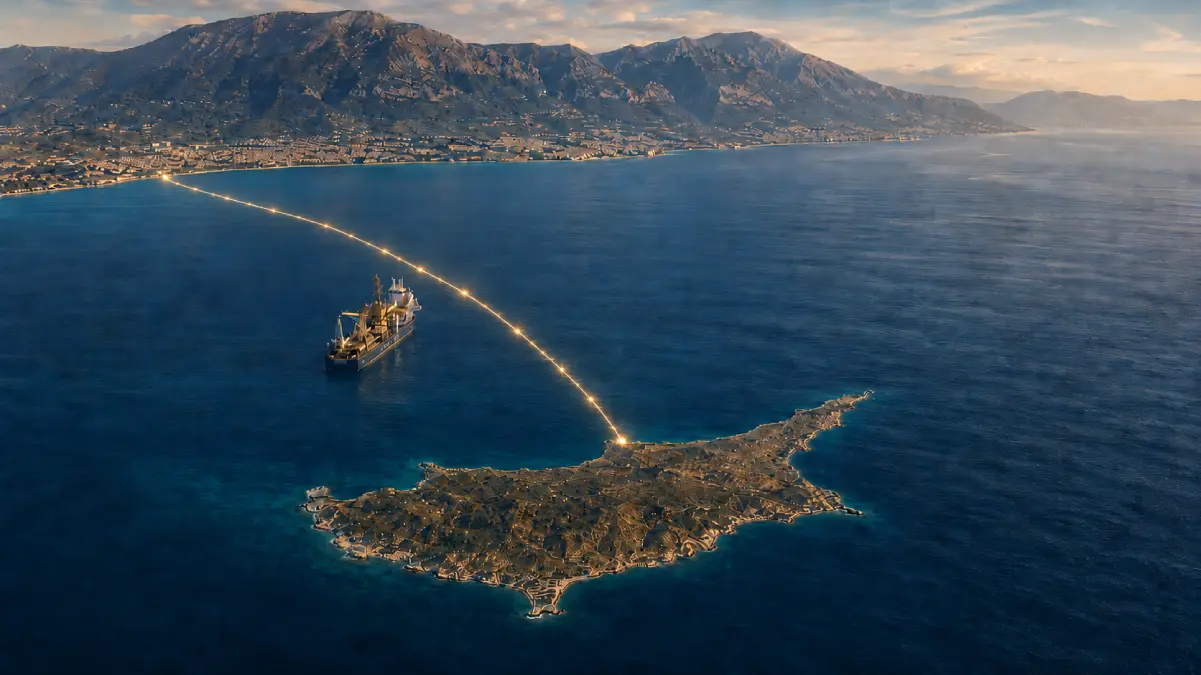
Türkiye and the Turkish Republic of Northern Cyprus signed a memorandum of understanding for a 101-kilometre bidirectional natural gas pipeline linking Türkiye's Mediterranean coast with northern Cyprus.
The proposed route would run from Anamur in Mersin province to the Teknecik area, with approximately 97 kilometres beneath the Mediterranean and four kilometres on land.
The agreement opens the planning stage rather than construction. Capacity, financing, technical design and a delivery timetable have not yet been announced.
The bidirectional design would connect the Turkish Cypriot energy system directly to Türkiye's gas network and allow energy to move in either direction if the required infrastructure is completed.
The project is intended to support electricity generation and reduce the Turkish Cypriot side's dependence on imported liquid fuels. It would also deepen the infrastructure link established by the water pipeline between Türkiye and northern Cyprus.
The planned route would create the first direct subsea natural gas connection between Türkiye and the TRNC, extending the energy and infrastructure relationship examined in Bosphorus News coverage of the memorandum.
The Republic of Cyprus Foreign Ministry rejected the memorandum, arguing that it violated the sovereign rights of the internationally recognised state and further integrated the north with Türkiye. Turkish and Turkish Cypriot officials presented the project as an energy-security and economic-development initiative.
Strategic Take
Hormuz and the Türkiye-TRNC pipeline sit at different stages of the energy-security problem. In the Gulf, military power is determining whether ships can move, which routes they follow and what they may be required to pay.
The proposed pipeline addresses supply through fixed infrastructure rather than contested maritime passage. It remains a memorandum without a construction timetable, but its planned route would place the Turkish Cypriot energy system inside Türkiye's gas network.
Sources: Reuters, Associated Press, Türkiye's Ministry of Energy and Natural Resources, Republic of Cyprus Foreign Ministry, Bosphorus News review and reporting.
Read Yesterday's brief: Eastern Mediterranean Strategic Brief | July 12, 2026.