
By Bosphorus News Defense Desk
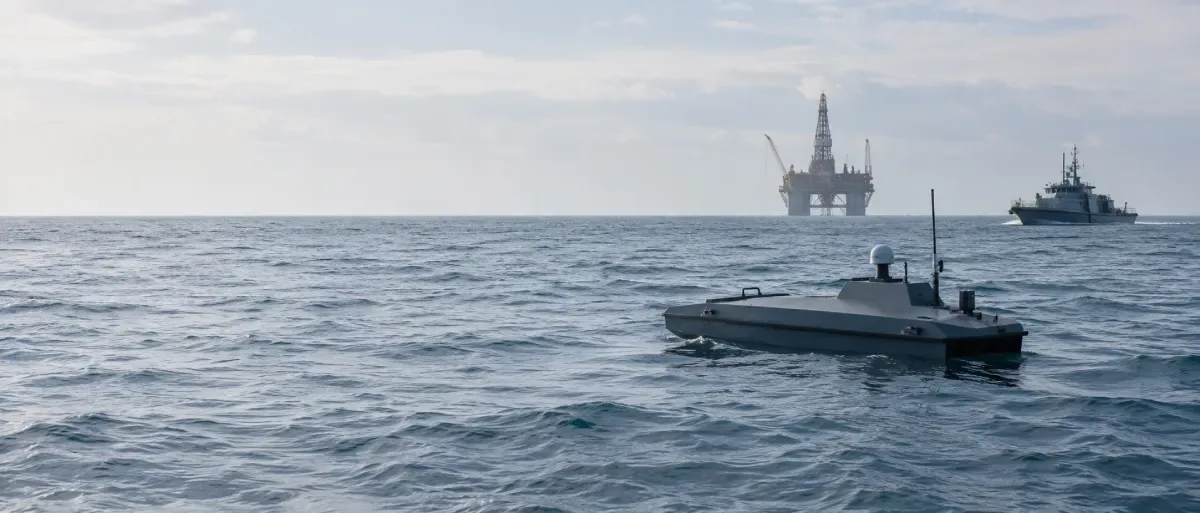
Discoveries of drifting drones, unmanned surface vessels and unexploded weapons in Romanian, Bulgarian and Turkish waters rose 208 percent over six months, with unmanned systems now overtaking mines as the main floating hazard in the Black Sea, maritime security firm Ambrey said.
Türkiye has already encountered the same threat along its coast. The Defense Ministry destroyed an unmanned surface vessel that drifted toward Ünye in March, while a three-country Black Sea task group originally established to deal with mines expanded its mission in July to cover critical undersea infrastructure.
Ambrey recorded 91 discovery events involving at least 105 separate systems across the Black Sea between September 2, 2025 and September 7, 2026. Incidents rose from 27 in the first six months of that period to 56 between March and August, an increase of 107 percent. Eight more discoveries followed in the first seven days of September.
The rise was concentrated along the NATO littoral. Discoveries in Romania, Bulgaria and Türkiye climbed from 13 to 40 between the two six-month periods, while the combined number in Ukrainian and Russian waters moved from 14 to 16. Ambrey cautioned that discoveries by both belligerents are likely to be underreported.
Drones Replace Mines as the Main Floating Hazard
The increase is being driven by unmanned systems rather than mines.
UAV and unmanned surface vessel discoveries rose from 13 to 41 between the two periods. Sea mines and legacy ordnance fell from 11 to eight.
Ambrey now assesses UAVs and USVs, rather than mines, as the dominant floating hazard in the basin. At least one-third of the objects were confirmed to carry a live payload when discovered. In another 53 cases, equal to 58 percent of all recorded discoveries, the payload status was never established publicly.
The dataset covers systems found adrift, afloat, aground or washed ashore. Some had been shot down or disabled by electronic warfare. Others appear to have lost propulsion, guidance or control before completing their missions.
Disabled UAVs and USVs can still turn up far from the areas where they were originally used, carrying the risk into civilian shipping lanes and coastal waters.
Türkiye Has Already Faced the Threat on Its Coast
Türkiye's Defense Ministry documented one such case on March 21, when an unmanned surface vessel drifted toward Ünye on the southern Black Sea coast.
The ministry assessed that the US-origin craft had suffered engine failure before currents carried it toward shore. Turkish Navy Underwater Defence Command teams destroyed it safely.
The ministry said unmanned surface and aerial systems widely used in the Russia-Ukraine war were creating risks across the Black Sea when they lost control or mobility. It also warned fishermen and other mariners to exercise particular caution.
The Ünye incident followed an earlier case in December 2025, when Turkish F-16s shot down a drone approaching Turkish airspace from the Black Sea after authorities concluded that it had lost control. The Defense Ministry later said both sides in the Russia-Ukraine war had been warned to exercise greater care over incidents threatening Black Sea security.
Black Sea Mission Expands Beyond Mines
Türkiye, Romania and Bulgaria created the Mine Countermeasures Black Sea Task Group to deal with drifting mines generated by the war.
On July 8, the three defense ministers signed an amendment that expanded the three-country mission from mine clearance to protection of critical undersea infrastructure in their Black Sea areas. The mandate applies to infrastructure belonging to the three participating states and does not create a general escort or air-defense role for commercial shipping.
Ambrey expects discovery rates to remain elevated through the rest of 2026 and identifies offshore energy infrastructure in the Romanian and Turkish exclusive economic zones as a continuing focal point.
The assessment does not say Turkish energy installations are being deliberately targeted. The risk comes from armed systems that remain mobile after a failed mission, loss of control or interception and can drift into areas containing fixed platforms, support vessels and commercial routes.
Direct Attacks and Drifting Weapons Create Different Problems
Ambrey's dataset covers a different risk from the direct attacks already hitting commercial shipping.
A Turkish Shipowners' Association dataset examined earlier by Bosphorus News documented 146 commercial vessels hit or damaged since the full-scale war began in 2022, including 34 Turkish-owned, controlled or flagged ships. Turkish shipowners are also examining counter-drone systems for merchant vessels.
That dataset measured ships struck or damaged during the war. Ambrey is tracking weapons that remain at sea after they miss, malfunction, are jammed or lose control.
The counter-drone systems being studied by shipowners are intended to address incoming attacks. An unidentified armed craft already drifting through a shipping lane or toward offshore infrastructure presents a different problem.
Ankara Pushes for a Black Sea Moratorium
Ankara has separately pushed Moscow and Kiev to reduce attacks at sea.
Foreign Minister Hakan Fidan said on August 8 that Türkiye had called on both Russia and Ukraine to establish a mechanism for a moratorium in the Black Sea. He said attacks had spread from military vessels and ports to commercial shipping, including Turkish-owned and Turkish-flagged ships.
The proposal would restrict attacks and establish a maritime security mechanism. Ambrey's figures add another problem to that effort: armed systems can remain dangerous after their original mission fails.
A moratorium could reduce new launches, but it would not remove weapons already drifting at sea. For Türkiye, armed systems moving toward coastal waters and offshore infrastructure now sit alongside direct attacks on commercial shipping.
Sources: Ambrey Analytics, Türkiye's Defense Ministry, Türkiye's Foreign Ministry, Turkish Shipowners' Association, Bosphorus News review and reporting.