
By Bosphorus News Geopolitics Desk
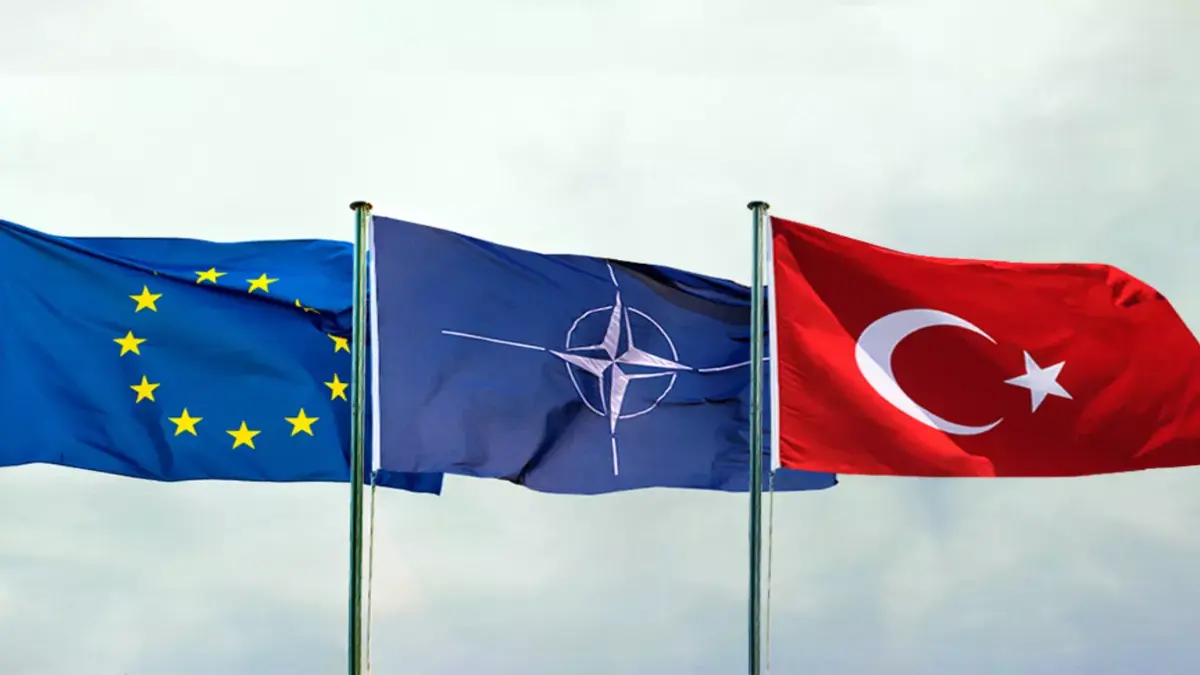
Türkiye's place in Europe's security debate is moving back toward the center of NATO Ankara summit diplomacy, after Berlin discussions placed German-Turkish dialogue inside a wider argument over European rearmament, defense industry access and the political limits of European Union security planning.
The talks came as Ankara prepares to host the North Atlantic Treaty Organization (NATO) leaders summit on July 7-8, a meeting already tied to defense production, burden sharing, regional security and the question of how Europe intends to build military capacity without weakening the alliance's southern and southeastern flank.
Germany gives that debate a harder edge. Berlin sits near the center of Europe's rearmament push, but it is also one of the capitals that will have to decide whether Türkiye is treated mainly as NATO geography, or as a defense-industrial partner whose role cannot be reduced to bases, borders and crisis management.
The most sensitive file is the European Union's Security Action for Europe (SAFE) defense instrument. The mechanism has raised concern in Ankara because Türkiye is a NATO ally with one of Europe's largest defense industries, but not an EU member. That gap leaves Turkish defense companies and procurement channels exposed to political filtering inside European funding and production frameworks.
Bosphorus News has previously examined how Europe's SAFE debate could turn the Ankara NATO summit into a defense bargain over Türkiye's place in the continent's rearmament architecture. The Berlin discussions give that file a more immediate European setting.
The issue is not limited to funding rules. Türkiye enters the Ankara summit with several hard-security files that Europe cannot easily separate from its own defense planning: the Black Sea, the Eastern Mediterranean, Syria, Iraq, the Balkans, the South Caucasus and a defense industry that has moved from regional supplier to export actor. Those files give Ankara added weight as European states look for faster production, deployable capabilities and stronger supply chains.
A European defense push that treats Türkiye as useful geography but not as an industrial partner would leave a gap between NATO's practical needs and the European Union's procurement politics. Berlin's approach to Ankara will help shape whether the summit produces only alliance language or a more practical discussion about defense cooperation, industrial access and European security capacity.
Bosphorus News has also read the Ankara summit as a possible alliance reset, with Germany and other European capitals expected to test how far Türkiye's NATO role can be translated into practical defense cooperation. Berlin therefore becomes more than a venue for pre-summit dialogue; it is one of the places where the European side of the Ankara summit is being tested before leaders arrive in Türkiye.
The Washington track adds another layer. U.S. President Donald Trump's expected role at the Ankara summit and Secretary of State Marco Rubio's earlier remarks have already pushed the meeting into a broader transatlantic frame. Bosphorus News reported that the Trump-Rubio line placed the Ankara summit inside a wider U.S.-Türkiye and NATO discussion, and Berlin now brings the European defense question into the same pre-summit field.
The German-Turkish channel is therefore more than a bilateral exchange. The Ankara summit is becoming a test of whether Europe can talk seriously about security with Türkiye while EU defense funding, NATO capability needs and regional crises continue to move through different institutional tracks.
The unresolved equation is clear enough. Türkiye remains outside the EU's political core, but it sits on NATO's operational map. It is not part of SAFE's internal decision-making structure, but it has defense capacity Europe increasingly needs. European capitals often treat Ankara as a difficult partner, yet the security routes running through the Black Sea, the Balkans, the Eastern Mediterranean and the South Caucasus make Türkiye difficult to bypass.
The Berlin talks point to that problem rather than solving it. If Europe wants a stronger defense base before the next NATO cycle, it will have to decide whether Türkiye remains a partner managed through exceptions, or becomes part of a more practical European security settlement built around capability, geography and shared risk.
***Sources: Turkish Foreign Ministry, German diplomatic sources and Bosphorus News Reporting.