
By Bosphorus News Geopolitics Desk
US Secretary of State Marco Rubio said President Donald Trump will attend the NATO summit in Ankara next month, placing Türkiye's first alliance summit since 2004 at the center of a wider debate over US commitments, European defense spending and the war with Iran.
Rubio made the remarks on June 3 during a House Foreign Affairs Committee hearing on the State Department's fiscal year 2027 budget request. The committee listed Rubio as the sole witness for the hearing, titled "A Commitment to America First Foreign Policy."
"The president himself will be attending the next NATO meeting of heads of state, where all these points will be made clear," Rubio told lawmakers, as cited by Reuters. He described the Ankara meeting as "probably the most important meeting in NATO's history," while saying the United States would remain in the alliance but wanted significant changes.
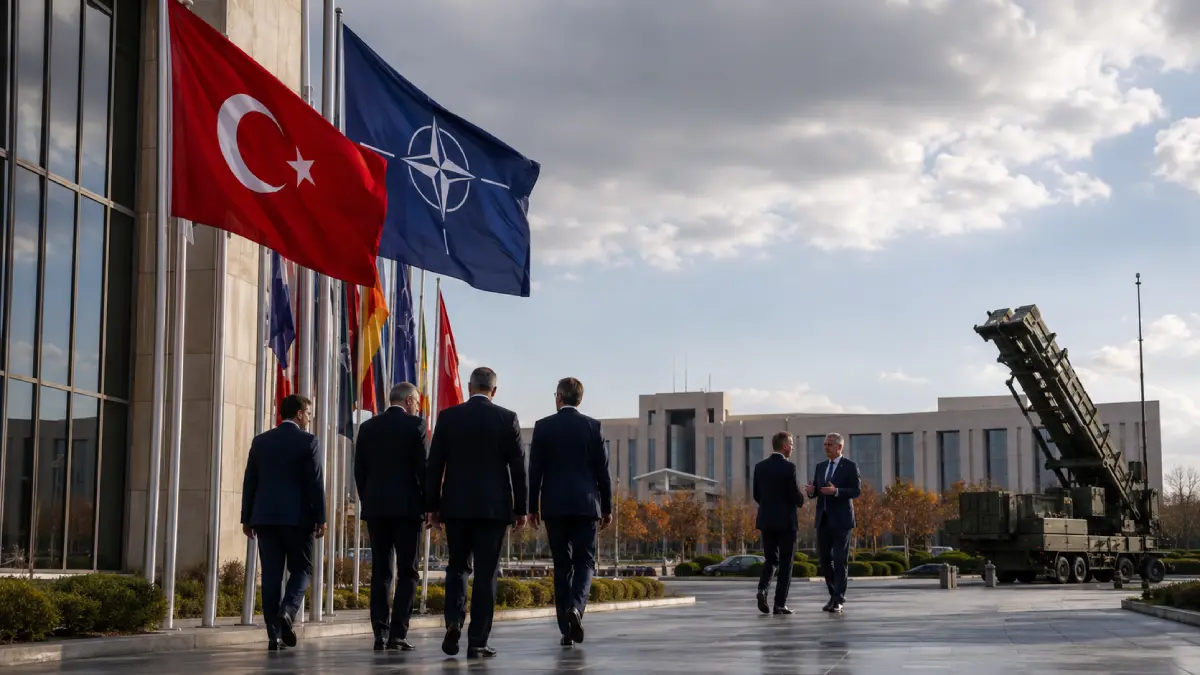
NATO's official media advisory says Türkiye will host the summit in Ankara on July 7-8, 2026, with the meeting chaired by the NATO Secretary General at the Beştepe Presidential Compound. NATO confirmed separately that Türkiye is hosting a NATO summit for the second time, after the Istanbul summit in 2004.
Trump's confirmed attendance carries unusual weight because of his long-running criticism of NATO and repeated demands that European allies carry more of the defense burden. Reuters reported that the announcement eased some concern in alliance capitals over whether Trump would attend, given his criticism of allies during the Iran war and his frustration over limited European support for US requests linked to bases, tanker aircraft and the Strait of Hormuz.
That makes the Ankara summit more than a formal leaders' meeting. It will bring together several pressure points at once: the US demand for a changed NATO, Europe's defense burden, Iran and Hormuz, Ukraine, Black Sea security and the alliance's southern flank. Türkiye will host the meeting while sitting close to several of those files at the same time, from the Black Sea and the Caucasus to Syria, the Eastern Mediterranean and the Gulf energy route.
The spending issue will also return to the center of the table. At the 2025 NATO summit in The Hague, allies agreed to a 5 percent commitment by 2035, split between 3.5 percent of gross domestic product for core defense requirements and NATO capability targets, and 1.5 percent for broader defense and security-related investment.
Ankara will be one of the first major political tests of that pledge. Washington's question is no longer only whether European allies raise defense budgets. It is also whether they can provide usable air, naval, logistics and basing support when a crisis moves beyond the European theater.
The Iran war has pushed that question forward. Reuters reported that Trump was disappointed with some NATO allies over their refusal to back US efforts during the conflict, including requests linked to military bases, tanker aircraft and reopening Hormuz. The same report said the administration wants allies to increase air and naval capacities and expects the summit to make those points clear.
Türkiye enters the summit with both visibility and pressure, hosting NATO leaders at a moment when the alliance is reassessing defense spending, US force priorities, Europe's military capacity and its response to crises beyond the traditional northern and eastern flank. Ankara's role in the Black Sea, the Eastern Mediterranean, the Middle East and the Caucasus gives the meeting a regional weight that goes beyond protocol.
The Ankara meeting will also test how far NATO can absorb Trump's pressure without appearing divided. Rubio's testimony made clear that Washington is not leaving the alliance, but it also signaled that the United States will use the summit to push for a different NATO, with Europe expected to carry more responsibility and respond faster when US security demands move through the Middle East and energy corridors.
***Source notes: Reuters, NATO, US House Foreign Affairs Committee, NATO Hague Summit Declaration.