
By Murat Yildiz
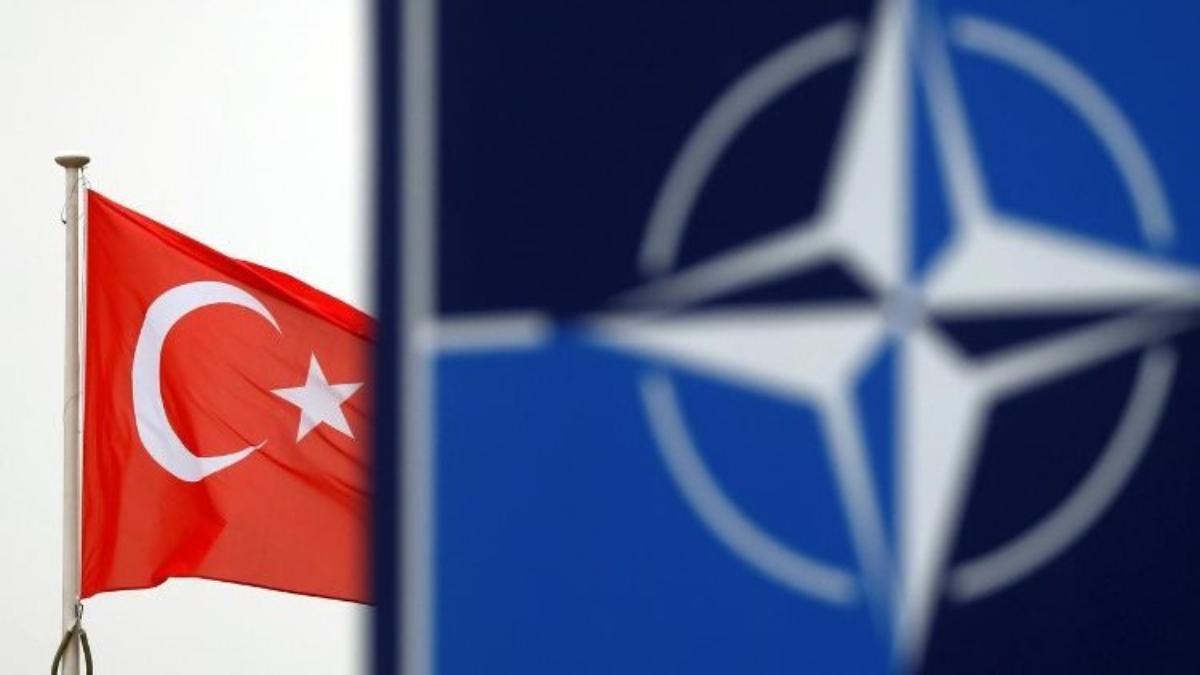
Ankara is not hosting another NATO summit simply because Türkiye happens to be next on the alliance calendar; it may be hosting one of the most decisive NATO summits since the alliance was founded, because the meeting comes at the point where Donald Trump's pressure on Europe to pay more for its own defense, Europe's unfinished military build-up and Türkiye's exclusion from the European defense bargain begin to collide.
The reason is not protocol, symbolism or the prestige of hosting, but the fact that NATO's old bargain is under pressure in a way that can no longer be managed by familiar language alone. The United States is becoming less willing to carry Europe without conditions, Europe is still not ready to carry its own defense alone, and Türkiye is being asked to remain inside the shield while being kept outside the bargain that decides who gets funded, armed and included.
For years, Europe and the EU have read Türkiye through the files that make Ankara inconvenient: Greece, Cyprus, the Aegean, Blue Homeland, Erdoğan, domestic politics, nationalist language and maritime disputes. These files are real, and none of them can be wished away, but they no longer explain the full weight of Türkiye inside NATO, because the same Europe and EU institutions that want to limit Türkiye politically also need Turkish military weight when the map shifts to the Black Sea, NATO's exposed skies, the southern flank, defense production, drones, naval access, migration pressure, overseas operations and the long war with Russia.
Europe wants Türkiye to carry weight in the shield while denying it a seat in the bargain that decides who gets paid, armed and included.
Donald Trump did not create this contradiction, but he may drag it into the open. Reuters reported that Trump will attend the July 7-8, 2026 NATO summit in Ankara, with U.S. Secretary of State Marco Rubio presenting the meeting as one of unusual importance at a time when Washington's expectations of European allies have become harder and more transactional. The deeper issue is not whether Trump sits at the table, but what kind of NATO sits across from him.
Trump's language is brutal, but the question beneath it is not absurd. Why should the United States keep carrying Europe's defense while Europe speaks about autonomy without producing enough hard power to match its ambition? This question is uncomfortable for Brussels, Paris and Berlin, but it is no longer avoidable, because if Washington carries less, Europe cannot answer with communiqués, spending promises and institutional slogans alone; it needs aircraft, ships, ammunition, air defense, soldiers, production capacity, naval access and geography.
Europe has tried to answer American pressure through higher spending targets, joint procurement, ammunition production and a new language of readiness, yet language still runs ahead of capacity. NATO's Steadfast Defender 2024 showed the scale of what collective defense now requires, with more than 90,000 forces, more than 50 ships, more than 80 aircraft and over 1,100 combat vehicles involved in the alliance's largest exercise in decades. Türkiye was part of that readiness picture, not a country watching from the edge, because the debate over Europe's defense burden is no longer abstract; it is about which allies can move forces, sustain operations and add real military weight when American power becomes less predictable.
That Turkish weight becomes clearer when NATO's later readiness activity is added to the picture. In Steadfast Dart 2026, Türkiye was reported as the largest contributor, deploying more than 2,000 personnel along with TCG Anadolu, four frigates, two support ships, marines and air assets, while the full exercise brought together around 10,000 troops, 17 naval vessels, more than 20 aircraft and roughly 1,500 military vehicles. Steadfast Defender showed the scale of the burden; Steadfast Dart showed that Türkiye is not peripheral to the operational answer.
Türkiye cannot replace the United States, and any argument that suggests otherwise would collapse under its own exaggeration, but Europe cannot build a serious security order for a more dangerous decade while treating Türkiye as peripheral. Ankara sits on the Black Sea, the Eastern Mediterranean, the Middle East, the Caucasus and the Balkans at the same time, controls access to the Black Sea through the Turkish Straits under the Montreux Convention, and brings a defense industry that has moved from dependency toward production with a speed many European capitals did not expect. These are the practical ingredients of alliance power at a moment when Europe is trying to calculate what it can still carry if American guarantees become less automatic.
Baltic air policing shows the contradiction in operational form. Türkiye's deployment of F-16s to Malbork, Poland, under NATO's enhanced Air Policing mission placed Turkish aircraft over a region far from Anatolia but close to NATO's most exposed frontier with Russia. The Turkish Air Force detachment operated from Malbork in 2021 in support of NATO's air policing mission, making clear that Türkiye's alliance role is not confined to its own immediate neighborhood.
The Black Sea is the place where Europe's dependence on Türkiye becomes hardest to disguise. Romania and Bulgaria matter, Ukraine's survival matters, and NATO's eastern flank matters, but Türkiye occupies a structural position that cannot be reproduced by any European funding scheme. The Straits, Montreux, naval weight and Ankara's ability to limit escalation without turning the Black Sea into an open NATO-Russia naval arena all make Türkiye central to the balance that Europe has benefited from since Russia's full-scale invasion of Ukraine.
Europe may not always like Turkish policy, but it has benefited from Turkish geography in ways it rarely says openly: the Straits, the Black Sea balance, migration management, southern flank security and the uncomfortable fact that Türkiye absorbs pressures Europe often prefers to keep at a distance.
NATO's own record also complicates the narrow European habit of discussing Türkiye mainly through the Aegean and Cyprus. NATO Secretary General Mark Rutte has described Türkiye as the Alliance's second-largest army and noted that Ankara spends more than 2 percent of GDP on defense. Türkiye has sent F-16s to Baltic air policing, reinforced KFOR with around 500 troops from its 65th Mechanized Infantry Brigade after the 2023 Kosovo unrest, completed command of the KFOR peacekeeping mission and contributed to NATO Mission Iraq as the Alliance works to strengthen Iraqi security institutions against the return of Daesh. Türkiye's operational record also extends beyond NATO's immediate geography, with Ankara listing participation in UN missions including African theatres such as the Central African Republic, the Democratic Republic of Congo, Abyei and South Sudan.
That record is not a decorative résumé. It places Turkish soldiers, aircraft, command roles and operational commitments inside the security machinery that Europe depends on when risk moves from policy language to deployment.
The Eastern Mediterranean and the southern flank bring the political difficulty back into view. European capitals can object to Turkish maritime claims, criticize Ankara's language, support Greece and the Republic of Cyprus in legal and political forums, and remain worried by the domestic politics attached to Blue Homeland. Those concerns should not be dismissed. Blue Homeland is not only a technical maritime doctrine; it carries national memory, domestic mobilization, Cyprus, the Aegean and Türkiye's long search for strategic autonomy inside the same language.
Yet Europe cannot reduce Türkiye to that problem file when it wants to limit Ankara, then rediscover Türkiye as an indispensable military actor when the discussion turns to Russia, the Black Sea, drones, migration routes, energy corridors, naval access, defense production and NATO's southern flank. Europe and EU institutions do not ignore Türkiye; they use Türkiye selectively, limiting Ankara through Greece and Cyprus when the subject is power, procurement and political access, then rediscovering Türkiye when the subject is the Black Sea, NATO's southern flank, migration pressure or military reach.
The contradiction becomes sharper when the discussion moves from NATO deployments to European defense money. The Council of the European Union adopted SAFE on May 27, 2025 as a €150 billion mechanism to support member states investing in defense industrial production through common procurement, while the European Commission presents it as a tool for urgent and large-scale procurement in Europe's defense capabilities.
SAFE was not designed as an anti-Türkiye instrument, but EU internal politics can still turn it into one. The mechanism is presented as a rational answer to Russia, ammunition shortages and the fear that American protection may no longer be automatic, yet for Ankara it looks like a European defense club being built with Türkiye's security contribution in mind, but without Türkiye at the table. Türkiye is expected to strengthen NATO's geography, reinforce its flanks and help absorb pressure from Russia, migration, regional wars and overseas instability, while Greece and the Republic of Cyprus retain enough institutional weight inside the EU to keep Ankara at the edge of the financial and industrial system created for Europe's defense.
The issue is not only what Europe thinks of Türkiye; it is how EU membership gives Greece and the Republic of Cyprus institutional tools to turn bilateral and Cyprus-related disputes into gates around Europe's defense economy. A NATO ally that Europe needs in the Black Sea, the southern flank, alliance air missions, overseas stabilization efforts and defense production can therefore be kept at the edge of funding, procurement and industrial cooperation because two EU members have the political tools to keep it there.
That is the bargain Europe is trying to preserve: Türkiye's aircraft, geography, navy, drones, defense industry, Black Sea role and overseas operational capacity are useful when Europe speaks the language of security, but Türkiye becomes inconvenient when the conversation shifts to funding, procurement, industrial participation and institutional access. As the American guarantee becomes less predictable and Europe's own capacity gap becomes harder to disguise, that separation between operational dependence and political exclusion becomes increasingly difficult to sustain.
Türkiye also has limits, and a serious commentary should not turn Ankara's growing role into easy triumphalism. Türkiye is stretched across too many fronts, from the Black Sea and Syria to Iraq, the Caucasus, the Eastern Mediterranean, the Balkans, Africa-linked security files and NATO's northern flank. More visibility may bring more influence, but it also brings more cost, more expectation and more exposure. A larger NATO role is not a free diplomatic prize; it is a heavier strategic bill.
Recognizing Türkiye's limits, including the risk of overextension and the political costs that come with a larger NATO role, still does not remove Europe's own problem. If Europe wants Türkiye's contribution to the shield, it cannot indefinitely avoid the question of Türkiye's place in the bargain, because keeping Ankara inside the operational map and outside the defense economy will eventually carry its own strategic price.
The Ankara summit will probably not resolve this tension in its official language, because NATO communiqués usually convert contradictions into manageable phrases rather than settle them. The importance of this summit lies elsewhere: Trump's pressure, Europe's capacity gap, Russia's war, Türkiye's military weight and the EU's selective defense architecture will all be present in the same political space.
Ankara will therefore not merely host the meeting; it will give physical form to the question Europe has tried to manage indirectly for years.
If the United States carries less, and Europe cannot yet carry itself, how long can Europe afford to keep Türkiye at arm's length?
Europe may continue to call Türkiye a difficult ally, and in several files it will have evidence for that claim, but difficulty has become the excuse through which Europe avoids admitting dependence. If the next NATO era is defined by less automatic American protection, a longer Russian threat and a Europe still short of hard power, then keeping Türkiye useful in the shield but excluded from the bargain is not a clever compromise. It is the habit of a continent that still wants Turkish protection without accepting the political cost of Turkish inclusion.