
By Murat Yıldız
President Recep Tayyip Erdoğan has approved the transfer of the remains of İsmail Namık Gedik, Türkiye's interior minister during the September 6-7, 1955 violence in Istanbul, to the Adnan Menderes Mausoleum in the city. Interior Minister Mustafa Çiftçi announced the decision on September 17 at a ceremony marking 65 years since the executions of Prime Minister Adnan Menderes, Foreign Minister Fatin Rüştü Zorlu and Finance Minister Hasan Polatkan.
Gedik is buried at Cebeci Asri Cemetery in Ankara. Çiftçi said Erdoğan had signed the decision a day earlier and that Gedik would be reburied at the Adnan Menderes Mausoleum.
The mausoleum was built for Menderes, Zorlu and Polatkan after Parliament restored their legal reputations. Their remains were brought from İmralı and reburied there on September 17, 1990, in a state ceremony. Menderes, Zorlu and Polatkan were executed in 1961 following the Yassıada trials held after the 1960 military coup.
Çiftçi tied Gedik's reburial directly to his death after the May 27, 1960 coup. Gedik was detained and taken to the Turkish Military Academy in Ankara, where he died on May 29. His death was officially reported as suicide. His son Arda later said he believed his father had taken his own life, while his wife Melahat, daughter Ayla and daughter-in-law Emine questioned that account. No autopsy was carried out, and the exact cause of death was never established.
At the September 17 ceremony, Çiftçi rejected the suicide account and described Gedik as a victim and "martyr" of May 27. AK Party deputy chair Kürşad Zorlu said the transfer would complete an unfinished page of history 66 years later.
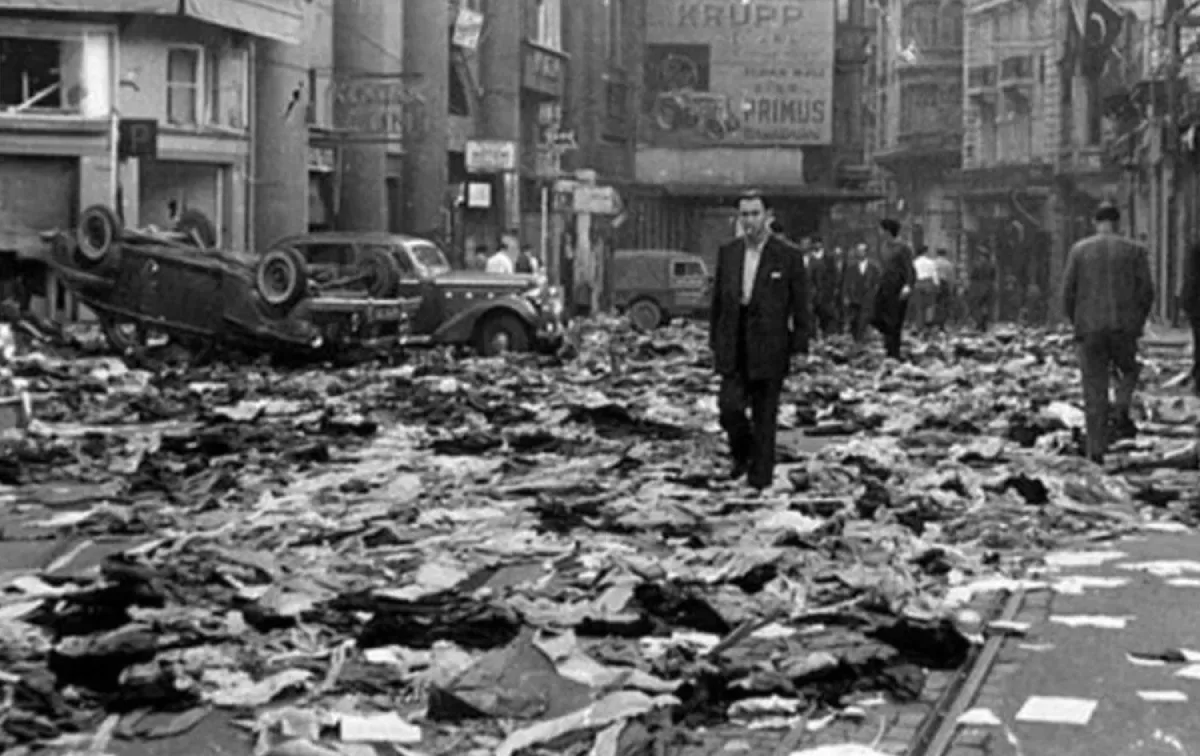
Gedik was interior minister when crowds attacked Istanbul's Greek Orthodox community on September 6-7, 1955. The violence followed reports of a bomb explosion at the house in Thessaloniki where Mustafa Kemal Atatürk was born. Homes, businesses, churches and other property belonging primarily to Istanbul Greeks were attacked. Armenian and Jewish property was also hit. Greeks commonly remember the events as the Septemvriana. Turkish usage generally refers to the September 6-7 events, while much of the historical literature describes them as the Istanbul pogrom.
Gedik resigned as interior minister on September 10, four days after the violence. He remained close to Menderes and returned to the Interior Ministry in late 1956, serving until the military takeover in May 1960.
Istanbul Governor Fahrettin Kerim Gökay said in the inquiries that followed that he had passed information to the Interior Ministry about Cyprus-related activity in the city. In sworn testimony in 1956, Gedik acknowledged receiving reports from Gökay but said the incidents he recalled had occurred earlier and were unrelated to the September 6-7 violence.
Hikmet Bil, head of the Cyprus Is Turkish Association, which played an active role in the mobilization surrounding the events, later alleged in his account of the period that President Celal Bayar, Menderes and Gedik were among the senior political figures behind the violence. Gedik died before the Yassıada trials opened and was never tried over the September 1955 events.
The September 1955 events were later heard as a separate case at Yassıada. In 2020, Parliament retroactively repealed the statutory provisions that had underpinned the High Court of Justice, rendering its decisions legally void and providing for their removal from judicial and archival records.
Çiftçi's announcement came ten days after the 71st anniversary of the attacks. The September 1955 violence became a turning point for Istanbul's long-established Greek community, whose population today numbers only a few thousand.
As of Saturday evening, Bosphorus News had found no public response to the reburial decision from Greece's Foreign Ministry, the Greek Orthodox Patriarchate in Istanbul or Istanbul Greek community organizations.
Sources: Türkiye's Interior Ministry, Presidency Directorate of Communications, Anadolu Agency, Turkish Parliament, Atatürk Ansiklopedisi, bianet, Bosphorus News review and reporting.