
By Murat Yıldız
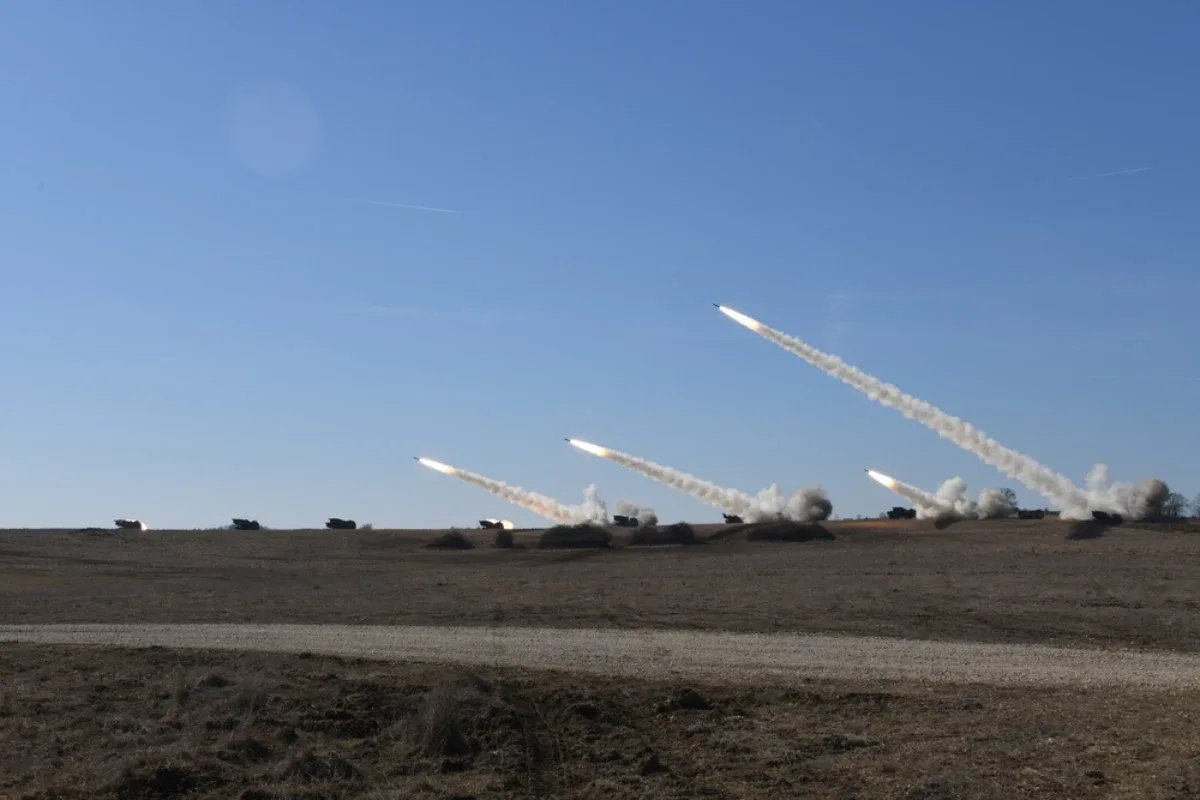
The United States Department of State has notified Congress that it is prepared to authorize Türkiye's proposed retransfer of 12 M270 launchers and three types of cluster munitions to Ukraine. The weapons listed in two congressional notifications contain a combined 10,151,956 explosive submunitions, according to calculations based on the official quantities.
Human Rights Watch (HRW) has urged Congress to oppose the transfer, warning that the package includes aging and unreliable weapons capable of leaving unexploded submunitions behind. Initial Turkish reports concentrated largely on the military systems, intermediaries and apparent value of the transaction, with limited attention to the civilian risk or the international campaign against cluster munitions.
What the Notices Contain
The first notification covers 12 M270 Multiple Launch Rocket System (MLRS) launchers, 2,524 M26 rockets and 47,000 M509A1 203mm artillery projectiles. The document lists their combined original acquisition value as approximately $255.9 million.
A separate notification covers 70 M39 Army Tactical Missile System (ATACMS) missiles with an original acquisition value of approximately $28 million.
Together, the two notifications list:
70 M39 missiles, each carrying 950 M74 anti-personnel and anti-materiel submunitions, for a total of 66,500
2,524 M26 rockets, each carrying 644 M77 Dual-Purpose Improved Conventional Munitions (DPICM), for a total of 1,625,456
47,000 M509A1 artillery projectiles, each carrying 180 M42 DPICM submunitions, for a total of 8,460,000
12 M270 launchers
The resulting total is 10,151,956 individual submunitions.
The combined figure of $283.9 million is not a disclosed sale price. It represents the original acquisition values assigned to the equipment in the two US notifications. Commercial terms, payment arrangements and the present value of the proposed transfer have not been made public.
Approval, Not a Completed Sale
The notifications were delivered to Congress on August 3 and published in the Congressional Record on August 6. The US government said it was "prepared to authorize" the transfer, meaning final authorization had not yet been publicly confirmed.
The congressional record provides a 30-calendar-day review period. It states that the equipment could be transferred immediately after that period is completed, contradicting Turkish reports that cited a 15-day review or suggested shipment could begin before the end of August.
Türkiye requires Washington's authorization because the launchers and munitions are US-origin defense articles. The official explanation says Ankara wants to reduce its inventory of older equipment and redirect resources toward the modernization and maintenance of existing systems. Ukraine, according to the notification, wants the weapons to strengthen offensive and defensive fire support against Russia.
HRW described the 12 M270 launchers as Türkiye's entire inventory. The US notifications confirm the number of launchers proposed for transfer but do not independently establish the total size of Türkiye's M270 fleet.
How Old Are the Munitions?
HRW says the weapons have been held in Turkish stocks for decades and were produced in part in Türkiye under US licenses. A 1987 memorandum between Washington and Ankara authorized the Turkish co-production of selected MLRS components, but it does not establish that every munition covered by the proposed transfer was manufactured in Türkiye.
The M26 is the original unguided rocket developed for the MLRS, while the M39 was the earliest operational ATACMS variant. The M509A1 projectiles account for most of the submunitions in the package. HRW says this type of projectile was removed from US service in 1994 when the artillery systems that fired it were retired.
Neither notification provides manufacturing dates, lot numbers, maintenance records or information about storage conditions. The public record therefore supports describing the systems as older designs, but not assigning a precise age or condition to every item in Türkiye's inventory.
State-Owned Companies Listed as Private Entities
The first notification names Mechanical and Chemical Industry Corporation (MKE), Military Factory and Shipyard Management Inc. (ASFAT) and ARCA Savunma as the Turkish entities involved in the transfer.
The US document describes all three collectively as "Turkish private entities." Turkish corporate records present a more complicated picture. MKE is wholly owned by the Turkish Treasury, with shareholder and management authority exercised through the Ministry of National Defense. ASFAT says it is fully publicly owned and was established within the ministry. ARCA Savunma is privately held.
The remaining intermediaries are Bulgaria-based VTIC International and the US-based companies Pansophico and Patriot Defense Group. The notifications do not explain the responsibilities, fees or contractual relationships of the individual companies.
Civilian Risk and Legal Questions
Cluster munitions disperse large numbers of smaller explosives over a wide area. Submunitions that fail to detonate on impact can remain dangerous long after an attack, posing a continuing risk to civilians.
HRW Deputy Washington Director Nicole Widdersheim said the listed weapons have a record of missing their targets and harming civilians. The organization has called on Congress to oppose the proposed transfer.
The Convention on Cluster Munitions prohibits participating states from using, stockpiling or transferring cluster munitions and from assisting prohibited activities. The treaty has 112 states parties, but Türkiye, the United States and Ukraine have not joined it.
Bulgaria is a state party, making the appearance of Bulgarian company VTIC International in the transfer chain a potential compliance question. The public notification does not explain the company's role in sufficient detail to determine whether its participation would fall within the convention's prohibitions.
HRW says US appropriations legislation has maintained restrictions on cluster-munition exports since 2009. The organization says the Biden administration used presidential national-security determinations to permit at least seven transfers to Ukraine between July 2023 and October 2024.
It is not publicly known whether the Trump administration has made a similar determination in this case. Congress could seek to block the proposed transfer through a joint resolution of disapproval.
What Initial Turkish Reports Emphasized
Initial reports by Cumhuriyet, CGTN Türk and specialist outlet DefenceTurk focused primarily on the weapons, their ranges, the companies involved and the apparent financial value of the proposed transfer.
Those reports appeared before HRW issued its warning on August 11, so their omission of the organization's objections cannot be treated as evidence of a deliberate decision to ignore them. A subsequent report by 10Haber covered the HRW warning and the civilian risks associated with unexploded submunitions.
The initial coverage nevertheless left several important points underdeveloped. The figures in the congressional notices are original acquisition values rather than a confirmed transaction price, the review period is 30 days rather than 15, and Washington has not announced that final authorization has been granted.
The congressional review clock is already running. What remains undisclosed is whether the Trump administration has made the national-security determination that HRW says could be used to bypass US restrictions on cluster-munition exports.
Sources: US Congressional Record, Human Rights Watch, US Army, MKE, ASFAT, Convention on Cluster Munitions, Cumhuriyet, CGTN Türk, DefenceTurk, 10Haber, Bosphorus News reporting and review.