
By Bosphorus News Geopolitics Desk
Türkiye's new defense pact with Saudi Arabia and Pakistan now carries a written mutual-defense clause, although the military machinery behind it has not been made public. Before dawn in Ankara, lawmakers were still debating the PKK bill as negotiations over Hormuz, a new verification plan for southern Lebanon and disrupted Black Sea oil exports produced fresh developments.
Mecca pact commits Türkiye, Saudi Arabia and Pakistan to mutual defense
President Recep Tayyip Erdoğan, Saudi Crown Prince and Prime Minister Mohammed bin Salman and Pakistani Prime Minister Shehbaz Sharif signed the Mecca Joint Defense Agreement on August 7, committing the three countries to treat an armed attack against any one of them as an attack against all three.
The joint statement says the agreement is intended to strengthen collective deterrence and expand defense cooperation. Erdoğan said it would support joint defense-industry projects and counterterrorism cooperation and linked the pact to the right of individual and collective self-defense under Article 51 of the United Nations Charter.
A Turkish government official described the agreement as purely defensive and said it neither targets a specific actor nor annuls or replaces existing bilateral or multilateral agreements. Saudi Arabia separately rejected suggestions that the pact creates a military axis or sectarian bloc.
The full treaty has not been published. The material released so far does not specify whether an attack would trigger an automatic military response or set out command arrangements, deployment provisions or a consultation procedure.
The agreement expands a security relationship that already included the Saudi-Pakistani Strategic Mutual Defense Agreement signed in September 2025 and long-standing bilateral defense ties between Türkiye and both countries.
Türkiye addresses NATO compatibility after Mecca signing
Turkish officials moved quickly to reject the argument that the new pact displaces Türkiye's existing alliance commitments, saying the agreement does not replace arrangements with other states or international organizations.
NATO Article 5 requires every ally to assist a member subjected to an armed attack, but allows each state to determine the action it considers necessary, including whether that assistance involves military force. The public Mecca statement does not provide comparable detail on how military assistance would be decided.
Until the treaty itself is released, the consultation and implementation rules behind its mutual-defense clause remain unknown.
PKK bill debate runs into early hours after 367 lawmakers sign proposal
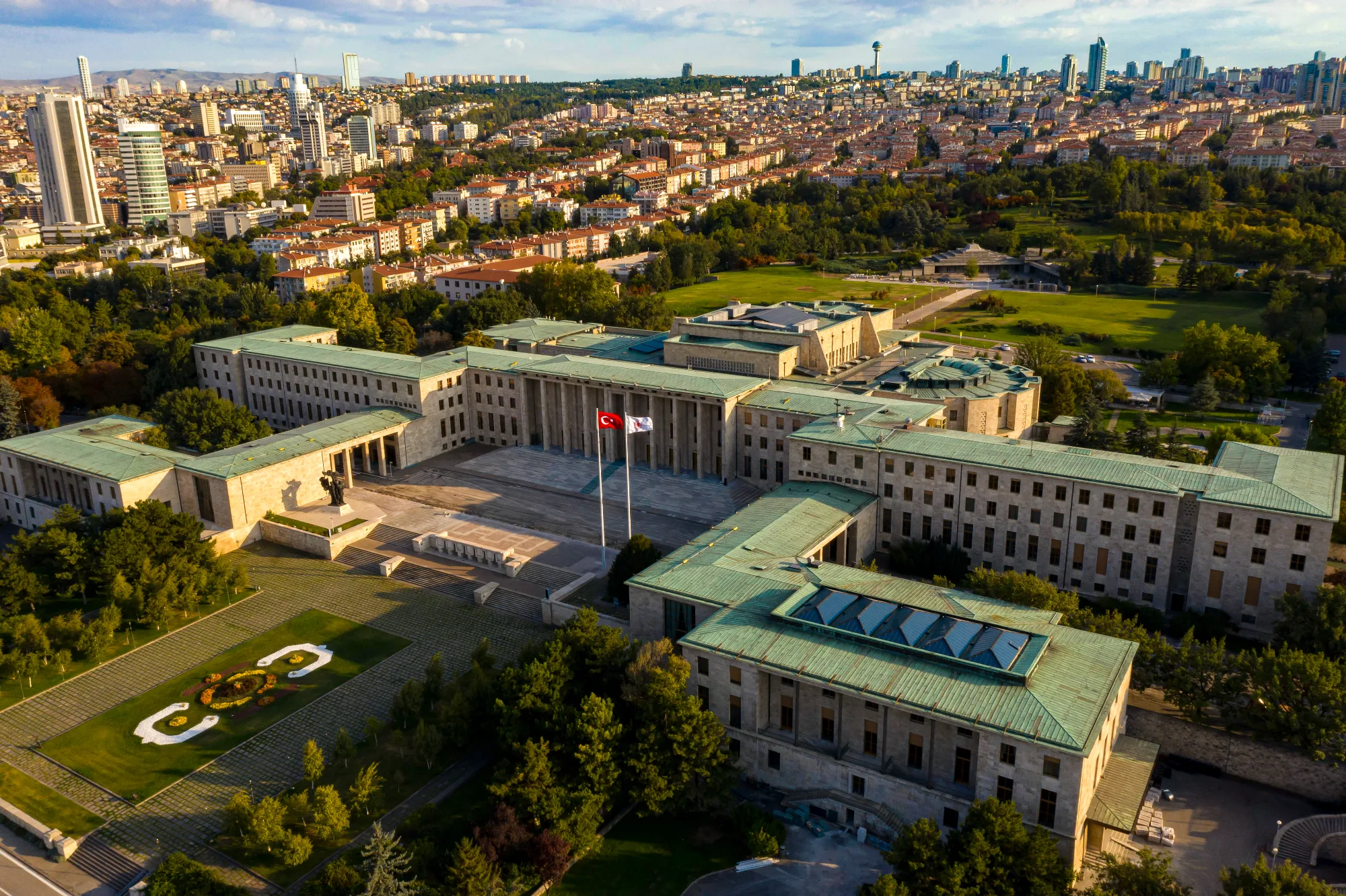
Türkiye's Justice Committee began considering proposal 2/3793 at 15:32 on August 7, two days after the legislation was submitted to the Grand National Assembly of Türkiye.
AK Party lawmaker Abdulhamit Gül told the committee that 367 lawmakers had signed the proposal. The legislation concerns the Kurdistan Workers' Party (PKK), which is designated as a terrorist organization by Türkiye, the United States and the European Union.
The first article makes the proposed legal mechanisms conditional on Turkish security institutions determining that the PKK/KCK and connected formations have ended their de facto presence and surrendered all weapons and ammunition under their control. That determination must then be confirmed through a National Security Council decision published in the Official Gazette before the relevant provisions can operate.
The official parliamentary transcript shows the second sitting closing at 03:06 on August 8 and a third sitting opening at 03:21, with debate continuing. No final committee vote was recorded in the published transcript available when this brief closed.
US says Hormuz agreement could be close
The United States said progress was being made in talks between Iran and Oman over the Strait of Hormuz and that an agreement restoring commercial shipping could be announced soon.
A U.S. official told Reuters that Washington would lift its blockade of Iranian ports once an agreement allowing commercial shipping to move without impediment was announced and implemented. U.S. action would remain conditional on Iran carrying out its commitments.
Traffic through the strait remains depressed. Shipping data showed 33 vessels transited between Monday and Thursday this week, compared with 50 over the same period a week earlier. Only four vessels crossed on Thursday.
The commercial cost is also becoming clearer. Abu Dhabi National Oil Company said 15 of its vessels had been attacked by missiles or drones while transiting the strait since the conflict began, including three this week, leaving one crew member dead and 20 injured.
Shipping companies continue to face sanctions exposure, insurance restrictions and security risks even as diplomatic negotiations advance.
Lebanon and Israel agree shortlist for Hezbollah verification force
Lebanon and Israel have agreed on a shortlist of countries that could provide troops to verify Hezbollah's disarmament under the U.S.-brokered arrangement linking the process to Israeli withdrawals from southern Lebanon.
The United States is expected to select one or more countries from the list, which was drawn up during talks at the U.S. Embassy in Rome. Lebanon rejected an earlier proposal to use private security companies and insisted that any third-party verification role be carried out by states.
The deployment structure remains undecided. Foreign personnel could operate within the United Nations Interim Force in Lebanon (UNIFIL), under another United Nations arrangement or through a separate agreement with the Lebanese government. Some options could require a new United Nations Security Council resolution.
The talks produced no agreement on the next area from which Israeli troops would withdraw. Hezbollah is not a party to the arrangement and continues to reject demands that it surrender its arsenal.
Black Sea attacks cut CPC oil loadings by more than 20 percent
Drone attacks around the Caspian Pipeline Consortium's Black Sea export operations reduced July oil loadings by more than 20 percent, removing roughly 400,000 barrels per day from international markets.
CPC loadings fell to around 1.2 million to 1.3 million barrels per day in July and have averaged about 1.1 million to 1.2 million barrels per day so far in August as interruptions continue around the terminal near Novorossiysk.
The pipeline carries crude from Kazakhstan to Russia's Black Sea coast and accounts for about 2 percent of global oil supply. Kazakhstan's oil production fell 14 percent in July from June as the disruption restricted access to a route for which the country has few alternatives capable of handling comparable volumes.
Major Western oil producers operating in Kazakhstan include Chevron and Exxon Mobil. Russia has blamed Ukrainian forces for attacks affecting tankers and infrastructure around the terminal, while Ukraine has neither claimed responsibility nor commented on the incidents involving facilities handling predominantly Kazakh crude.
Meanwhile, Türkiye's National Security Council on August 6 warned that the strategic deadlock in the Russia-Ukraine war could not be overcome by turning neighboring regions, particularly the Black Sea and the Caspian Sea, into areas of conflict. The statement came after months of attacks on commercial shipping, Turkish casualties and Ukrainian operations that had carried the war into the Caspian.
Strategic Take
The Mecca pact places a written mutual-defense commitment among Türkiye, Saudi Arabia and Pakistan on the record, but its operational content remains undisclosed. The attack-on-one clause is explicit; the rules governing consultation, deployment and military assistance are not. NATO Article 5 gives each ally discretion over the form of assistance it provides, so the two arrangements cannot be treated as legally identical on the basis of the material now public.
The PKK legislation is more specific about sequencing. Security verification and a National Security Council decision published in the Official Gazette must precede operation of its legal mechanisms. Parliament was still debating the proposal before dawn.
CPC provides the clearest measure of the cost already being imposed on commercial infrastructure: roughly 400,000 barrels per day of scheduled July loadings were lost. Hormuz and southern Lebanon have produced negotiating mechanisms, but neither has yet produced the operating conditions needed to restore normal movement on the ground.
Correction: Yesterday's brief reported that a bomb planted on a minibus in Jaramana, outside Damascus, killed two people and wounded 14. Syria's Health Ministry subsequently corrected the toll to 14 wounded and no deaths. Bosphorus News regrets the error.
Sources: Türkiye's Directorate of Communications, Grand National Assembly of Türkiye and Justice Committee records, NATO, Reuters, Associated Press, Bosphorus News review and reporting.
Read Yesterday's brief: Eastern Mediterranean Strategic Brief | August 7, 2026.