
By Bosphorus News Energy Desk
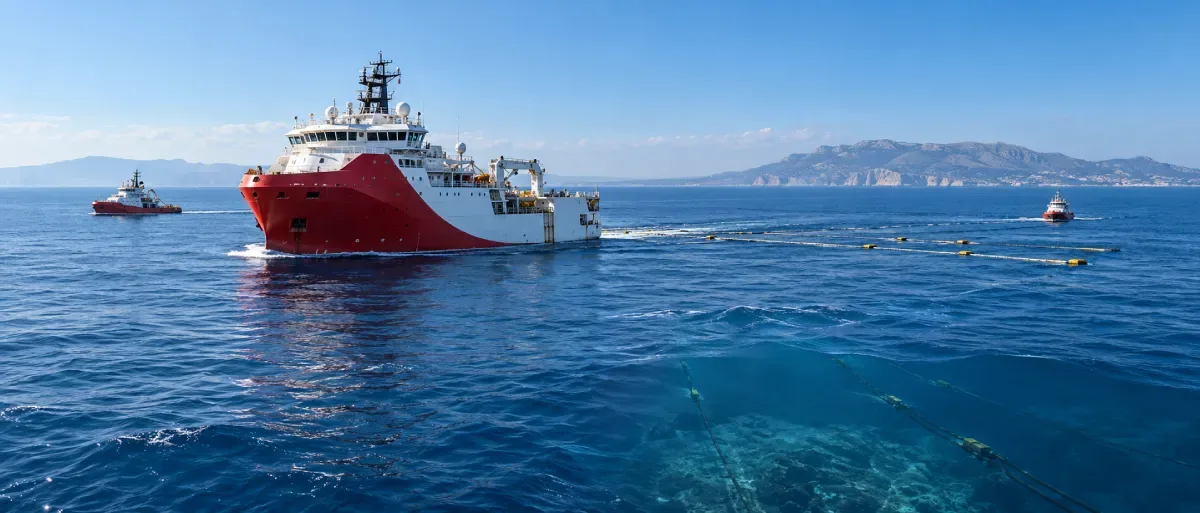
A new Turkish NAVTEX for Oruç Reis survey activity in the Eastern Mediterranean has drawn a Greek objection over the planned natural gas pipeline between Türkiye and the Turkish Republic of Northern Cyprus (TRNC). Greek diplomatic sources said the survey announced under NAVTEX 953/26 is linked to the planned subsea gas pipeline.
The Greek side said parts of the survey fall within territorial waters and continental shelf areas claimed by the Republic of Cyprus. It argued that energy infrastructure developed without the Republic of Cyprus' consent lacks a legal basis under international law and the United Nations Convention on the Law of the Sea (UNCLOS). Greek diplomatic sources called the move "another provocative unilateral action."
Türkiye has already confirmed that Oruç Reis is surveying for the pipeline. Energy and Natural Resources Minister Alparslan Bayraktar said on August 7 that the vessel was conducting seabed research in the Mediterranean for a natural gas pipeline to the TRNC. He said engineering and construction were planned to take 24 to 30 months.
Türkiye and the TRNC signed the pipeline memorandum on July 10. The project calls for an approximately 101-kilometer line from Anamur to Teknecik, with 97 kilometers offshore and four kilometers on land. Two parallel 22-inch pipelines are planned, with the system designed to carry gas in both directions.
The latest survey follows earlier Oruç Reis work south of Anamur, when the announced area covered a limited offshore block rather than the full route to northern Cyprus.
Gas would initially flow from Türkiye to the TRNC, with electricity generation a central use. The bidirectional design would also allow future gas flows from the island to Türkiye and onward to Europe. The 101-kilometer Anamur-Teknecik project formalized the route and bidirectional design.
The Republic of Cyprus objected when the memorandum was signed. Its Foreign Ministry said on July 10 that the project violated what it considers the Republic's sovereignty and sovereign rights, arguing that energy infrastructure affecting its territory or maritime zones could not proceed without its consent.
Türkiye restated its own maritime position on October 1. The statement came in response to a question about the Greece-Cyprus electricity interconnector, not NAVTEX 953/26.
The Defense Ministry said any cable or pipeline laying, or scientific research, on areas Türkiye regards as its continental shelf must be coordinated with Ankara in advance. It said Türkiye would not allow unauthorized activity in those areas and referred to maritime delimitation agreements with the TRNC and Libya, as well as the continental shelf limits declared to the United Nations on March 18, 2020.
Greek diplomatic sources say the Oruç Reis survey affects maritime areas under the jurisdiction of the Republic of Cyprus. Türkiye says cable, pipeline and scientific research activity on its claimed continental shelf requires prior coordination with Ankara.
TRNC Prime Minister Ünal Üstel also cast the project in political terms when the memorandum was signed in July. He called it "a strong message" to the Eastern Mediterranean and said the Turkish Cypriot people were rooted in the region and were building their future "with their sovereign will."
"Where Türkiye is, there is security. Where Türkiye is, there is strength," Üstel said.
Later on October 1, Greece's Government Council for National Security (KYSEA), chaired by Prime Minister Kyriakos Mitsotakis, reviewed international developments. The official readout said Foreign Minister George Gerapetritis briefed the council with particular emphasis on the Eastern Mediterranean, the Middle East and Ukraine. It did not say that Oruç Reis, NAVTEX 953/26 or the Türkiye-TRNC pipeline was specifically discussed.
The pipeline has now moved beyond the July agreement into confirmed seabed survey work. Ankara says Oruç Reis is conducting seabed research for the project, while Greece and the Republic of Cyprus challenge the legal basis for activity in maritime areas claimed by the Republic of Cyprus.
Sources: Türkiye's Ministry of Energy and Natural Resources, Türkiye's Ministry of National Defense, Greek Foreign Ministry diplomatic-source briefing, Republic of Cyprus Foreign Ministry, Greek government, TRNC Prime Ministry, Bosphorus News review and reporting.