
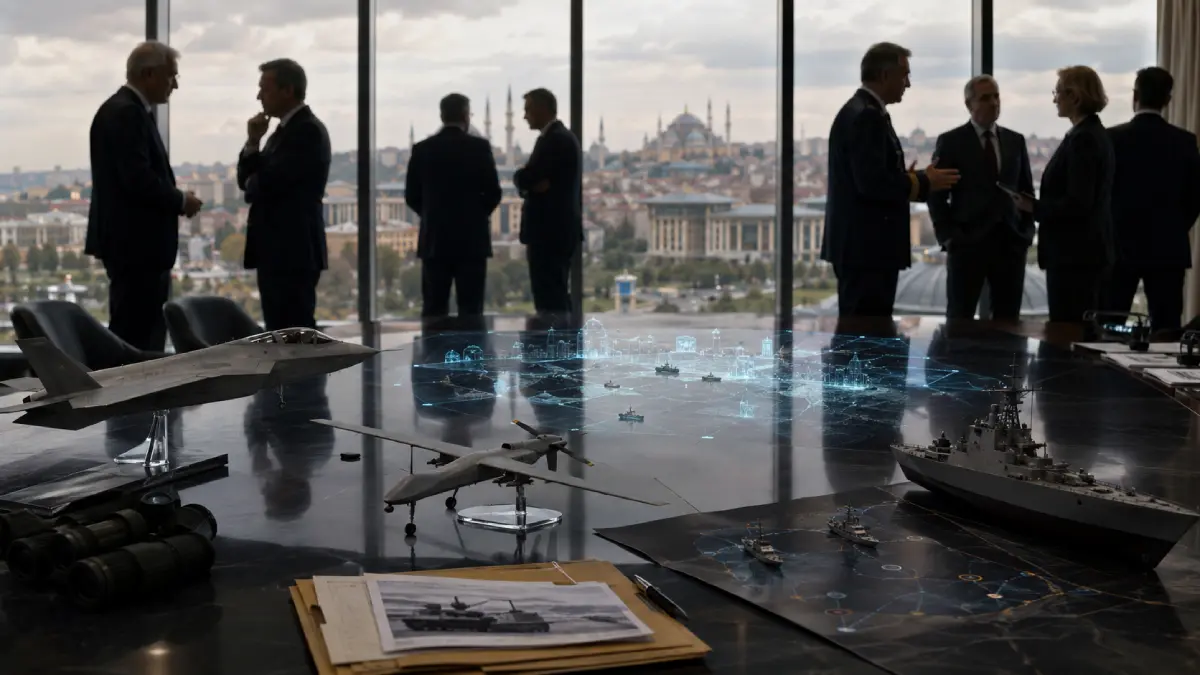
By Murat Yıldız, Editor-in-Chief of Bosphorus News
The Ankara NATO summit will test more than alliance unity when leaders meet in Türkiye's capital on July 7-8. It will show whether Europe's political framework can accommodate Türkiye's operational role in the North Atlantic Treaty Organization (NATO), from Black Sea security and the Montreux regime to air policing, rapid reinforcement and defence production.
That question is no longer theoretical. Turkish Defence Minister Yaşar Güler told Reuters ahead of the summit that NATO is not in crisis but adapting to a changed security environment. He also said the United States was not seeking to withdraw from NATO, but wanted European allies and Canada to take greater responsibility for European security.
Güler's central point went beyond reassurance about the alliance. Türkiye, he said, should be included in European defence plans and initiatives. The statement went directly to a contradiction Ankara has raised for years: NATO uses Türkiye's military capacity across several theatres, while European Union (EU) defence instruments and political arrangements still leave Türkiye outside key parts of Europe's security order.
This is the institutional contradiction at the center of the Ankara summit. European capitals rely on Türkiye inside NATO when military capacity, geography, air policing, naval access and defence production are needed. Yet EU instruments such as Security Action for Europe (SAFE), Cyprus-related limits and political restrictions still keep Ankara outside important decisions on funding, procurement and institutional access.
President Recep Tayyip Erdoğan made the same argument before the summit, calling for alliance unity, stronger resilience and the removal of defence trade restrictions on Türkiye. He also said Türkiye should be more deeply included in European security initiatives.
The timing matters. NATO leaders will meet in Ankara as the alliance tries to turn higher defence spending into industrial capacity. NATO says the Defence Industry Forum in Ankara will focus on the alliance's 5 percent defence investment plan, increased production, cooperation and joint procurement. That gives the summit an industrial agenda as well as a political one.
Türkiye is not arriving at that debate only as host. It is one of NATO's largest military powers, a Black Sea actor, a gatekeeper of the Turkish Straits under the Montreux Convention, a defence-industrial producer and a contributor to alliance operations beyond its immediate geography.
Türkiye's Operational Role
Türkiye's NATO value is often reduced to troop numbers. That misses the point. The country's contribution is spread across geography, legal control, operational readiness and defence production.
In Steadfast Dart 26, a major NATO exercise in 2026, around 10,000 troops from 13 allies deployed across Europe between January and March. NATO said the exercise brought together 17 naval vessels, more than 20 aircraft and roughly 1,500 military vehicles to test rapid reinforcement across land, air, sea and cyber domains. NATO material from the exercise showed Turkish platforms, including TCG Anadolu, Turkish attack helicopters and the Bayraktar TB3 drone.
Türkiye's role also extends north. Ankara plans to deploy fighter jets to Estonia from August to November 2026 and to Romania from December 2026 to March 2027 under NATO air policing missions. Those rotations matter because they place Türkiye inside the alliance's eastern and northern deterrence architecture, not only in the eastern Mediterranean, the Middle East or the Black Sea.
The same pattern appears in defence industry. Türkiye's drones, naval platforms, air defence ambitions and unmanned systems are now part of NATO's broader debate over production capacity and supply chains. Güler said Türkiye's priority areas include drones, anti-drone systems, air defence and missile systems, naval projects, unmanned systems and cyber capabilities.
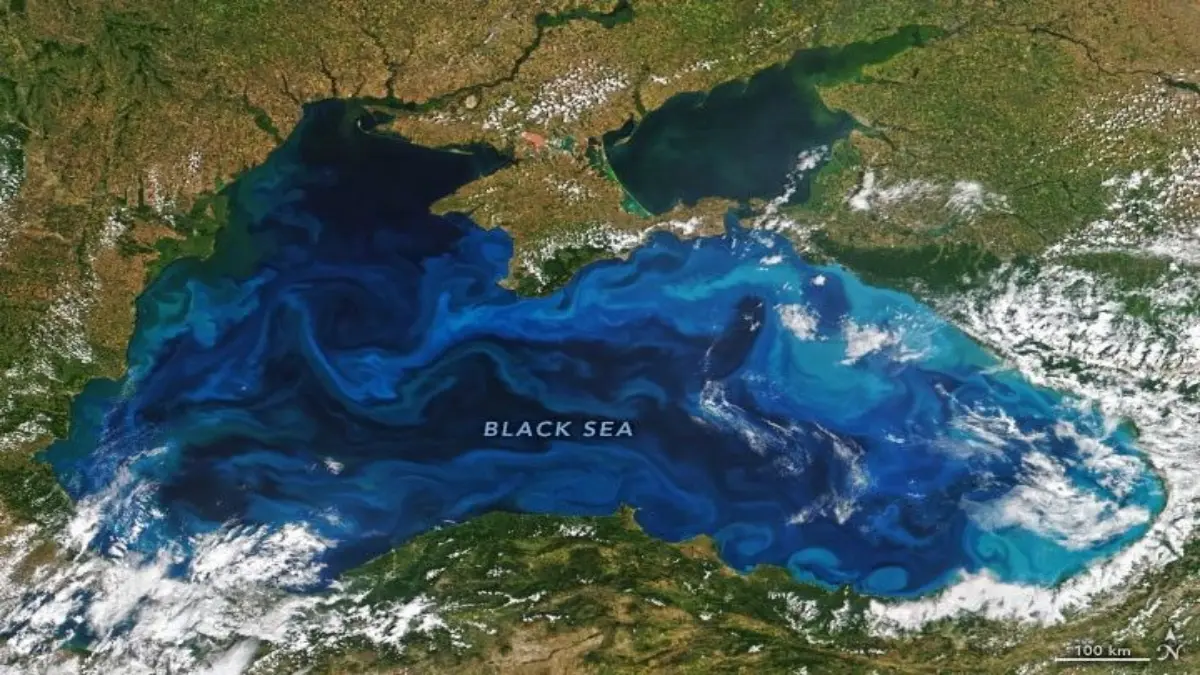
Bosphorus News reported earlier that Türkiye's KAAN fighter program and the U.S. review of engine sales had moved into the same political window as Ankara's NATO summit preparations. That file shows how operational ambition, defence industry and alliance politics now overlap.
The Black Sea and Montreux
The Black Sea gives Türkiye a role that cannot be measured only by defence spending or force size. Energy routes, grain shipments, naval access, mine threats, Russia's war in Ukraine and NATO's eastern flank all meet in the same maritime space.
The Montreux Convention makes Türkiye more than a littoral state. It is the country that applies the legal regime governing passage through the Turkish Straits. Türkiye's Foreign Ministry describes the convention as an essential element of Black Sea security and stability and says it has been implemented properly and impartially for more than eight decades.
That legal position gives Ankara a specific weight inside NATO's Black Sea debate. Türkiye does not simply contribute assets to the region; it administers the gateway between the Black Sea and the Mediterranean. In a period when Russia, Ukraine, NATO allies, energy flows and grain corridors remain tied to maritime access, that role is strategic and institutional at once.
This is why Türkiye's NATO value cannot be separated from Montreux, the Straits, Black Sea security, energy corridors and maritime trade. The alliance can debate burden-sharing in budget terms, but the Black Sea file shows that some contributions are embedded in geography and law.
Europe's Institutional Contradiction
Europe's political framework has not caught up with NATO's growing operational reliance on Türkiye.
SAFE illustrates the gap. The Council of the European Union describes SAFE as a €150 billion financial instrument to support member states investing in defence industrial production through common procurement. The structure is designed around EU members and eligible partners, not around NATO's full operational map.
Türkiye is a NATO ally, but it is not an EU member. SAFE's eligibility structure does not place Türkiye automatically inside EU common procurement on the same terms as EU members and eligible partners. That distinction matters because Europe is trying to expand defence production, rapid procurement and military capacity while NATO continues to rely on Türkiye's military and industrial weight.
The contradiction becomes sharper when the discussion shifts from soldiers and platforms to money, procurement and institutional access. Türkiye is expected to help fill NATO's operational gaps, from air policing to Black Sea security, but European defence tools can still treat Ankara as a country outside the institutional space where industrial priorities, funding and eligibility are shaped. That is not a technical detail. It is the political core of the dispute.
The Cyprus file adds another layer. Türkiye does not recognize the Republic of Cyprus government and recognizes the Turkish Republic of Northern Cyprus (TRNC) as the Turkish Cypriot state. The Republic of Cyprus is an EU member but not a NATO ally. Türkiye is a NATO ally but remains outside the EU's defence architecture.
Cyprus is part of the institutional contradiction, not an excuse to ignore it. The dispute is real, and Ankara does not dismiss its weight. But Europe cannot use Cyprus as a permanent limiting factor in EU defence structures while expecting Türkiye to act as an unrestricted NATO provider from the Black Sea to the alliance's air policing missions.
The SOFA Layer
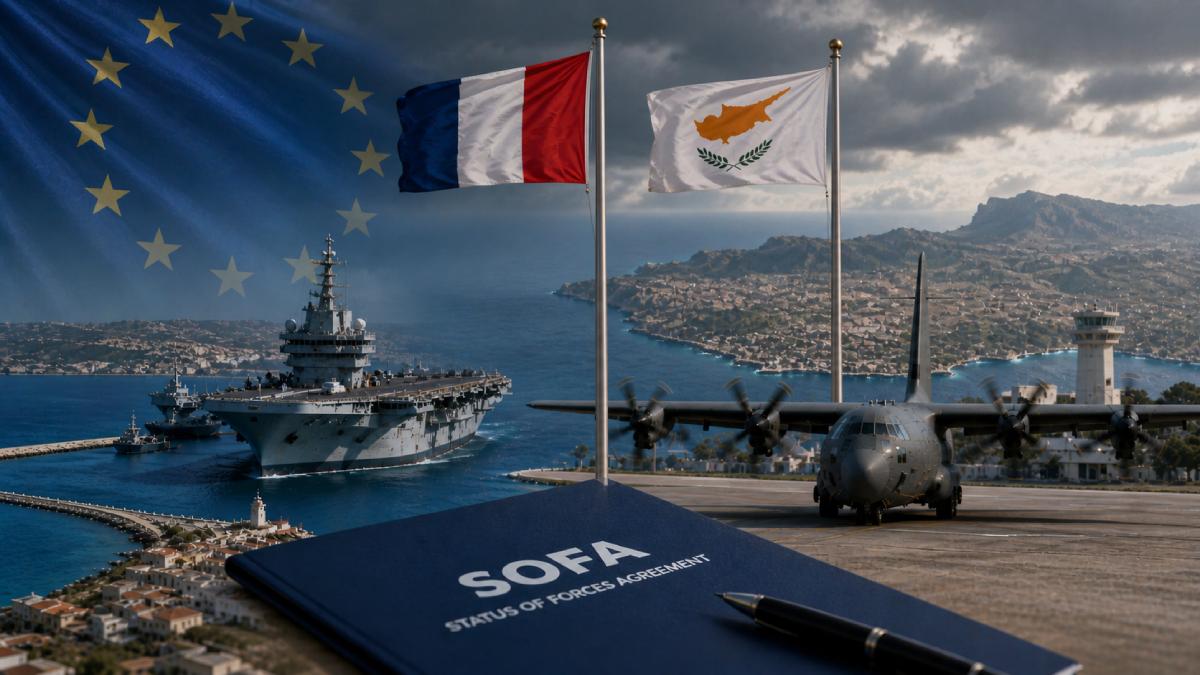
France's Status of Forces Agreement (SOFA) with the Republic of Cyprus gives that contradiction a sharper eastern Mediterranean edge. Cyprus Mail reported that the agreement, signed in Nicosia on June 8, establishes the legal framework for the presence and activities of French military personnel in Cyprus and Cypriot personnel in France. Anadolu Agency reported that the deal also provides a framework for French military deployment and access to military bases and infrastructure on the island.
That is not a small addition to the Cyprus file. The internationally recognized Republic of Cyprus is an EU member, but the Cyprus problem has its own treaty architecture and negotiation format. The 5+1 process is built around the two Cypriot sides, the three guarantor powers, Türkiye, Greece and the United Kingdom, and the United Nations (UN). The EU has political weight because the Republic of Cyprus is an EU member, but it is not one of the original guarantor actors in the Cyprus settlement structure.
France's deeper military footprint therefore adds another layer to an already narrow diplomatic space. Paris is not a guarantor power in Cyprus, but it is now building a formal defence presence with one side of a disputed island. Ankara cannot separate that move from the wider question of whether Europe treats Türkiye as a NATO security provider while allowing EU member states to reshape the security environment around a dispute in which Türkiye is a treaty guarantor.
The France-Cyprus agreement also sits inside a wider eastern Mediterranean layer. The Republic of Cyprus has deepened energy and security links with Israel, Egypt and Greece through overlapping gas, infrastructure and military cooperation tracks. Greece, Israel and the Republic of Cyprus have moved to expand joint air and naval exercises in 2026, while Cyprus gas projects are increasingly being tied to Egypt's liquefied natural gas (LNG) infrastructure and export routes.
That network matters for Ankara because it places the Cyprus dispute inside a broader regional alignment rather than a narrow island file. The issue is not only the unresolved status of Cyprus. It is the gradual construction of an eastern Mediterranean security and energy map in which the Republic of Cyprus gains military, diplomatic and commercial depth through partners, while Türkiye's role is still filtered through EU political limits and the Cyprus dispute.
EU members have the right to build defence arrangements among themselves. The harder question is whether Europe can build a credible security order that relies on Türkiye's NATO capacity while treating Ankara as a political outsider when instruments, funding, military access and institutional decisions are negotiated.
The Ankara Test
The Ankara summit will therefore carry a larger question than the official agenda suggests.
NATO will discuss spending, deterrence, support for Ukraine, industrial production and alliance unity. Those are real files. In Ankara, they will also pass through Türkiye's own position: a country asked to contribute to NATO's operational depth while facing limits inside Europe's political and defence-industrial structures.
This is not only Ankara's complaint. It is a structural problem for Europe's security order. If Europe wants stronger defence production, credible deterrence and a reduced dependence on U.S. capacity, it cannot avoid the question of where Türkiye fits.
Ankara's argument is not that political disputes should disappear overnight. It is that NATO's military reality and Europe's political architecture are moving at different speeds. Türkiye is present in the operational field, but partial or contested in the European institutional field.
That gap is becoming harder to manage as NATO moves from declarations to production, procurement and deployment. The more the alliance depends on rapid reinforcement, air policing, Black Sea access, drones, naval capacity and industrial scale, the harder it becomes to treat Türkiye as central in operations but peripheral in political design.
The France-Cyprus SOFA shows why the issue is not abstract. Europe is not only deciding whether to include Türkiye in defence instruments such as SAFE; it is also allowing member states to deepen military arrangements around a dispute where Türkiye remains one of the formal guarantor powers.
The Ankara summit will not test whether Türkiye matters to NATO. That question has already been answered from the Black Sea to NATO's air policing missions. The real test is whether Europe is prepared to treat that military reality as a political and industrial fact.
Sources: Reuters, NATO, Türkiye's Foreign Ministry, Council of the European Union, Cyprus Mail, Anadolu Agency, Bosphorus News review and reporting.