
By Murat Yıldız
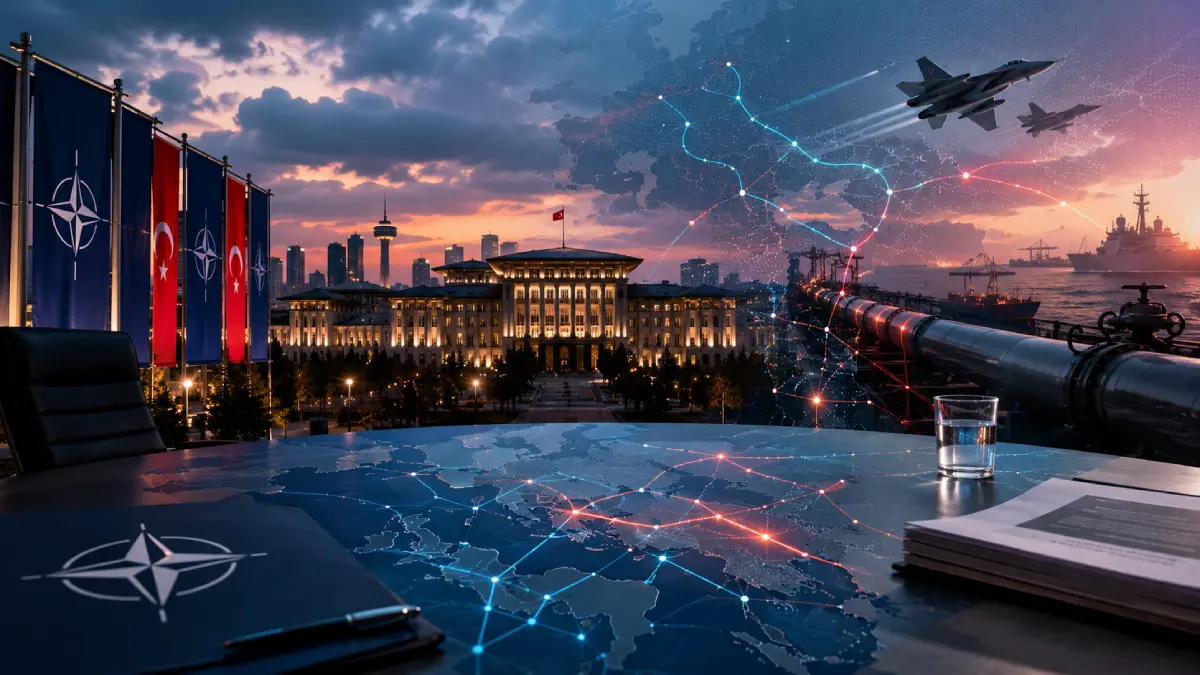
Türkiye will host North Atlantic Treaty Organization (NATO) leaders in Ankara on July 7-8 with a demand that runs through nearly every dispute around the summit. Military weight, in Ankara's view, should bring political, industrial and institutional access.
The official agenda will focus on Russia, Ukraine, defense spending, alliance unity and the future U.S. role under President Donald Trump. Ankara's message is more direct. Türkiye wants to know what it receives in return for the military capacity, geography, defense industry and operational deployments it brings to NATO.
That is the Turkish meaning of this summit.
NATO's Turkish Test
For much of the post-Cold War period, NATO's relevance was debated in universities, ministries and Western capitals. Russia's invasion of Ukraine ended that debate. Finland and Sweden abandoned long traditions of military non-alignment and joined the alliance. Türkiye's approval was required, and after hard bargaining, Ankara gave it.
The Black Sea has since become one of the alliance's most exposed theaters. Russia's war against Ukraine, drifting mines, drone attacks, maritime disruption and pressure on shipping routes have increased the value of Turkish geography. Türkiye, Romania and Bulgaria created the Black Sea Mine Countermeasures Task Group in 2024 to respond to the mine threat, while Türkiye remains active in NATO's Kosovo Force (KFOR) and in the security belt running from the Balkans to the Black Sea.
Hormuz Moves Onto the NATO Table
The recent Iran-Israel-United States conflict pushed energy security closer to the NATO table. The Strait of Hormuz crisis showed how quickly Gulf energy flows, liquefied natural gas shipments and oil markets can be trapped by a single maritime chokepoint, reminding Europe that Türkiye's value is not limited to soldiers, bases and alliance geography.
The draft summit text seen by Reuters confirms that Hormuz is no longer a side issue. NATO leaders are expected to reaffirm Article 5 collective defense commitments, pledge €70 billion in military support for Ukraine in 2026 and warn Iran that it must not develop a nuclear weapon or threaten freedom of navigation in the Strait of Hormuz, placing Gulf security beside Russia and Ukraine as a pressure point at the Ankara table.
Corridors, Energy and Leverage
Ceyhan is the most visible Turkish energy outlet in this argument. The Baku-Tbilisi-Ceyhan (BTC) pipeline carries Caspian oil to the Mediterranean through Türkiye. The Kirkuk-Ceyhan line remains a strategic outlet for Iraqi crude, even with its political, legal and operational problems. The Trans-Anatolian Natural Gas Pipeline (TANAP) and the Southern Gas Corridor move Azerbaijani gas through Türkiye toward Europe. TurkStream keeps another pipeline route on the map, while Türkiye's liquefied natural gas terminals, floating storage and regasification units and gas-storage investments add flexibility that pipeline-only systems cannot provide.
Azerbaijan gives this corridor logic its Caspian backbone. Its oil and gas infrastructure ties the Caspian basin to Türkiye and Europe, and the transfer of BTC operatorship from BP to SOCAR in July 2026 gives Baku a larger operational role in the route. The same partnership is moving beyond oil and gas into electricity transmission and green-energy corridor planning with Georgia, Bulgaria and southeast Europe.
Turkmen gas has also returned to the agenda. Türkiye began receiving Turkmen gas through an Iran swap arrangement in 2025, but the route quickly became vulnerable to sanctions pressure and infrastructure limits. Ankara has since said it wants to restart or increase those supplies in 2026. A full Trans-Caspian solution is still a political and technical project rather than an operating pipeline, but Turkmenistan's reserves, Azerbaijan's transit role and Türkiye's market access give the Turkic world a stronger place in Europe's energy-security debate.
Kazakhstan strengthens the same case from the oil side. Its search for alternative export routes has increased attention on BTC and the Trans-Caspian Middle Corridor, especially when Russian-linked routes face war risk, sanctions pressure or technical disruption. The Middle Corridor is the physical geography of a wider Turkic and Caspian connection running from Central Asia to Azerbaijan, Georgia and Türkiye.
The planned revival of the historic Hejaz Railway corridor adds a southern route to the discussion. Türkiye and Saudi Arabia signed railway and logistics cooperation memorandums in June 2026, with Ankara presenting a future route through Syria and Jordan as a way to connect the Gulf to Türkiye and Europe. The project is not operational and remains exposed to financing, security and reconstruction constraints, especially across Syria and the unfinished Syria-Jordan section, but Ankara is already using the plan to show how Gulf-Europe logistics could move through Turkish-linked geography after a Hormuz disruption.
These routes do not replace Hormuz or eliminate Europe's dependence on Gulf energy, Russian-linked flows or global liquefied natural gas markets. They do give Europe route diversity, storage flexibility, Caspian access, Gulf-Europe rail optionality and a NATO member state able to connect the Black Sea, the Eastern Mediterranean, the Caucasus, Central Asia and the Gulf.
Russia and Ukraine will dominate much of the summit, but Ankara's bargaining power is now tied to a wider set of routes and risks, from Hormuz, Caspian energy and the Middle Corridor to Gulf-Europe logistics and Europe's rearmament gap. Türkiye is a Black Sea power, an Eastern Mediterranean actor, a Caspian corridor state and a NATO member controlling one of the most valuable land-and-sea bridges into Europe.
SAFE and the Access Problem
Europe faces a second pressure point. Trump has made clear that Washington expects European allies to carry more of their own defense burden. The European Union (EU) response is Security Action for Europe (SAFE), a financial instrument offering up to €150 billion in long-maturity loans for defense procurement and urgent capability gaps.
Türkiye is not among the countries admitted into SAFE on equal terms from the outset.
Türkiye is not an EU member, but it is not a country with a distant economic relationship to Europe either. It has been linked to the European market through the EU-Türkiye Customs Union since 1995, a framework that covers industrial goods and processed agricultural products but leaves services, public procurement, most agriculture and newer digital-era trade questions outside its core structure.
Ankara has asked for years to modernize that Customs Union. Turkish officials argue that the current model no longer reflects supply chains, green transition rules, digital trade, defense-industrial needs or Türkiye's role in European economic security. Foreign Minister Hakan Fidan raised the issue again on July 1, accusing the Greek Cypriot side of blocking modernization despite broad support among EU member states.
This is the exclusion problem Türkiye brings to Ankara. The country has one of NATO's largest armies, contributes to NATO missions, controls access to the Black Sea under the Montreux Convention and has developed a defense industry that now exports drones, naval platforms, armored vehicles, missiles and command systems. Yet it remains outside the financial and institutional machinery Europe is building for its own rearmament.
Europe cannot treat Türkiye as a defense subcontractor and then call the arrangement alliance solidarity.
The NATO Summit Defense Industry Forum gives that argument a practical venue. NATO says this year's forum will focus on the alliance's 5 percent defense investment plan and on turning new money into defense production, cooperation and joint procurement. Türkiye will use the industrial track to present its defense sector as a production base that can help close NATO capability gaps.
President Recep Tayyip Erdoğan has already set the political line. Ahead of the summit, he called for allied defense trade restrictions on Türkiye to be lifted and for Ankara to be included more deeply in European security initiatives. This is the official Turkish translation of burden-sharing, because if Türkiye carries part of the defense burden, it wants access to the defense system.
There is also an uncomfortable domestic reality around the summit. Ankara has tightened security before the meeting, with detentions, restrictions and heavy controls around a gathering that will bring leaders from all 32 NATO allies to the Turkish capital. Reuters reported that authorities detained more than 200 people, citing security concerns, before the summit.
NATO's Office of Strategic Communications also rejected accreditation requests from several Turkish independent media outlets, including Halk TV, Sözcü TV, Nefes, BirGün, Cumhuriyet, ANKA News Agency, Medyascope and T24. Press freedom organizations wrote to Secretary General Mark Rutte demanding an explanation. NATO has said that for summits outside Brussels, it relies on the host country for assessments of journalists from that country.
The accreditation decision weakens NATO's own rights language before the summit even opens. An alliance that describes itself through democracy, individual liberty and rule of law cannot treat media access as a technical matter when the host country ranks 163rd out of 180 countries in the 2026 World Press Freedom Index.
Cyprus Enters the Defense Question
Access is the central demand, covering procurement, financing, technology channels and political treatment equal to Türkiye's NATO weight. Cyprus is where that demand becomes most sensitive.
The Republic of Cyprus and Greece sit inside the European Union. Türkiye does not. The Republic of Cyprus is also part of new defense and energy arrangements in the Eastern Mediterranean, including the June 2026 Eastern Mediterranean Energy Center launched by the United States, the Republic of Cyprus, Greece, Israel and Rice University in Houston.
Ankara does not read this as an isolated energy platform. It sees a pattern in which Greece, Israel and the Republic of Cyprus deepen military exercises and energy-security cooperation, Greece advances Israeli-linked air and missile defense projects, France renews and expands defense ties with Greece, and France signs a Status of Forces Agreement with the Republic of Cyprus that enables French military activity on the island.
Türkiye reads those steps through Cyprus's unresolved status, especially the 1960 Treaty of Guarantee, under which Türkiye, Greece and the United Kingdom are guarantor powers. France is not. Ankara and Turkish Cypriot authorities therefore view the France-Republic of Cyprus Status of Forces Agreement as more than a bilateral defense arrangement. They see it as a European military move into an unresolved island dispute, one that ignores Turkish Cypriot claims to political equality and the security balance established in 1960.
The Republic of Cyprus's European Union membership is now a settled institutional fact in Brussels. Türkiye's concern is no longer a formal challenge to that membership, but its institutional consequence. A dispute that originally involved Türkiye, Greece, the United Kingdom and the island's two communities entered the European Union's decision-making machinery once the Republic of Cyprus joined the Union.
Greek Cypriot leverage inside the European Union can now touch defense procurement, SAFE, Customs Union modernization, energy platforms and Eastern Mediterranean security. The Cyprus problem did not disappear into Europe. It became a European institutional problem with direct consequences for Türkiye's access to European defense and economic mechanisms.
The visa issue gives the same argument a social edge. Turkish soldiers can deploy for NATO missions and exercises in Europe. Turkish students, doctors, tourists and businesspeople still face Schengen barriers. Ankara may not put visas at the center of the formal summit agenda, but the contradiction feeds a wider Turkish perception that Europe welcomes Turkish security contributions while keeping Turkish citizens at the door.
Trump, Engines and the U.S. Channel
Trump gives Erdoğan a direct U.S. channel on sanctions, engines and the F-35 question that European capitals cannot provide on their own.
The U.S. defense dispute will therefore sit behind the summit language. Reuters reported that the Trump administration plans to move ahead with a sale of General Electric F110 engines worth more than $700 million for Türkiye's KAAN combat aircraft program, despite objections from some members of Congress. Trump also said, when asked about the jet engines, the F-35 program and the Ankara summit, that he would probably do something that would make Türkiye "very happy."
Ankara will not measure the summit by Trump's tone, but by movement on engines, sanctions, procurement channels and the F-35 dispute. Türkiye was removed from the F-35 program after buying the Russian S-400 air-defense system. The F-16 modernization process moved slowly before approval. U.S. sanctions under the Countering America's Adversaries Through Sanctions Act still weigh on parts of the defense relationship. The KAAN engine sale helps, but it does not answer whether Washington is prepared to rebuild durable defense-industrial trust with Ankara.
Türkiye's summit objectives are clear. Ankara wants political recognition for its NATO role, access to European defense mechanisms that match its actual contribution to European security, movement on U.S.-Türkiye defense disputes, contracts and technology channels for its defense industry, Customs Union modernization that treats Türkiye as part of Europe's economic security, and a Cyprus track that does not treat Turkish Cypriot political equality as an obstacle to be bypassed.
NATO leaders will spend much of the summit on Ukraine, Russian military pressure, spending targets, readiness and force planning. Iran, the Strait of Hormuz, Gaza and the Eastern Mediterranean will add pressure to the leaders' table.
Ankara is asking whether NATO's European members can keep demanding more from Türkiye while EU politics, Cyprus disputes, visa barriers, trade limits and selective access rules limit what Türkiye gets back.
Ankara is not asking for another statement of appreciation. It is asking whether NATO's European bargain will finally include the country it keeps asking to carry more weight.
Murat Yıldız is the founder and editor-in-chief of Bosphorus News.
Sources: NATO, Reuters, Associated Press, European Commission, Council of the European Union, EUR-Lex, EEAS, Türkiye's Foreign Ministry, Türkiye's Energy Ministry, U.S. Department of Energy, S&P Global Commodity Insights, Anadolu Agency, Saudi Press Agency, Al-Monitor, Eurasianet, SOCAR, BP, TRNC Foreign Ministry, Cyprus Mail, Reporters Without Borders, Committee to Protect Journalists, 1960 Treaty of Guarantee, Bosphorus News review and reporting.