
By Murat Yıldız
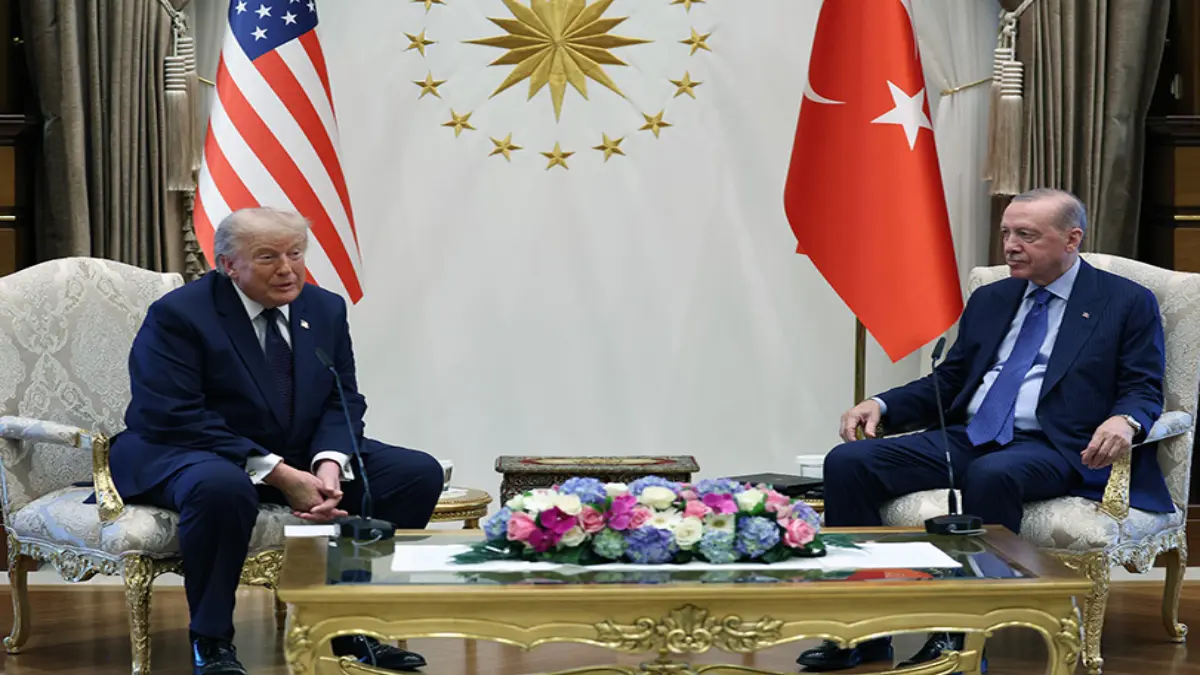
The NATO summit in Ankara gave Türkiye the stage it wanted, not the deal it needed. Before Trump's Ankara appearance, the F-35 file was already back in the room.
Ankara knows the difference between a reopened conversation and a reopened delivery path. The public story has blurred that line. A warmer Trump tone is being turned into an F-35 advance at home, even though the legal file has not moved.
Trump's signal allowed Ankara to say the F-35 file was no longer trapped in the old language of punishment and exclusion. It also fed a simpler domestic story: Trump sounded friendlier, sanctions relief looked closer and the hard defense files could be presented as if they had already started to move.
What Ankara put on display
Ankara did not need the summit to prove that Türkiye matters to NATO. The summit simply put that weight on display. No serious NATO planner can treat the country as optional when the alliance looks at its southeastern flank, the Black Sea, missile defense, industrial production, migration pressure, Ukraine-Russia geography or the security of energy corridors running through Türkiye and its neighborhood. Europe can redesign its defense architecture around new funding instruments such as SAFE, but it cannot make Türkiye strategically irrelevant by keeping it outside EU defense planning.
That weight is not limited to geography. Türkiye has spent years carrying military risk beyond its borders, from Kosovo, where NATO's Kosovo Force operates under a United Nations mandate, to Iraq, where NATO's advisory mission sits next to Türkiye's own border-security concerns and its long-running fight against the Kurdistan Workers' Party (PKK), which is designated as a terrorist organization by Türkiye, the United States and the European Union.
That is Ankara's leverage: geography, force, bases, corridors, air-defense needs, defense industry and a record of operating in the hard zones NATO cannot ignore.
The problem began when that leverage was repackaged as delivery.
F-35s are now being discussed as though they are one presidential gesture away. KAAN engine access is treated as though the license door has already opened. Sanctions relief is presented as if it naturally carries aircraft behind it. Political and media voices close to the summit narrative have let a simple story harden in public: Trump sounded friendly, therefore the hard files are moving.
The S-400 file is inside the F-35 question
The F-35 obstacle is not only a political dispute between Ankara and Washington. It is written into U.S. law. Section 1245 of the Fiscal Year 2020 National Defense Authorization Act prohibits the transfer of F-35 aircraft, parts, technical data or support to Türkiye unless the secretaries of state and defense certify to Congress, at least 90 days before any transfer, that the statutory conditions have been met.
Those conditions are not symbolic. Türkiye must no longer possess the S-400 system or related equipment, material and personnel. It must provide credible assurances that it will not acquire the system again. It must not accept another Russian system that would threaten the F-35. The S-400 file is therefore not parked beside the F-35 question. It sits inside it.
Trump can warm the conversation by standing next to Erdoğan. He cannot remove that paragraph from the American legal record.
U.S. Secretary of State Marco Rubio made the same point in testimony before the House Foreign Affairs Committee in June. He said the administration does not have the legal authority to act on its own while the S-400 barrier remains in place. Vice President JD Vance later said a Pentagon review was under way on how Türkiye could receive F-35s, while also saying that the United States would have to certify that certain legal conditions had been met.
Summit language stops at that point. The F-35 issue now sits in law, bureaucracy and program security, far beyond the chemistry between presidents.
The CAATSA shortcut
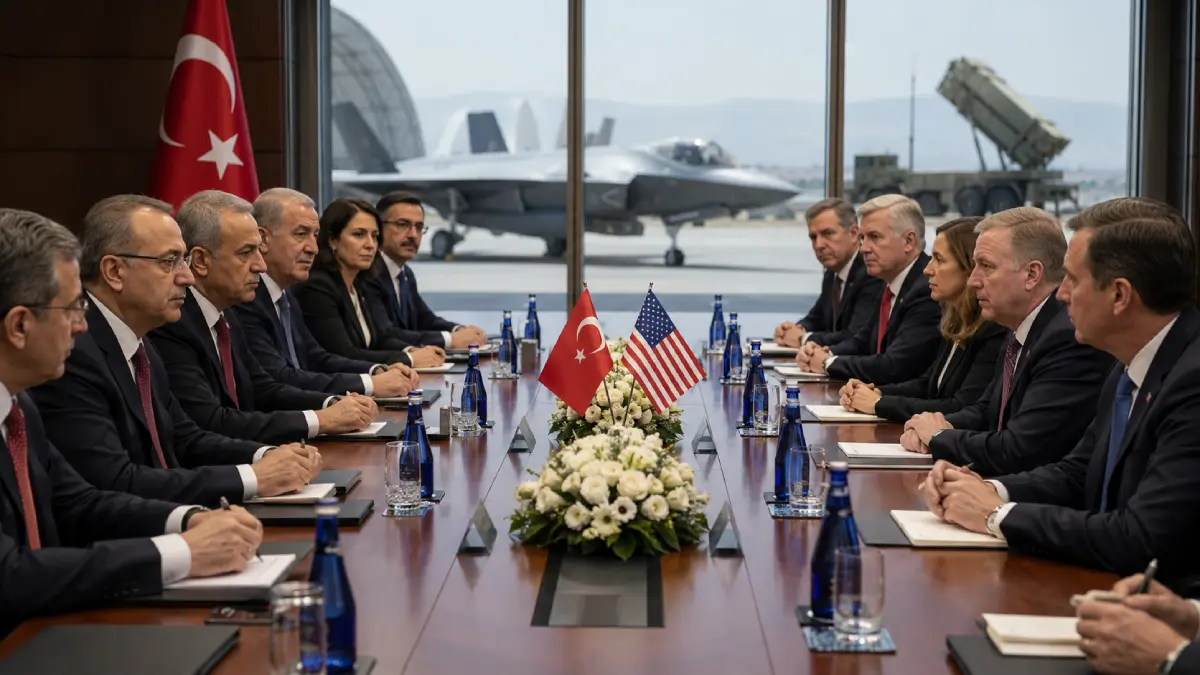
CAATSA relief is not F-35 delivery.
Trump may have more room to move on sanctions imposed after Türkiye acquired the Russian S-400 system. If those sanctions are lifted or eased, the political atmosphere around Ankara improves, the bilateral relationship breathes more easily and other defense talks may become less toxic.
The F-35 certification problem survives that improvement. Even the easier promise on the Countering America's Adversaries Through Sanctions Act is not a one-signature act, since a move to terminate the sanctions would trigger congressional review and give lawmakers a chance to object.
The easier promise improves the mood around the file. The harder condition remains outside Trump's personal discretion, whatever the tone, friendship or summit chemistry.
A formula is not a schedule
There may be a way out of the S-400 trap. Diplomacy exists for precisely these ugly corners. Congress could amend or remove the relevant legal barrier. Türkiye could agree to a solution that makes the S-400 no longer a Turkish-controlled system in a way Washington can certify. A third-country, storage, transfer or monitoring formula could become the center of a diplomatic workaround.
Some of that is now leaking into the open, and that matters. Reuters, citing people familiar with the matter, has reported that sending the S-400 system to a third country has gained traction in recent weeks. No deal has been sealed, and Russia's position remains uncertain because of end-user obligations. Reuters also reported that the Kremlin said it was in touch with Türkiye on the future of the S-400s and described the matter as "extremely sensitive."
That makes the file more concrete, not easier. The aircraft still sit behind an unnamed formula, Russian consent, congressional certification and Pentagon acceptance.
A formula in circulation is not a certification route. A possible workaround is not a delivery date.
The fight now moves to Washington
The American debate is already widening.
Israeli Prime Minister Benjamin Netanyahu has tried to harden the argument against any F-35 move, warning that giving Türkiye the aircraft could upset the Middle East power balance and weaken Israel's air superiority. Lindsey Graham, a Republican senator usually attentive to Israel's security case, told Türkiye Today he was open to the idea. A group of 18 House Democrats led by Rep. Dina Titus urged House leaders to be ready to block any attempt to move Türkiye back into the F-35 program without a legal basis. Separately, Republican Rep. Mike Lawler and Democratic Rep. Brad Sherman led a House letter urging Trump to maintain the prohibition on F-35 sales to Türkiye.
That is not a cleared path. It is the opening phase of a political fight in Washington.
Every defense file has its own mechanics
The F-16 file shows why these files should not be thrown into one basket. Congress allowed the Block 70 sale and modernization package to move forward in 2024, even while the S-400 remained in Türkiye. That separates the F-16 track from the harder statutory wall surrounding the F-35.
KAAN engine access is another file. It does not sit behind the same F-35 transfer ban, yet it still runs through export licenses, congressional review culture, technology-release decisions and the political climate created by the S-400 dispute. A warmer sentence from Washington does not put engines on the factory floor.
Türkiye's payment history belongs in the grievance file, not in the transfer file. A 2025 Congressional Research Service report, cited by Breaking Defense, says six Turkish-owned F-35s remain in storage in the United States and that $1.7 billion paid for the aircraft apparently remains in U.S. hands. That gives Ankara a real political argument after seven years of exclusion. It still does not replace the certification Congress requires before aircraft, parts, technical data or program support can move.
The Aegean file
The Aegean file moved through the summit in a similar way. Language in Ankara could make the room look calmer, but it did not retire Türkiye's 1995 casus belli position or Greece's 12-nautical-mile claim. The Turkish parliamentary position came after Greece ratified the United Nations Convention on the Law of the Sea and preserved the option of extending its territorial waters in the Aegean to 12 nautical miles.
Greek Prime Minister Kyriakos Mitsotakis used the summit moment to put that file back into the public conversation. The timing mattered. It placed Greece's Aegean argument beside Trump's F-35 signal and turned a NATO stage into a domestic and regional positioning tool.
The dispute itself did not move, but the politics around it did, and Mitsotakis used the Ankara stage as carefully as Erdoğan used the F-35 opening.
Ankara came out of the summit with a better argument and a louder microphone. The aircraft stayed where they were: behind the S-400 file, congressional certification and the security rules of the F-35 program.
Ankara turned the summit into political capital. The F-35 file still asks the harder question: what happens to the S-400s?
Sources: Fiscal Year 2020 National Defense Authorization Act, NATO, Reuters, Breaking Defense citing Congressional Research Service, Al-Monitor, Fox News, Türkiye Today, Axios, Kathimerini, Rep. Mike Lawler's office, U.S. House Foreign Affairs Committee testimony, Bosphorus News review and reporting.