
By Bosphorus News Defense Desk
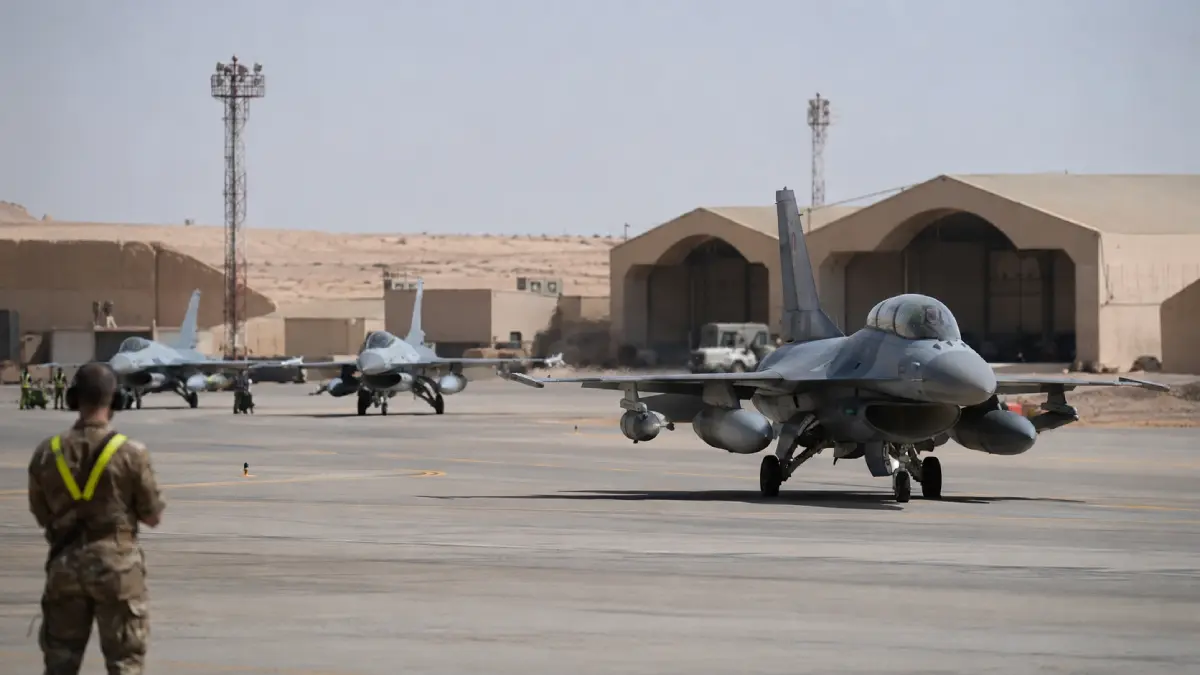
Türkiye and Egypt are holding a joint air training exercise in Egypt, which started on June 4 and runs through June 17, extending renewed military contacts from last year's Friendship Sea (Dostluk Denizi) naval drill into the air domain.
The Turkish Ministry of National Defense listed the "Türkiye-Egypt Bilateral Air Exercise" in its weekly briefing, saying the drill was being conducted in Egypt between June 4 and 17. Egyptian military-linked reporting said the exercise is taking place at several air bases and includes multi-role fighter aircraft.
The exercise does not amount to a new military alliance. It is more limited and more useful than that: a controlled air-force training activity between two states whose defense contacts have returned after years of political tension.
From sea drill to air training
The timing gives the exercise its wider significance.
Türkiye and Egypt held the Dostluk Denizi naval drill in 2025, marking the return of a visible military exercise track between the two countries. That drill placed naval units from both sides in a joint training framework and became one of the first practical defense signs of the Ankara-Cairo reset.
The current air exercise adds a second operational layer. Egyptian military-linked reports said the first phase included theoretical sessions, shared training concepts and preparations for joint air missions. The exercise then moved into training flights designed to improve coordination between the two air forces.
That is the point where the exercise becomes more than a line in a military schedule. The Ankara-Cairo defense channel is no longer confined to diplomatic normalization, ministerial visits or broad statements about restoring ties; it is now moving through dated exercises, service-level contact and training activity in specific operational domains, first at sea through Dostluk Denizi and now in the air through the June exercise in Egypt.
A crowded Turkish exercise calendar
The Egypt exercise also appeared in a wider Turkish military schedule.
Bosphorus News noted from the same Ministry of National Defense briefing that Türkiye-Egypt air training was listed alongside Denizkurdu-II and other regional drills, underlining how Ankara's defense contacts are expanding across different operational areas.
That matters for the reading of the Egypt track. The exercise is not isolated from Türkiye's wider military tempo, but it should not be overstated either. It sits inside a broader pattern of regular drills, regional signaling and practical defense engagement.
For Cairo, the exercise gives the air force a direct training channel with Türkiye after the naval track was reopened. For Ankara, it keeps the military side of the Egypt relationship active without requiring a large political announcement.
Defense contacts widen carefully
The Turkish-Egyptian reset has also started to produce practical files outside the exercise calendar.
Bosphorus News has tracked how the relationship has moved into LNG services, mining and energy-infrastructure talks, showing that the normalization track is developing through operational files rather than only political statements.
The defense side is following a similar pattern. Ankara and Cairo are not presenting a single dramatic breakthrough. They are building contact through naval drills, air training, military delegations and defense-industry conversations.
That approach keeps the process measured. It also avoids forcing the relationship into old regional blocs or new strategic slogans before the practical mechanisms are tested.
Eastern Mediterranean context
The air exercise will still be read through the wider Eastern Mediterranean map.
Türkiye and Egypt are two major military actors in the region, and their relationship has direct consequences for Mediterranean security calculations, maritime politics and regional crisis management. Their defense contacts now sit next to energy talks, diplomatic normalization and a more crowded security environment from the Red Sea to the Levant.
But the current exercise should be read with discipline. It shows expanding military contact, not a finished strategic alignment. It marks an air-force layer after a naval drill, not a complete security architecture.
That distinction is important because Ankara-Cairo relations have improved through practical steps rather than a sudden political settlement of every disputed file.
A practical signal
The June 4-17 exercise gives the Türkiye-Egypt defense track a clearer operational shape.
The two countries have moved from restored political contact to naval training, and now to air-force cooperation on Egyptian territory. That is a real development, but its significance lies in continuity rather than spectacle.
The safest reading is also the strongest one: Ankara and Cairo are rebuilding military contact through limited, scheduled and domain-specific exercises. The air drill shows that the reset is no longer only diplomatic. It is entering the military training calendar.
***Sources: Turkish Ministry of National Defense, Egyptian Armed Forces Spokesperson, Egypt Today, Ahram Online, Egyptian Ministry of Defense, Asharq Al-Awsat and Bosphorus News Reporting.