
By Bosphorus News Energy Desk
Türkiye and Egypt are moving their diplomatic reset into energy infrastructure and mining, with new talks in Baku placing liquefied natural gas services, gold exploration and Eastern Mediterranean energy links at the centre of a widening economic track between Ankara and Cairo.
Turkish Energy and Natural Resources Minister Alparslan Bayraktar and Egyptian Minister of Petroleum and Mineral Resources Karim Badawi discussed expanding cooperation in energy and mining on the sidelines of Baku Energy Week, following their April meeting in İstanbul during the Organisation for Economic Co-operation and Development (OECD) Critical Minerals Forum.
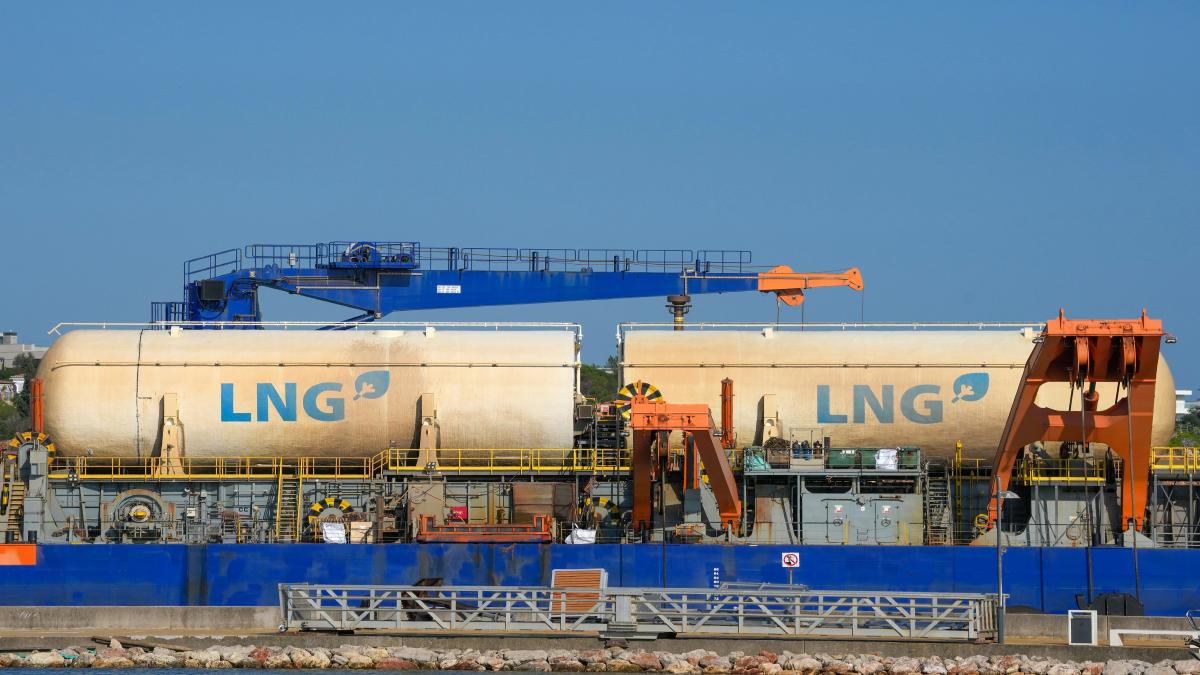
The sequence gives the latest contact more weight than a routine ministerial meeting. The Baku talks followed a year in which energy cooperation between the two countries moved from political language into operational infrastructure, most clearly through a 2025 agreement between Türkiye's state energy company BOTAŞ and the Egyptian Natural Gas Holding Company (EGAS) for the use of a Turkish floating storage and regasification unit (FSRU) in Egypt.
That agreement marked the first overseas assignment of a BOTAŞ-owned FSRU and gave Türkiye a direct role in Egypt's gas supply system during a period of high seasonal demand. It also created a practical energy file between Ankara and Cairo outside the older disputes of the Eastern Mediterranean, where gas routes, maritime boundaries and regional partnerships have often carried a heavier political charge.
The Baku meeting suggests that both governments now want to widen that file. Bayraktar and Badawi discussed cooperation between government institutions, specialised companies and private-sector actors, with Egyptian statements linking the agenda to energy security, regional connectivity and shared economic interests.
Mining has become the clearest new layer. Turkish company OZ Mining has begun feasibility work linked to gold exploration opportunities in Egypt's Eastern Desert after a memorandum of understanding with Egypt's Mineral Resources and Mining Industries Authority. Badawi also invited Bayraktar and Turkish mining companies to the Egypt Mining Forum, scheduled to be held in September in the New Administrative Capital.
The April meeting in İstanbul gave that mining track its first structured setting. Held on the sidelines of the OECD Critical Minerals Forum, the Bayraktar-Badawi contact included discussion of joint working groups on mineral exploration and prospecting, a sign that Cairo is trying to bring Turkish companies into a sector it wants to develop beyond traditional oil and gas.
Egypt is also using the Baku platform to present itself as more than an Eastern Mediterranean gas hub. Badawi described Egypt as a potential energy bridge between the Caspian region and Europe, pointing to the country's infrastructure, geography and role in regional energy trade. In Baku, he also met Azerbaijani officials as Cairo works to activate an energy cooperation framework between the Egyptian General Petroleum Corporation (EGPC) and the State Oil Company of the Azerbaijan Republic (SOCAR).
That wider setting gives the Türkiye-Egypt track additional weight. Ankara is already deepening energy ties with Azerbaijan through gas, electricity and green energy corridors, while Cairo is trying to position its infrastructure as a route connecting Eastern Mediterranean, Caspian and European markets. The result is a more crowded but potentially useful map, where Türkiye and Egypt can cooperate in selected files without resolving every strategic disagreement between them.
The political background remains important. President Recep Tayyip Erdoğan's visit to Cairo in February 2026 placed Türkiye-Egypt ties on a higher track, with both sides raising the bilateral trade target from around $9 billion to $15 billion. Egypt is already Türkiye's largest trade partner in Africa, giving the energy and mining agenda a commercial base rather than a purely diplomatic one.
The shift is visible in the type of cooperation now being discussed. Instead of symbolic normalisation language, the agenda includes LNG services, FSRU deployment, gold exploration, mining forums, critical minerals, gas infrastructure and Eastern Mediterranean energy links. These are practical files that can produce contracts, company-level activity and repeat ministerial engagement.
The Eastern Mediterranean context still requires careful language. The latest talks do not mean Ankara and Cairo have formed an energy bloc, nor do they erase regional sensitivities around maritime zones, Cyprus, Greece or gas routes. They do show that both governments are building areas of cooperation where economic infrastructure can move faster than unresolved political disputes.
Türkiye gains a broader regional field for BOTAŞ and Turkish mining companies at a time when Ankara is trying to export energy services, expand access to critical minerals and deepen its role in regional energy logistics. Egypt gains Turkish investment interest, technical capacity and a connection to Ankara's wider energy network across the Black Sea, the Caucasus, the Eastern Mediterranean and Europe.
The Baku meeting therefore marks another step in the slow conversion of Türkiye-Egypt normalisation into economic infrastructure. The relationship is no longer measured only by diplomatic visits and trade targets. It is increasingly being tested through LNG capacity, mining concessions, company-level deals and the question of whether Ankara and Cairo can turn a political reset into durable energy cooperation.
***Sources: Egyptian Ministry of Petroleum and Mineral Resources, June 2026; Egypt Independent, June 2026; Egypt Oil & Gas, April and June 2026; Daily News Egypt, June 2026; Egypt State Information Service, June 2026; BOTAŞ, 2025 FSRU Time Charter Contract announcement; Turkish Ministry of Energy and Natural Resources, 2025 and 2026 statements; Organisation for Economic Co-operation and Development, Critical Minerals Forum, April 2026; Al-Monitor, June 2026; Report.az, Baku Energy Week, June 2026; Ahram Online, June 2026.