
Key military, maritime and diplomatic developments across the Eastern Mediterranean
By Bosphorus News Geopolitics Desk
An aging, heavily sanctioned tanker crossed the Bosphorus with improvised defenses against aerial and surface drones as attacks disrupted grain terminals and export routes in Russia and Ukraine. Hakan Fidan's Libya visit ended with a clearer picture of the factions fighting in Zawiya, while Türkiye's Kurdistan Workers' Party process reached provincial administrations and President Recep Tayyip Erdoğan hosted Mahmoud Abbas.
Erhürman applies the guarantor test to all three powers
Turkish Cypriot leader Tufan Erhürman said no Cyprus settlement could be reached without Türkiye and added that the same applied to Greece and the United Kingdom, the three guarantor powers under the 1960 framework. He also called for frequent talks with Greek Cypriot leader Nikos Christodoulides ahead of their August 26 meeting in the United Nations buffer zone.
The central disagreement over post-settlement guarantees remains intact. Erhürman is pushing back, however, against any formula that treats Türkiye's role as uniquely negotiable while leaving the island's other guarantors in the background.
Sanctioned tanker crosses Bosphorus with anti-drone barriers
The 28-year-old Suezmax tanker Caruzo, sanctioned by the United Kingdom, European Union and other jurisdictions, was photographed crossing the Bosphorus with netting over its superstructure and cage-like barriers around its aft section. TankerTrackers said the vessel was carrying about one million barrels of Russian crude.
The netting appears designed to obstruct aerial drones, while the suspended barriers may provide stand-off protection around the engine room against uncrewed surface vessels. Another tanker, Rizvel, was seen with similar modifications in the Sea of Marmara. Their effectiveness has not been tested publicly.
The modifications bring the physical consequences of Black Sea drone warfare into Turkish waters, extending a risk pattern already visible as attacks force crews to seek shelter in Samsun.
Russian and Ukrainian grain routes tighten at the same time
Two of Russia's largest grain terminals at Novorossiysk suspended operations after Ukrainian drone strikes, leaving operators to assess damage at facilities central to Russian wheat exports.
Ukrainian grain exports, meanwhile, fell about 75 percent year on year during the first two weeks of August as repeated Russian attacks constrained port operations around Odesa. Black Sea ports normally handle around 90 percent of the country's grain exports.
Neither interruption closes the basin, but simultaneous pressure on Novorossiysk and Odesa reduces spare capacity and raises the risk of higher storage, freight and insurance costs for shipments bound for the Mediterranean, Middle East and Africa.
Zawiya militias identified as Fidan wraps Libya visit
Foreign Minister Hakan Fidan concluded his two-day Libya visit on Wednesday after talks in Tripoli and Benghazi. In the east, he met Libyan National Army commander Khalifa Haftar, deputy commander Saddam Haftar, House of Representatives Speaker Aguila Saleh and Development and Reconstruction Fund chief Belkacem Haftar. His Tripoli meetings included Prime Minister Abdul Hamid Dbeibah and senior figures from the Presidential Council and High Council of State.
Fidan said his meetings had shown broad support for reunifying Libya, although negotiations remained subject to conditions and unresolved obstacles. Türkiye, he added, would continue mediating while maintaining relations with both centers of power.
The factional map behind the drone campaign against Zawiya's energy infrastructure also became clearer. Armed Conflict Location & Event Data (ACLED), the conflict-monitoring group, identified the forces involved as the Interior Ministry-aligned First Support Division and the Defense Ministry-aligned 103rd Battalion. The fighting began after an August 4 drone strike killed at least five 103rd Battalion fighters.
No party has claimed the later strikes on oil and electricity infrastructure. Dbeibah called the attacks a serious crime and said the escalation would not go unanswered. General Electric again suspended work and withdrew technical teams from the Zawiya power plant, while the National Oil Corporation warned that continued attacks could force it to declare force majeure.
PKK process moves into provincial coordination
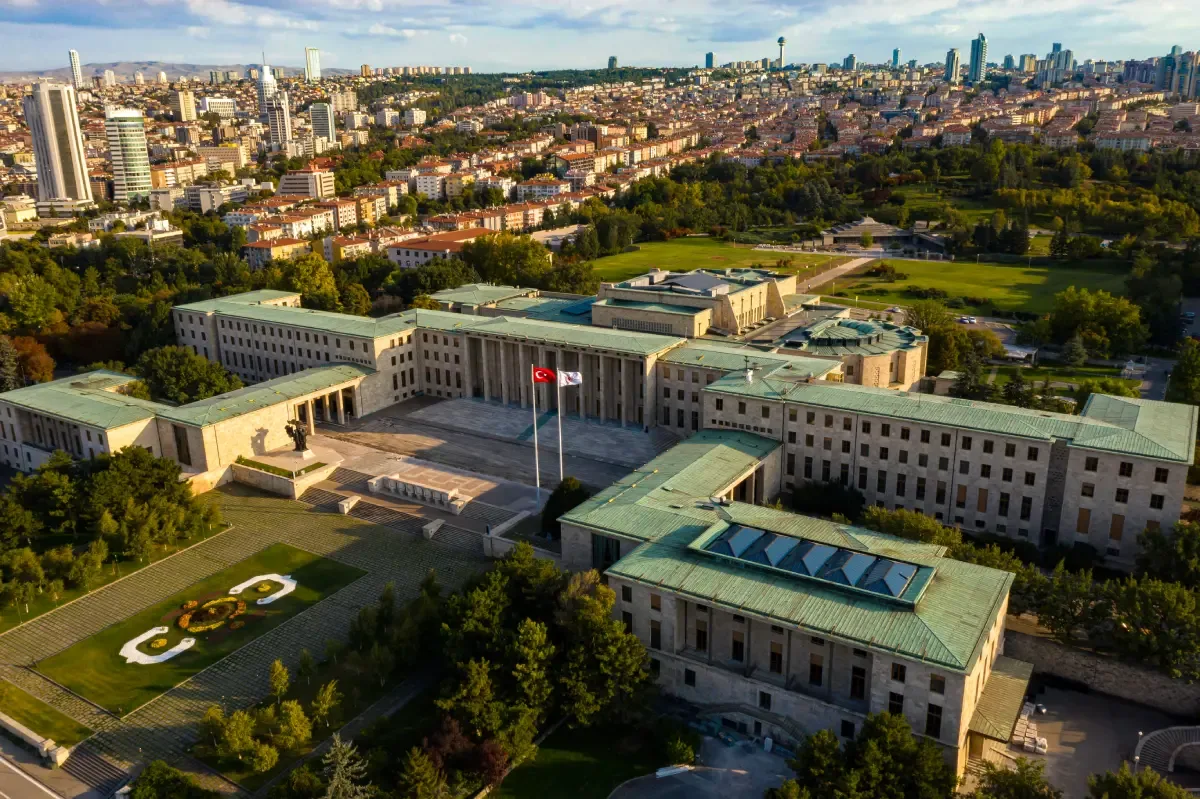
Parliament Speaker Numan Kurtulmuş and Interior Minister Mustafa Çiftçi met governors, police chiefs and gendarmerie commanders from all 81 provinces by video conference on Wednesday, taking the Terror-Free Türkiye process from parliamentary legislation into province-level coordination.
The meeting covered local monitoring, public communication, social integration and precautions against possible provocations. Çiftçi said weapons must be completely taken out of use, while Kurtulmuş briefed participants on the Law on Strengthening National Solidarity and Social Integration.
The law's conditional provisions did not take effect upon passage. Security institutions must first verify that the Kurdistan Workers' Party (PKK), Kurdistan Communities Union (KCK) and affiliated structures have ended their operational presence and surrendered their weapons. A National Security Council decision must then be published in the Official Gazette. Wednesday's meeting did not reach that stage, as Bosphorus News detailed before the final vote.
Erdoğan hosts Abbas as Mecca agreement enters Palestine talks
Erdoğan hosted Palestinian President Mahmoud Abbas in Ankara on Wednesday during the Palestinian leader's three-day visit. At their joint press conference, Erdoğan accused the Netanyahu government of continuing unlawful practices in the occupied West Bank and East Jerusalem.
Citing United Nations figures, Erdoğan said around 3,800 Palestinians had been displaced in 2026 through settler violence, demolitions and evictions, while nearly 100 had been killed. He repeated Türkiye's support for an independent Palestinian state based on the 1967 borders, with East Jerusalem as its capital.
Abbas also brought the Mecca Joint Defense Agreement into the discussion, saying the pact signed by Türkiye, Saudi Arabia and Pakistan on August 7 could become a starting point for regional stability and security. His remarks brought the Palestinian file directly into the debate over the pact's regional purpose.
Greek Cypriot commentary casts TF-2000 as a bilateral threat
Greek Cypriot newspaper PhileNews described Türkiye's naval expansion as an "invisible war" against Greece, focusing on the TF-2000 air-defense destroyer program.
The current design is expected to displace about 8,300 tonnes and carry a domestically produced 96-cell vertical-launch system for weapons including SİPER air-defense missiles, alongside ATMACA anti-ship missiles. The lead vessel is targeted for launch by the end of 2027, with completion expected around 2030.
The article does not reflect a fresh procurement decision or revised construction schedule. Its significance lies in the language: a ship that has not yet entered the water is already being treated as evidence of a changing naval balance.
Strategic Take
The day's strongest strategic signal came from shipping rather than a government statement. A sanctioned tanker carrying Russian crude crossed the Bosphorus fitted for drone warfare at the same time as attacks disrupted grain capacity around Novorossiysk and Odesa. The war's maritime consequences are no longer approaching Türkiye's northern threshold; they are moving through it.
Ankara's other files are developing more slowly. Fidan's trip showed that Ankara can work openly with both Libyan power centers, but the Zawiya attacks show how little diplomatic access alone can contain armed competition on the ground. The provincial PKK meeting builds the machinery needed for implementation without activating the law, while Abbas used his Ankara visit to connect Palestinian diplomacy with the new Mecca defense framework.
Any Cyprus formula still has to account for Türkiye's guarantor role, while its naval programs are shaping Greek and Greek Cypriot threat perceptions years before the ships enter service.
Sources: Financial Times, Reuters, Associated Press, The National, Anadolu Agency, Armed Conflict Location & Event Data, Libya's National Oil Corporation, Libya's General Electricity Company, Türkiye's Foreign Ministry, Türkiye's Interior Ministry, Türkiye's Presidency, Politis, PhileNews, Bosphorus News review and reporting.
Read Yesterday's brief: Eastern Mediterranean Strategic Brief | August 12, 2026