
By Bosphorus News Geopolitics Desk
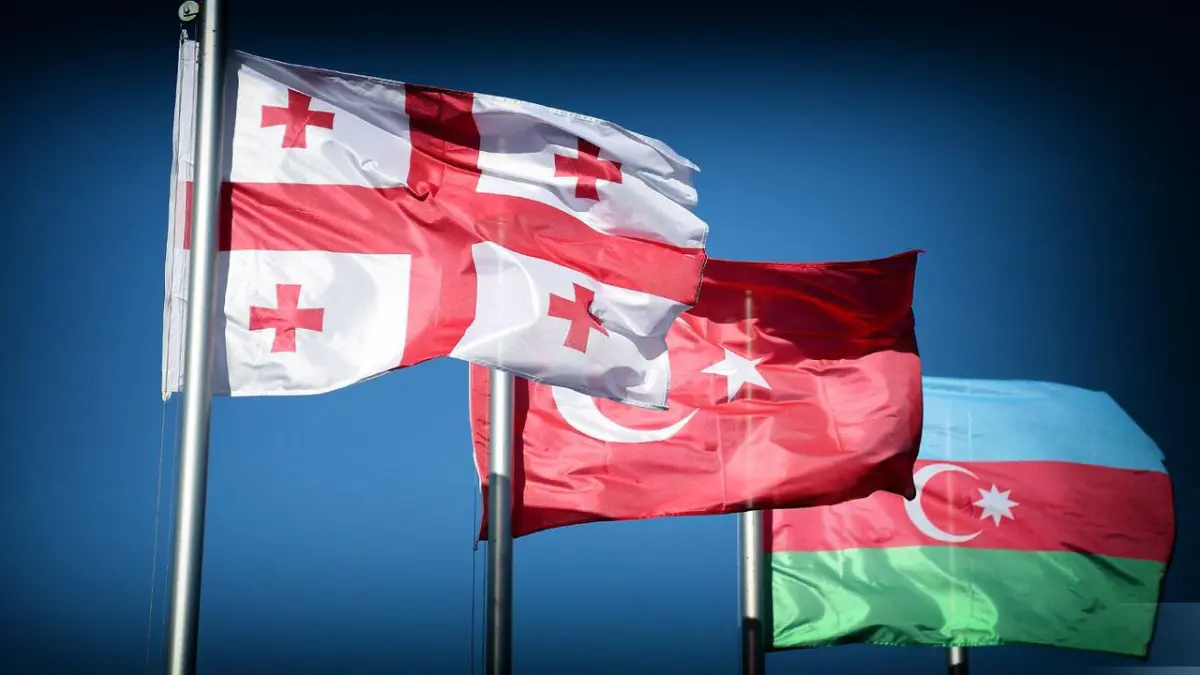
Türkiye hosted the 10th trilateral meeting of the foreign ministers of Türkiye, Azerbaijan and Georgia in İstanbul on June 8, bringing the South Caucasus corridor file back to ministerial level as trade, energy and security routes face renewed pressure from the Gulf to the Eastern Mediterranean.
Foreign Minister Hakan Fidan hosted Azerbaijani Foreign Minister Jeyhun Bayramov and Georgian Foreign Minister Maka Botchorishvili for the meeting, which Türkiye's Foreign Ministry announced on June 7. Turkish diplomatic sources said the ministers would review existing cooperation and discuss the next stage of joint work, including transport, connectivity and energy projects.
The İstanbul meeting sits on an established channel rather than a one-day diplomatic photo. Bosphorus News previously traced the Türkiye-Azerbaijan-Georgia trilateral track through defense consultations, joint military activity, parliamentary contacts and corridor work, showing how the format has moved across security and infrastructure files since its earlier rounds.
Azerbaijani media reported after the meeting that the three foreign ministers signed an İstanbul Declaration. Reports from Baku also said the sides discussed regional transport projects, the Baku-Tbilisi-Kars railway, the TRIPP project and stability in the South Caucasus. That gives the format a practical frame: transport routes, energy movement and security coordination across a region that has become more visible since Russia's invasion of Ukraine disrupted older trade and transit assumptions.
The Baku-Tbilisi-Kars railway remains one of the main assets in this corridor logic. Bosphorus News has detailed how the reopened BTK railway strengthens the Middle Corridor through Türkiye, Azerbaijan and Georgia, giving the three states a physical route that can support Caspian-Europe transport without passing through Russia or Iran. Its value rises when maritime routes look less predictable, especially as Hormuz and Red Sea pressure affect energy markets, insurance costs and shipping calculations.
The TRIPP file adds another layer to the same map. Bosphorus News has also examined how the US-Armenia TRIPP framework places a Türkiye-linked route and critical minerals inside the South Caucasus equation. That makes the region more than a railway discussion. It is becoming a contest over access, raw materials, border routes and the political shape of east-west connectivity after the Karabakh war.
The corridor file also extends beyond the immediate Türkiye-Azerbaijan-Georgia format. Bosphorus News has examined how Kazakh oil, artificial intelligence cooperation and Middle Corridor planning entered the Turkic summit agenda, showing how energy, transport and digital infrastructure are increasingly discussed inside the same Caspian-to-Europe frame.
Outside actors are reading the South Caucasus, Cyprus and Eastern Mediterranean together. Bosphorus News has tracked how Indian media widened the Cyprus file into a Greece-Armenia pressure map on Türkiye, a media signal rather than an official policy document, but one that shows how separate regional disputes are increasingly being folded into wider Türkiye-focused strategic language.
The harder test now sits in the route itself. Rail capacity, customs coordination, energy flows, investment timing and security guarantees will decide whether the İstanbul meeting remains a diplomatic marker or becomes part of a working corridor system. As pressure builds around Hormuz, the Red Sea and the Eastern Mediterranean, the South Caucasus is being treated less as a distant geography and more as one of the routes through which Türkiye connects security, trade and diplomacy.