
By Bosphorus News Geopolitics Desk
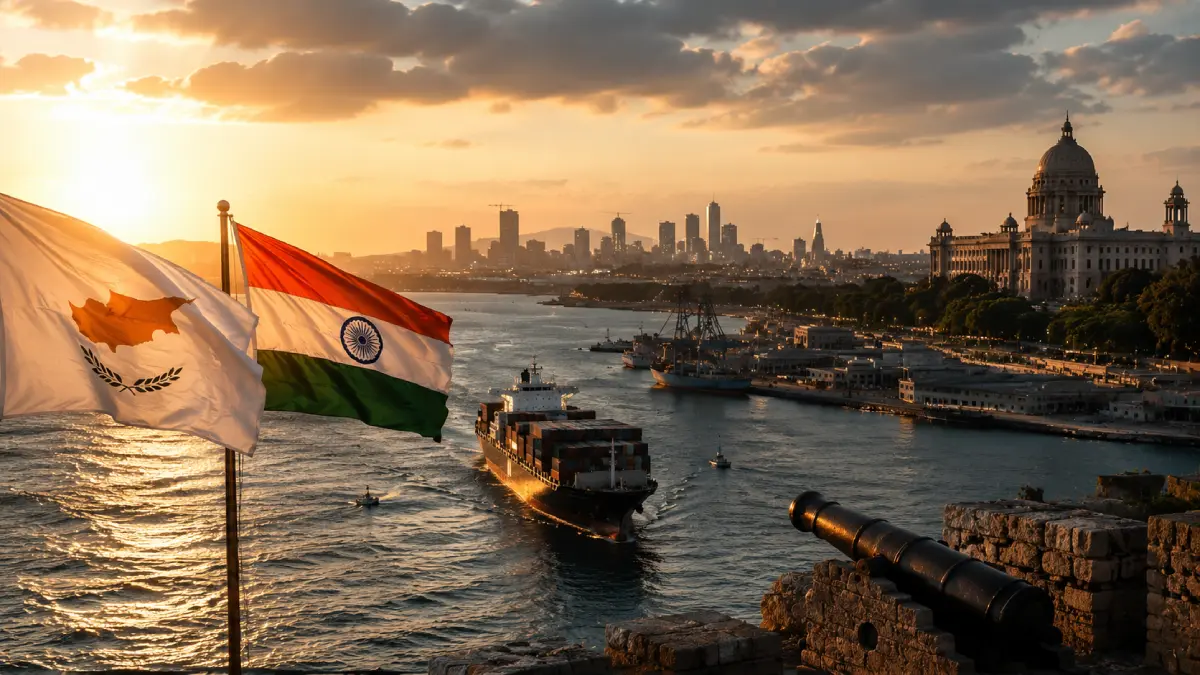
Indian nationalist media is widening the Türkiye-Pakistan frame beyond South Asia, presenting India's defense and diplomatic ties with Greece, the Greek Cypriot administration and Armenia as pressure points on Ankara.
The latest example came from Organiser, which argued that India's Mediterranean push and Indo-Pacific rise are unsettling Türkiye's strategic calculations. The article links India's closer relations with Greece, the Greek Cypriot administration and Armenia to Türkiye's support for Pakistan, turning separate diplomatic and defense files into a broader media narrative about Indian pushback against Ankara.
The article's tone is political and should be handled as a media signal rather than a formal policy document. Its value lies in the way it reflects a harder Indian reading of Türkiye, not in every claim it makes. Language around BrahMos missiles, drones or Turkish anxiety still requires caution unless supported by official contracts or confirmed transfer announcements.
There is, however, a real diplomatic and defense framework behind part of the argument. India and the Greek Cypriot administration have already elevated relations to a strategic partnership and adopted a five-year defense cooperation roadmap, as Bosphorus News reported in its coverage of the India-Cyprus defense roadmap. That agreement gave the relationship a formal security structure before Indian media began presenting it as a message to Türkiye.
Organiser's article also extends a media frame Bosphorus News tracked earlier, when NDTV's BrahMos coverage turned the India-Cyprus roadmap into a sharper message about Pakistan, Türkiye and the Eastern Mediterranean. The Organiser version goes further by placing Greece and Armenia into the same pressure map.
That expansion is not accidental. India-Greece ties already carry a strategic partnership language that includes security, maritime cooperation, shipping and defense contacts. India-Armenia defense cooperation has also grown through documented weapons and systems deliveries, including Pinaka-related reporting in Indian media. The confirmed record varies by file, but the political reading in Indian media is becoming more direct: Türkiye's Pakistan and Azerbaijan relationships are now being answered through India's own ties with actors close to Ankara's regional disputes.
That line had already been examined by Bosphorus News in a guest commentary by Prof. Dr. Mehmet Hasgüler, who argued that India's opening to the Greek Cypriot administration is increasingly being read through Türkiye's close defense and political relationship with Pakistan. Organiser uses a sharper nationalist language, but it works from the same discomfort: India is no longer treating Türkiye as a distant West Asian actor when Ankara's Pakistan policy touches Indian security perceptions.
The Armenia element adds another layer. India's defense cooperation with Yerevan is being read in some Indian circles through Türkiye's relationship with Azerbaijan, just as the Cyprus file is being read through Türkiye's position in the Eastern Mediterranean. That does not make Greece, the Greek Cypriot administration and Armenia a single formal bloc, but it shows how Indian strategic media is connecting them inside one story about counter-pressure on Türkiye.
The risk is overstatement. Indian media framing can move faster than governments, contracts and military delivery schedules. A signed defense roadmap is not the same as a confirmed missile sale. A strategic partnership is not the same as an alliance. A media narrative about pressure on Türkiye is not itself proof that Ankara's calculations have changed.
The more durable story is the shift in language. India's ties with Greece, the Greek Cypriot administration and Armenia are now being discussed in some Indian outlets as part of a wider answer to Türkiye's Pakistan policy. That matters because public strategic language often prepares the ground before formal policy catches up, and the Türkiye file in Indian media is no longer confined to Kashmir, Pakistan or South Asian rivalry. It is moving into the Eastern Mediterranean and the Caucasus, where Ankara already carries its own disputes, alliances and sensitivities.
***Sources: Organiser, Government of Cyprus, Ministry of External Affairs of India, Reuters, Times of India, Bosphorus News reporting.