
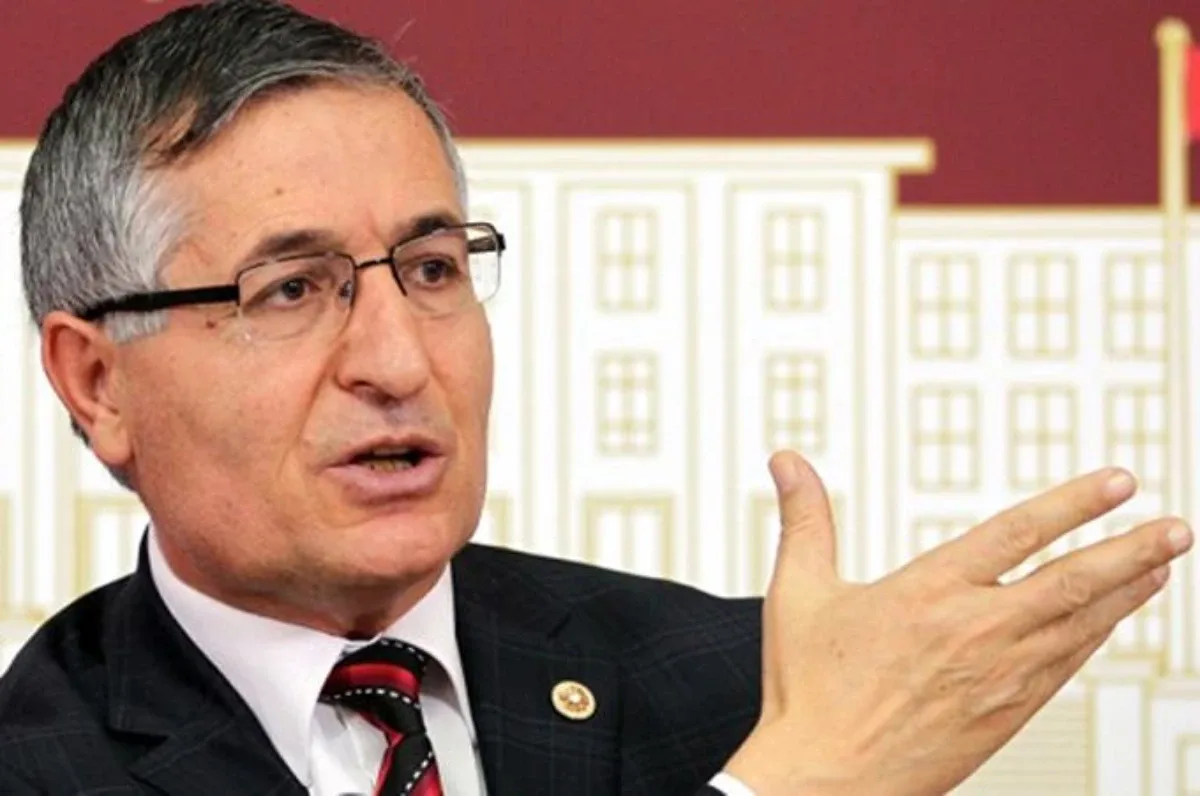
By Bosphorus News Türkiye Desk
In an exclusive written assessment provided to Bosphorus News on August 14, 2026, former Nationalist Movement Party (MHP) lawmaker and academic Özcan Yeniçeri challenged the premise of Türkiye's "Terror-Free Türkiye" initiative. Dismantling the Kurdistan Workers' Party (PKK), he argues, will not remove the grievances and political narratives that once sustained armed violence.
His intervention came days after the Grand National Assembly of Türkiye (TBMM) passed legislation setting the terms for the PKK/KCK's dissolution, weapons surrender and the treatment of criminal cases involving members of the organization.
The armed threat inside Türkiye has receded, Yeniçeri says. The harder task is preventing personal injury and perceived injustice from being turned into collective resentment.
Parliament Sets Conditions for PKK Dissolution
The TBMM passed the Law on Strengthening National Solidarity and Social Integration on August 11 with 467 votes.
The legislation covers the PKK/KCK and structures linked to it. The PKK is designated as a terrorist organization by Türkiye, the United States and the European Union.
Key deferral provisions take effect only after Türkiye's security institutions determine that the organization has ended its physical presence and surrendered the weapons and ammunition under its control. The finding must then be confirmed by a National Security Council decision published in the Official Gazette.
Authorities may subsequently defer investigations, prosecutions and the enforcement of some sentences for periods based on the seriousness of the offense. Intentional killing and certain other grave crimes are excluded.
President Recep Tayyip Erdoğan called the law a historic step toward resolving a conflict that has cost tens of thousands of lives over four decades. Parliament Speaker Numan Kurtulmuş said in July that about 80 percent of the process had been completed and warned political actors against language that could damage the disarmament effort.
Yeniçeri does not focus on the statute's individual clauses. He questions its name and the diagnosis behind it.
How Grievance Becomes a Political Weapon
Yeniçeri's thesis is that terrorism develops when experiences of mistreatment, deprivation and exclusion are assembled into a collective political story.
Drawing on the work of Robert S. Robins and Jerrold M. Post, he describes people shaped by repeated mistreatment as "injustice collectors." Some confront the perceived wrong openly, he writes, while others allow resentment to grow internally.
The risk increases when a leader presents personal trauma as the experience of an entire community. Political mobilization then depends on persuading a wider group that the leader's story explains its own condition.
Yeniçeri applies this reading to PKK founder Abdullah Öcalan. He cites Öcalan's descriptions of violence and conflict during his childhood in the 1993 interview book Kürt Bahçesinde Söyleşi.
In Yeniçeri's account, Öcalan turned elements of his personal history into a political narrative and attached them to feelings of deprivation among Kurdish citizens. An individual grievance could then be presented as the grievance of a wider ethnic community.
The analysis concerns Öcalan's leadership and the PKK's methods of mobilization. Kurdish citizens and broader Kurdish political activity remain distinct from the organization.
Yeniçeri first developed elements of this argument in a March 2008 column for Yeniçağ. The assessment supplied to Bosphorus News applies that framework to the conditions created by the 2026 law and adds a direct challenge to the current slogan.
'Neither Exists in Today's Türkiye'
Yeniçeri saves his most direct criticism for the conclusion.
"Not a terror-free or malaria-free Türkiye," he wrote. "Neither exists in today's Türkiye."
The comparison treats terrorism as a condition that has already disappeared from the country, rather than an objective still waiting to be achieved.
The law itself records unfinished work. Its deferral mechanism cannot begin until security institutions certify that the PKK/KCK has ended its de facto existence and surrendered its weapons.
The government presents the statute as the final stage of removing the organization's armed capacity. Yeniçeri says the active domestic threat has already receded and that the political debate should now concentrate on keeping old grievances from being mobilized again.
Understanding and Prevention
Yeniçeri warns against measures that, in his view, reward political violence or present it as an effective route to obtaining rights. Security operations and legal arrangements, he argues, cannot by themselves prevent resentment from being mobilized again.
His approach starts with identifying how hatred develops and intervening before private grievance becomes collective anger.
"The path does not pass through surrender," Yeniçeri wrote. "It passes through understanding and prevention."
He does not set out a detailed program covering economic development, education, political participation or post-conflict reintegration. His proposition is more limited: ending the PKK's armed structure will not erase the narratives previously used to recruit members and maintain loyalty.
Parliament has written a path for the weapons to be surrendered. Yeniçeri is warning about what could survive after the weapons are gone.
Sources: Exclusive written assessment provided by Özcan Yeniçeri, Grand National Assembly of Türkiye, Türkiye's Directorate of Communications, Yeniçağ, Bosphorus News review and reporting.